
 Is the DCEU still a thing? Conceived as the answer to Marvel’s unfathomably successful Cinematic Universe, DC’s interconnected supertales never quite coalesced the way they were intended to. You could point to any number of reasons for this derailment: a lack of a Kevin Feige-type visionary at the helm, or a violent shift in tone from one movie to the next, or poor casting in crucial roles, or the general cart-before-the-horse nature in which this series was rushed into existence. Those are all blameworthy when considering the ineffectiveness of a franchise. But because each individual film in the DCEU — Man of Steel, Suicide Squad, Batman v. Superman, Wonder Woman, Justice League, Aquaman — is mighty flawed in a vacuum, I’m inclined to point to crappy, one-note villains as an unfortunate recurring theme which, if given proper TLC, might just right the DCEU ship.
Well, you’re saying, that sounds like a massive oversimplification. It is, probably, considering we’re now in an era so dominated by superhero movies that the more experimental outings are the most interesting ones. Deadpool, Logan and Into the Spider-Verse all have villain types we’ve seen before, but they still manage to break the mold. Exactly, you’re saying, and besides, I happen to like General Zod and some of the other DC villains. Granted, ascribing a matter of opinion as the sole reason for the failure of a billion-dollar film franchise could be a stretch. Definitely, you’re saying, and besides, aren’t you supposed to be talking about the new one instead of whining about the old ones?
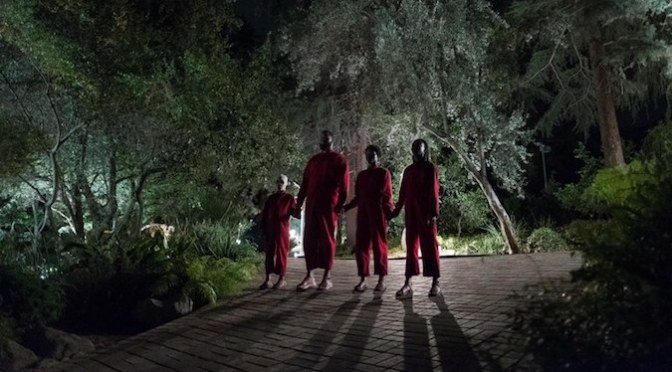
 Jordan Peele’s Us is nothing short of exceptionally entertaining horror. Starring Lupita Nyong’o and Winston Duke as the mother and father of a prototypical American family, Us joins a long tradition of doppelgänger horror while still emerging from that tradition into definitive modernity. Like Peele’s debut Get Out, the American Dream — as a white-picket-fence fantasy and as a dark reality — is crucial not only to the implicit themes of the film, but to the reason both films are scary in the first place. Yes, Us has a preponderance of classic horror moments, from jump-scares to home invasions to creepy coincidences foreshadowing a coming threat. But these tropes become entertaining again only in context of a strong underlying assertion that speaks to something in our everyday life, and while Us may not speak as explicitly as Get Out, the potency of the film is drawn from a similar source.
 The Black Stallion is very much a film of two halves. You could enter the film at the midpoint and still enjoy the back 50% as a self-contained story. Similarly, you could just watch the first chunk and then turn it off feeling surprisingly satisfied. Viewed as a whole, though, Stallion serves as a personality quiz centered around whichever half you ultimately prefer. Think Full Metal Jacket or King Kong, which not only bring characters through two vastly different settings but seemingly bring them through different genres of film as well. It’s possible to enjoy the whole film in each of these instances, but by design one segment probably connects with you more powerfully than the other.
 In 2017 The Last Jedi ignited a culture war between lovers of Star Wars on the one side and…well, lovers of Star Wars on the other side. This war was ostensibly borne of debate over the film, praise versus criticism, and there certainly is a battlefront of this war that does engage in genuine discourse over Jedi. There’s another front, of course, comprised mostly of warriors fighting with a willing blindness to the merits or pitfalls of the film as a film; some people just despise Jedi for puerile personal reasons, some just defend it simply because it’s Star Wars. This is the Ultimate First World Problem, such hatred and ire thrown about over the seventh sequel to a space fantasy from 1977. But intentionally or not, a particular faction of “critics” revealed themselves during this war. We’ll call them the Shitboys, because they’re mostly boys and they mostly shit on everything.


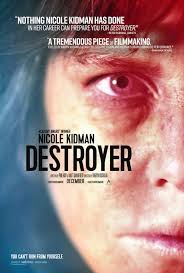 I was pretty darn excited by Destroyer just prior to watching Destroyer. The fact of a female-led, female-directed crime film with such noir grit would’ve been enticing enough. That female lead, of course, is Nicole Kidman, which always helps in the Excitement category. But frankly director Karyn Kusama was even more of a draw, coming off her last effort The Invitation. While not altogether a classic, Invitation stuck in the mind for its slow-burn tension and creepy performances. It was almost a suburban spin on a haunted house tale, Ice Storm meets Amityville Horror, accomplished with confidence by Kusama on a comparatively small budget of $1 million. Destroyer upped the ante, left the suburban mansion for the L.A. streets, but the fact that it was still an original thriller was mighty exciting.
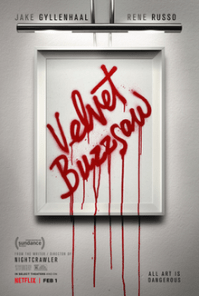 I went to the Tate Modern in London once. Modern art is easy to shit on, the philosophy of experimentation and willful disregard for tradition seeming to some haphazard, easy, cheap or just plain juvenile. That day at the Tate somebody had left a crumpled-up brochure on the ground, dead center of a pristine exhibit hall, and visitors would occasionally encircle it with hushed regard as they mistook it for art. It was the most surreal thing in a museum of exclusively surreal things, watching a piece of trash receive such vigilant appreciation.
 Motion State Review