
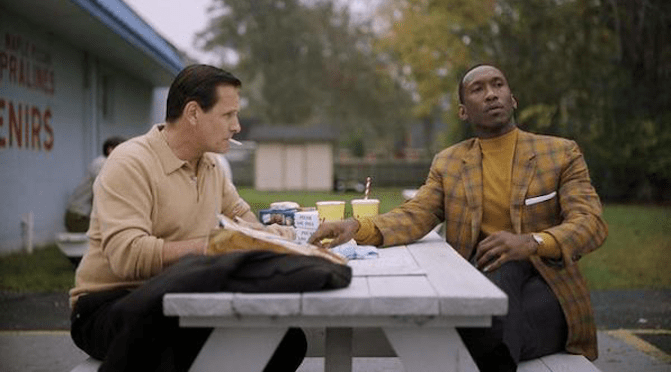
 After winning the People’s Choice Award at the Toronto International Film Festival last weekend, public opinion on Green Book quickly pivoted from a general curiosity in a dramatic effort from the guy who did Dumb and Dumber to genuine anticipation for an early Oscar frontrunner. The film’s first trailer, full of emotional monologues and swelling orchestral strings, already gave off a For Your Consideration vibe before Green Book even premiered. But TIFF has certainly become a stronger indicator of awards season success in recent years, and nine of the last ten People’s Choice Award winners went on to become Best Picture nominees. Universal went into overdrive this past week to get their sudden contender out to smaller festivals and screenings, so this week’s presentation at the 34th Boston Film Festival was a pleasant surprise.
Set in the back half of 1962, Green Book follows pianist Don Shirley (Mahershala Ali) after he hires bouncer Tony Lip (Viggo Mortensen) to be his driver on a tour of the Deep South. Their pairing has the trappings of a buddy road movie, Shirley a wealthy and dignified artist and Tony a brash and illiterate tough guy. Shirley is reserved, polite, particular; Tony eats twenty-six hot dogs in a bid to win fifty bucks. More to Green Book‘s theme, Shirley is a Jamaican-born American rightfully concerned about his own safety on a tour of the increasingly bigoted South; Tony, an Italian-American who rarely leaves the Bronx, is for the most part blissfully unaware of his own racism.

 Shane Black’s new Predator movie, which opened last night and was advertised as an “explosive reinvention” of the series, purportedly debuts on the crest of a new wave of R-rated Hollywood blockbusters. Deadpool and Logan did pretty well in ’16 and ’17, see, and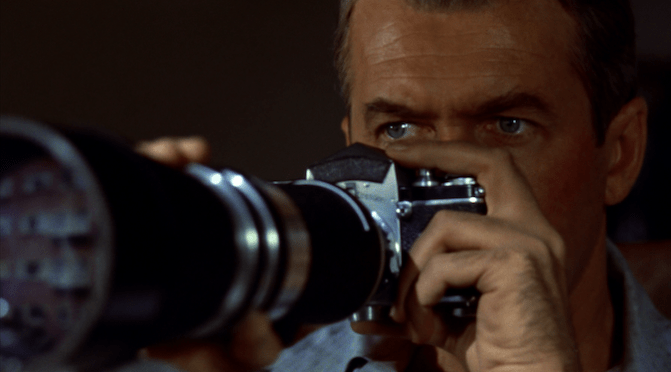
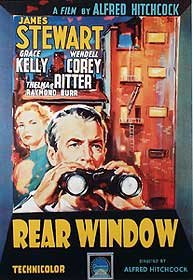 Alfred Hitchcock was no stranger to the optical point-of-view shot, inserting a camera into the heads of his characters in nearly every film throughout his career. The Master of Suspense knew that this shortcut to conveying a character’s experience could be a powerful tool if used artfully. In Vertigo, this artfulness resulted in one of the greatest POV shots of all time, the discombobulating push-in-zoom-out (technically a “dolly zoom”) that simultaneously suggests our hero’s unbalanced frame of mind. More importantly, Hitchcock routinely tied these POV shot choices to significant narrative moments. In Vertigo this served to heighten the most intense action scenes by placing us directly in the action; elsewhere, the POV shot served to convey vital information, revelations, twists and — you guessed it! — suspense:
 Motion State Review