

 Jimmy Stewart was in a lot of Westerns. From Destry Rides Again (1939) all the way to The Shootist (1976), the actor’s continual returns to the frontier nearly end up signposting the decades-long rise and fall of the genre itself. In the early 1960s, just prior to the introduction of a violent revisionism courtesy of Sam Peckinpah and Sergio Leone, Stewart teamed with John Ford and turned out classics like The Man Who Shot Liberty Valance and How the West was Won. Prior to that, as the Western was enjoying its heyday in the 1950s, Stewart starred in the progressive-for-the-time Broken Arrow and in a string of Westerns from director Anthony Mann, including the eventual classic Winchester ’73. But the most underrated Stewart Western — and maybe one of the most underrated Westerns period — is another feature from Mann called Bend of the River.
It’s an unlikely candidate for that mantle, maybe, if only for the lack of stereotypical Western tropes. Stewart stars as Glyn McLyntock, a tough cowboy who puts himself at risk to ensure a delivery of supplies reaches a budding homestead in the Northwest Frontier. The route takes him by valley and mountainside, through Portland, and back and forth across the eponymous river, all the while accompanied by friend and foe of varying loyalties. This question of loyalty — who’s the real villain? —is very much at the heart of Bend, and the guessing game we play as viewer is a big part of what makes the film so great. (Also, it must be noted, “Glyn McLyntock” is an all-timer of a character name.)

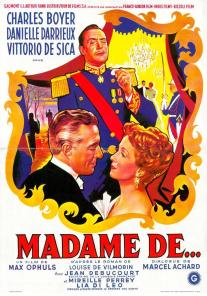 The Earrings of Madame de… is the English-language title for Madame de…, as it was released in France, which heralds the heart-shaped diamond jewelry — not its owner — as the star of the film. The earrings do indeed play a major role, significantly altering the lives of those who possess them, seemingly propelled by their own willpower from one owner to another and back again. With a pinch more malice this would be The Lord of the (Ear)rings, a fantasy tale about tempting jewelry that instills a deadly pride in those who dare purport to wield such power. But the passionately humanist Max Ophüls ensures that this is always really the story of Madame de…, not simply of her diamonds, and the themes of pride and ownership don’t necessarily involve the earrings at all.
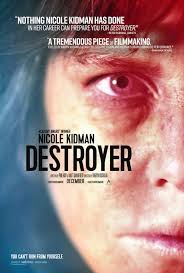 I was pretty darn excited by Destroyer just prior to watching Destroyer. The fact of a female-led, female-directed crime film with such noir grit would’ve been enticing enough. That female lead, of course, is Nicole Kidman, which always helps in the Excitement category. But frankly director Karyn Kusama was even more of a draw, coming off her last effort The Invitation. While not altogether a classic, Invitation stuck in the mind for its slow-burn tension and creepy performances. It was almost a suburban spin on a haunted house tale, Ice Storm meets Amityville Horror, accomplished with confidence by Kusama on a comparatively small budget of $1 million. Destroyer upped the ante, left the suburban mansion for the L.A. streets, but the fact that it was still an original thriller was mighty exciting.
 I recently watched Edgar Wright’s Hot Fuzz for the zillionth time. This was partly to assuage my excitement for Baby Driver, Wright’s latest, and partly because the discovery of a commentary track by Wright and his buddy Quentin Tarantino was too good to pass up. Usually commentary tracks feel slight, strained, straight-up unnecessary; Wright and Tarantino have a casual chat that’s nearly as bonkers as Hot Fuzz itself. The pair share a vast encyclopedic knowledge of film and music, and throughout the course of the commentary they discuss nearly 200 films — basically everything besides Hot Fuzz — and if you’re thinking someone should write out that list, well, yeah:
  Motion State Review