

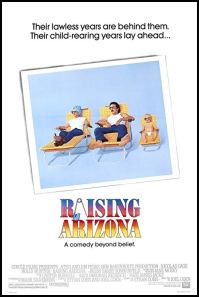
 One of the most impressive things about the Coen Brothers is their ability to succeed in both self-aware comedy and super-serious drama, and their first two movies encapsulate both ends of that spectrum. Apart from No Country for Old Men, their debut Blood Simple is still their most stripped-down and somber effort. There’s only one real moment of self-awareness in that film, when the camera slides along the saloon counter and then jumps over a sleeping barfly before hitting the counter again. Coming only three years after that hardboiled crime drama, the cartoonishly bonkers Raising Arizona seems like the work of a different filmmaker altogether.
And maybe it is, in a way, given how much the Coens owe to Preston Sturges. The Golden Age screwball writer/director is often cited as a Coen inspiration, due in part to a few direct correlations between his Sullivan’s Travels and the Coens’ O Brother, Where Art Thou? But Raising Arizona lives more fully under the influence of Sturges, from the pratfalls to the simple-minded characters to the way dialogue reigns as simultaneously elevated and immature. Specific elements of three Sturges films from the most celebrated era of his career — Easy Living (1937), The Lady Eve (1941) and The Palm Beach Story (1942) — offer some insight into how Raising Arizona came together with the King of ’40s Screwballs in mind.

 As far as indicators of things to come are concerned, Blood Simple has everything you need to know about the Coen Brothers right there in the opening. Okay, maybe not everything — after all, daring to think you’ve nailed down the Coens is,

 Motion State Review