Tag Archives: The Leftovers

The Leftovers 2.1 – “Axis Mundi”

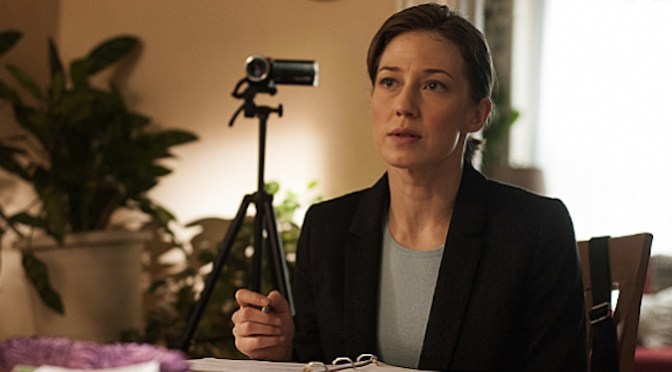
If 2% of the world’s population — call it roughly 140 million people — suddenly vanished one day, the world would change, right? Everything would be different, right? Religion would be shaken for some, as we saw last season on The Leftovers in the third episode “Two Boats and a Helicopter“. Grief, as a concept, would take on a new complexity as in “Guest“. Heck, even the ATF would necessarily expand to become the Bureau of Alcohol, Tobacco, Firearms, Explosives and Cults (obviously). Three years after the Sudden Departure, Carrie Coon’s Nora Durst lives her life (again, in “Guest”) in what appears to be a normal way: she goes to the grocery store and takes the trash out. But Leftovers unveils something underneath those trips to the grocery store and to the trash barrel, betrays a world changed but changed only beneath the business-as-usual facade.

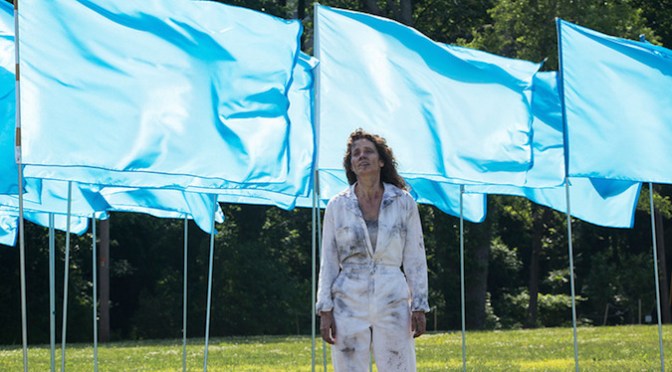
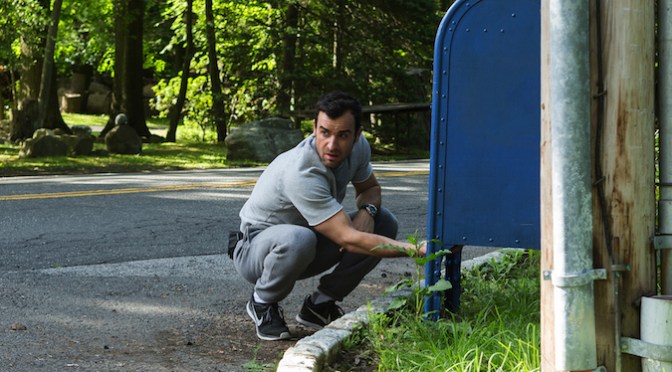
I expect as much to be the case with Jarden, Texas, a town that miraculously was unaffected by the Departure. All 9,261 citizens of the town were “spared”, turning Jarden into a mecca for those believing it to be the only safe haven on the planet. It’s now billed as Miracle National Park, and tourists flock by the thousands to breathe the air of the place that God saved. The change of location from Mapleton, NY, works on several levels, providing more than fresh faces and fresh challenges. The sparing of Jarden is no more explicable than the Departure everywhere else, and thus we get a fresh take on the world of The Leftovers as well, one where the whole business of “not knowing” is framed as a positive thing instead of a tragic thing. In Mapleton everyone asked what happened, and we talked about how Leftovers will never actually answer that question. Here, in Jarden, whoever asks what happened is met with a chorus of justifications from God saved us to stop asking and just be thankful.
Continue reading The Leftovers 2.1 – “Axis Mundi”

The Leftovers 1.10 – “The Prodigal Son Returns”

Sometimes drama is hard. Part of the reason why people are throwing around phrases like The Golden Age of Television is because great drama often implies a certain longevity, a depth not only of feeling but of space and time as well. Rust Cohle’s True Detective arc spans more than a decade, and we’re allowed insight into that arc for eight hours rather than for the limited runtime of a film. Walter White’s (d)evolution is likewise more effective for the time it takes building itself. In the coldest sense television allows what comic book chronology allows, simply more, and thus more of a compounding effect in the later hours or later seasons. True Detective and Breaking Bad are intense in their final sequences mostly due to brilliant writing, brilliant directing, brilliant acting — nothing replaces storytelling (preach!) — but partially due to what came before.

And yes: sometimes drama is easy. Fabricated drama isn’t hard to find. Heck, take Best Picture winner Argo, which climaxes with a harrowing scene at the airport where the heroes are really just standing in a room sweating as to whether they’re about to be let out of the country or not. Quick cuts are made to the drama, vehicles holding the bad guys hurtling along the tarmac. It’s all spiced up, and usually when you have to spice up your scene with cuts to action that simply happen faster and faster as the music plays faster and faster — well, maybe there’s another way to extract drama, a less easy way, an infinitely more effective way. Argo is hardly the worst example. The cringeworthiest one that leaps to mind is all the extraneous shit going down at the end of The Amazing Spider-Man 2, because Spidey battling his enemy isn’t enough. And Spidey battling two enemies isn’t enough. And Spidey battling two enemies while a hospital full of people is in danger and a plane full of people is about to crash isn’t even enough, so throw Gwen Stacey in there. There we go: amazing.

Continue reading The Leftovers 1.10 – “The Prodigal Son Returns”

The Leftovers 1.9 – “The Garveys at Their Best”

“The Garveys at Their Best” is probably the most illuminating episode of the first season of The Leftovers, and had it been placed at the beginning where it belongs chronologically it might have heightened the impact of a lot of the symbolism that came in the first eight hours. Pure benefit of the doubt dictates that The Leftovers is playing the long game, see, and so this is still the beginning. Fair enough, and the rewatchability factor is not to be discounted either. But those who claim the series is often purposefully obscure or figurative for the sake of being figurative can probably point to “Garveys” as evidence of that, and despite the realizations that come about during the episode there are just as many new questions.

Set in the few days leading up to the Departure, “Garveys” is the first look at “normal” life in The Leftovers aside from the season-opening scene in the grocery store parking lot and a brief swath of “Two Boats and a Helicopter” depicting Matt Jamison’s horrific personal experience on October 14th. Having an entire episode follow the main characters of the show in their day-to-day lives provides a huge amount of context for the often-questionable ways in which the same characters conduct themselves in the Brave New post-Departue world, and it also betrays the fact that pre-Departure life was possibly not as “normal” as everyone might like to believe.

Continue reading The Leftovers 1.9 – “The Garveys at Their Best”

Film & TV News: September 29

News

  • The Prometheus sequel is moving forward as Ridley Scott’s next film under the official title Alien: Paradise Lost. Hard to pass judgement on title alone, but for the moment we’re cautiously pessimistic.
  • Speaking of Alien, Sigourney Weaver has confirmed a cameo in the upcoming Ghostbusters reboot, which you probably know as “the all-female Ghostbusters reboot” to such a degree that the title could be The All-Female Ghostbusters Reboot.
  • Spectre‘s theme song “Writing’s on the Wall” has been released, featuring the crooning vocals of Sam Smith, and can be heard in full over on Spotify. I haven’t actually listened to it, and won’t until I’m firmly in my seat in the theater for Spectre, but apparently it’s divisive so far without any of the visual/story context. On another note, isn’t it weird that so few photos of Christoph Waltz’s villain have leaked?
  • Some beautiful new stills from The Revenant hit the interwebs yesterday, teasing the exclusive use of natural light throughout Alejandro González Iñárritu’s Birdman follow-up. For those of you who have been pining for a shot of Leonardo DiCaprio standing before a mountain of buffalo skulls, today is your lucky day.

Continue reading Film & TV News: September 29

The Leftovers 1.8 – “Cairo”

The question of protagonist Kevin Garvey’s sanity was first raised in the pilot, wherein he may or may not have fired his gun at a pack of wild dogs. The second episode “Penguin One, Us Zero” seemed to look on uncaringly as poor Kevin lost his shit over a disappeared bagel. Since then he’s inexplicably lost track of a closet full of white shirts, tethered a dog to his fence without any recollection of doing so, and crusaded across Mapleton to find a stolen baby Jesus doll. After all of that it’s still not exactly clear what’s eating Kevin Garvey, nor is it even clear whether he is or is not crazy. Moreover, it’s not clear how Kevin losing his sanity ties in to the greater themes of The Leftovers.

“Cairo” changes all of that. Crazy is a strong word, but Kevin’s definitely not A-OK upstairs. Clear is a strong word, too, so perhaps we should state that the clarity we get on Kevin’s mental state and how that mental state ties into the grander schemes of the series isn’t exactly a straightforward answer. But Kevin’s sleepwalking comes with serious bouts of amnesia, and he often wakes up to find he’s done something questionable — like tying a dog up in the yard — during his waking slumber. In “Cairo”, he gets downright violent, so much so that the part of himself that he never remembers becomes something that he doesn’t want to be a part of himself at all.

Continue reading The Leftovers 1.8 – “Cairo”

The Leftovers 1.7 – “Solace for Tired Feet”

Solace indeed. The first half of the rookie season of The Leftovers hurtles forward at breakneck speed, propelled by a whole lot of pain, a whole lot of angst, a whole lot of doom and gloom, and just a little tiny bit of hope. It’s fairly characteristic, actually, for an intense episode of this show to contain one small but valuable nugget of joy within the dark folds, although I’m not sure the darkest episode “Gladys” had anything of the sort. “Guest“, the sixth and best episode of the season, showed Nora more broken and identityless than she’s ever been — and yet her connection with Wayne (“Will I forget them?” “Never.“) was one of the most life-affirming moments in the entire season. Her brother Matt endured a series of cruelly hellish occurrences in “Two Boats and a Helicopter“, and yet his win at the roulette table probably elicited a smile as large as his out of most viewers. The previous episode “Penguin One, Us Zero” showed us just how tragic it could be to lost your bagel, and then it showed us just how exhilirating it can be to find it again.

So “Solace for Tired Feet” is just that: a breather. It’s not built with such intentionality, of course, and if anything it’s structured as a set-up to the final stroke of the season. “Tired Feet” says here is where everyone is, here is where they seem to be headed, and here is how they are all connected. The first two points are necessary to orient us towards the end of the season’s arc, but it’s the third point — the ways in which all of the characters are connected — that’s most impressive in this otherwise slow hour. To boot, instead of a full episode of straight-up intensity, “Tired Feet” provides a blend of hopefulness, revelation, and some intriguing Lost-style question marks.

Continue reading The Leftovers 1.7 – “Solace for Tired Feet”

The Leftovers 1.6 – “Guest”

The first scene of “Guest” perfectly encapsulates the special kind of world we talked about in our review of the previous episode “Gladys“. Sure, the second scene steals the show: Nora leafs through a newspaper, makes an appointment with a prostitute advertised under the headline Nothing is Forbidden, invites the scantily-clad girl into her home, plants a pistol in her hand, dons a bulletproof vest, then demands the girl shoot her directly in the chest. Nora’s done this before, she assures the prostitute, although the last girl she got to shoot her “said she’d never do it again”. Thousands of dollars change hands, as do a great number of understandable health-related concerns. Tears fall. Eventually the gun goes off and Nora lurches backwards onto the blow-up air mattress. The hooker flees. After a long moment, Nora gasps a breath of fresh air.

Hell of a scene, no? Even if you aren’t sold on Nora’s self-help methods as a kind of New Grief — as if the old methods of grieving for lost loved ones no longer cut it — the intensity of the scene is still powerful. It builds moment by moment, starting as the prostitute steps over the threshold and holding an inhale as she darts back over it after the gunshot, finally exhaling at the same time Nora does. But a large part of the intensity of the scene might be attributed to the fact that this is the second scene of “Guest”, and the first is so deceptively twisted and unimaginably tragic that the gunshot scene almost becomes inevitable.

Continue reading The Leftovers 1.6 – “Guest”

The Leftovers 1.5 – “Gladys”

To my mind, two things played a major role in spawning a resurgence in post-apocalyptic storytelling in the past decade. The first is Cormac McCarthy’s The Road, a bombshell of a novel from 2006 that depicted an ashen, desolate earth struggling to grasp the faintest glimmers of hope. It became a decent John Hillcoat film a few years later, but the craze spun off into more than just that: The Book of Eli, I Am Legend, Tom Cruise’s Oblivion, last year’s brilliant Snowpiercer, last year’s crappy Young Ones, that crappy now-cancelled NBC show Revolution, etc. etc. They’re not all directly borne of The Road, of course, but the genre itself certainly received a huge boost from McCarthy’s novel. That’s why the time was right to revisit Mad Max with Fury Road, and why the likes of Blade Runner is getting a new treatment as well. Heck, just this week there’s talk of Christopher Nolan being involved with the long-awaited Akira adaptation.

The second influential piece of post-apocalyptic storytelling is The Walking Dead, the massively popular AMC show that launched a thousand other zombie-related things and an official spinoff of its own (Fear the Walking Dead, which is pretty good if almost exactly what you’d expect). The thing that pushed TWD ahead of the pack was the format of a television series: movies and books are comparatively finite, but the long-term storytelling at hand in a TV series (or a comic book series, like the one TWD is based on) serves the genre in the perfect way. In both cases — Road and TWD — the aim was to create a new world out of the old one, to watch characters deal with the differences, to play witness to what fantastic and terrible things might arise after something alters life as we know it.

Continue reading The Leftovers 1.5 – “Gladys”

The Leftovers 1.4 – “B.J. and the A.C.”

Right down to the title of the show, The Leftovers isn’t necessarily one for subtlety. Any time something isn’t where it’s supposed to be, a parallel is drawn to the mysterious Departure that inexplicably claimed 2% of the world’s population. This is Drama, capital D, and these people have Problems, capital P, and sitting down to an hour of cap-D plus cap-P — especially “B.J. and the A.C.” — can end up being too much CAPS LOCK to handle if you’re not ready for it. But on one level The Leftovers sacrifices subtlety intentionally, I think, allowing for clarity instead. Supreme clarity, in fact, and one that should make nearly every other show on television envious.

Take the opening Breaking Bad-esque montage of “B.J. and the A.C.”:

https://www.youtube.com/watch?v=kj09IP7J9E0

Continue reading The Leftovers 1.4 – “B.J. and the A.C.”

The Leftovers 1.3 – “Two Boats and a Helicopter”

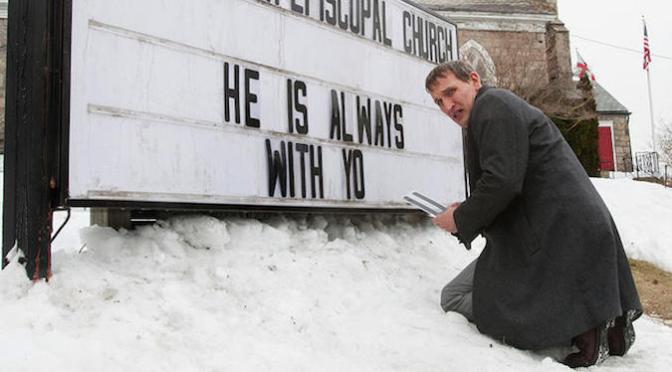
Alongside the sixth episode “Guest”, “Two Boats and a Helicopter” provides the most effective hour of character drama in the stellar first season of The Leftovers. The first episode to zoom in on a single character depicts the sad struggle of Reverend Matt Jamison, portrayed with suitable passion by Christopher Eccleston, in the wake of the mysterious Departure. The first and second hours showed glimpses of Matt, passing out flyers at a rally that damn the Departed rather than deify them. “It was not the Rapture!” maintains Matt. In “Two Boats and a Helicopter”, he reveals what he thinks the Departure actually was: a test.

And his sister Nora sums up one side of the episode with perfect succinctness: “if it was a test, I think you might be failing it.” Thus is his post-non-Rapture existence a continuous test of faith wherein Matt attempts to hold onto his beliefs in the face of that unthinkable and impossible event. Matt’s story keeps turning in on itself, offering hope in one instant and ripping it away just as quickly. It’s a cruel-seeming existence, one that forces Matt to eventually view the smallest of occurrences as a direct sign from God. After a certain point, the letdowns are more or less inevitable.

Continue reading The Leftovers 1.3 – “Two Boats and a Helicopter”