

When Darren Aronofsky’s Noah came out in 2014, the website I was writing for at the time sent me to screen it and review it. The film stars Russell Crowe as the biblical Noah and follows his ark-building journey after God warns him of a great world-cleansing flood. Animals arrive two-by-two for the cruise, forty days of rain ensues…you know the story. Amongst my original thoughts was the following:
“This is probably Aronofsky’s least personal work — the close-quarter character examinations of Pi and The Wrestler aren’t at play here, and while the character of Noah is drawn quite well, the confines of a big-budget blockbuster based on what may be the most widely-read story of all time just doesn’t allow for as much intimacy.”
I was wrong. Not about the impersonal nature of the film — that’s still the case — but about Noah being based on the Bible.
Continue reading Face Off: Noah’s Ark (1999) and Noah (2014)


 The superhero genre is not, in fact, a genre. Adapting comics to film has become a billion-dollar industry in the past decade, and the movies comprising that industry have certainly been typified by a familiar formula. Marvel movies are with few exceptions fun but mostly mindless. DC movies are with few exceptions Marvel movies with all the fun wrung out. Those exceptions usually end up being the best of the bunch, but the point is that the “superhero genre” — while technically an applicable term for things grouped by subject matter — is more a “superhero formula” applied across genres. There’s action-thriller, action-comedy, action-adventure, sci-fi action…heck, when’s someone gonna make a superhero rom-com or a superhero road trip flick? Or a super-workplace melodrama devoid of any action whatsoever?
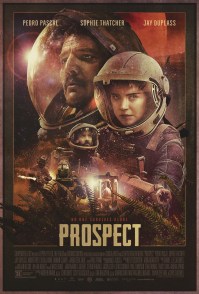 Detail is king in Prospect, the debut feature from writing/directing duo Christopher Caldwell and Zeek Earl. There’s little to latch onto in the opening minutes that could be called “familiar” outside the general setup: two human characters, father and daughter, in a ship floating through space. But the young girl is writing in an alien language, her father is administering a strange drug, and the process they both engage with to launch their pod down to the surface of a nearby planet is about as complicated as the entire mission in First Man. There’s a device that the father holds in place and continuously winds like it’s a jack-in-the-box, though its purpose is never actually articulated.
 Art ages. The second a book hits the shelf, a movie hits the cinema, a painting hits the exhibit or a song hits the radio, that art is in some ways locked into that time period forever. Maybe as time passes that art ages poorly and is sentenced to oblivion — like, say,
 I never much expected Yorgos Lanthimos to become a great filmmaker. He was always a very good filmmaker, and it must be noted that we’re reserving the term great here for someone truly deserving of the moniker, as in one of the all-time greats. Nowadays great gets bandied about a lot. Is Ridley Scott great? From time to time, sure. Maybe we weigh the greatness of
 It would have been easy for Shoplifters to glamorize the criminal acts of its central characters. Hirokazu Kore-eda’s latest film follows an impoverished Tokyo family surviving on a hierarchical system of thievery, nicking small items where the opportunity arises or, more frequently, setting out on an express mission to steal that which they need. The setup, of course, is worlds away from the heist genre, but it’s still refreshing to experience these criminal acts for what they actually are: desperate, thrill-less acts devoid of meticulous planning or grifter’s luck. And if there is any thrill in stealing shampoo and ramen noodles, it’s a thrill that quickly sinks into the pit of one’s stomach, weighed by the immorality of it all.
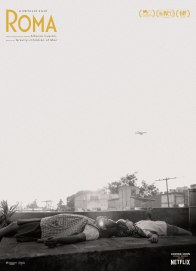 You could call Roma the most colorful black-and-white film ever made. After the Centerpiece screening at the 56th New York Film Festival, writer/director Alfonso Cuarón noted how important the visual presentation was to the overall effect of the movie. Crucial among his points was that this black-and-white is “not a nostalgic black-and-white” but instead “modern” and “pristine,” disabusing the viewer of the notion that this tale is unfolding in a long-forgotten place or time. Despite being assured throughout the film that the place is Mexico City and the year is 1971, Roma simultaneously manages to assure you that what’s happening is happening here and now.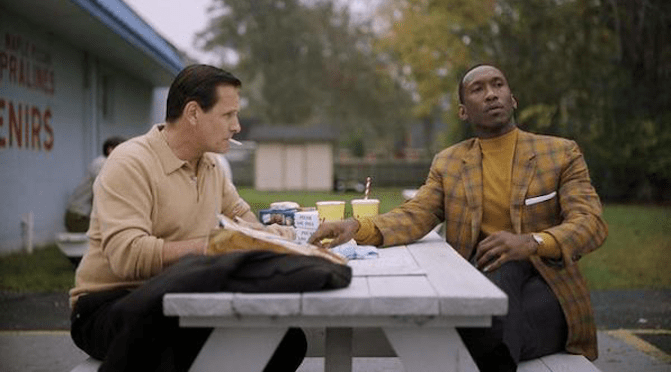
 After winning the People’s Choice Award at the Toronto International Film Festival last weekend, public opinion on Green Book quickly pivoted from a general curiosity in a dramatic effort from the guy who did Dumb and Dumber to genuine anticipation for an early Oscar frontrunner. The film’s first trailer, full of emotional monologues and swelling orchestral strings, already gave off a For Your Consideration vibe before Green Book even premiered. But TIFF has certainly become a stronger indicator of awards season success in recent years, and nine of the last ten People’s Choice Award winners went on to become Best Picture nominees. Universal went into overdrive this past week to get their sudden contender out to smaller festivals and screenings, so this week’s presentation at the 34th Boston Film Festival was a pleasant surprise.
 Shane Black’s new Predator movie, which opened last night and was advertised as an “explosive reinvention” of the series, purportedly debuts on the crest of a new wave of R-rated Hollywood blockbusters. Deadpool and Logan did pretty well in ’16 and ’17, see, and
  Motion State Review