

 Tár is perhaps not the most exciting title ever conceived for a film, but a character as narcissistic as Lydia Tár wouldn’t dare permit any confusion about who’s in charge here. This is her story, and in Tár’s mind that means she alone is the owner of that story. A story, a piece of music, a relationship, a marriage — these are not conversations or discussions, not malleable things that allow for multiple participants. These are possessions, shouldered entirely by their owner, and in a way those possessions define the identity of the owner herself. Any attempt by another to repossess those things, then, would be akin to destroying that identity.
If you’ve ever found yourself in contention with a true narcissist, you know how threatening that idea really is. Here, in Todd Field’s first film in sixteen years (his previous being the excellent Little Children), Cate Blanchett gives her all as the embattled and egomaniacal Tár, a decorated classical conductor on the verge of completing a massive cycle of Mahler’s symphonies. At first, the success Tár enjoys seems well-earned. She credits her mentors, gives back to the community and has amicable relationships with her assistant and her guest conductor. As the recording session for the final symphony approaches, though, we begin to see how Tár’s success has been built on a sinister foundation.

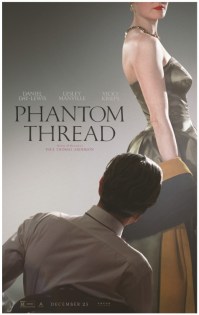 Early on in Phantom Thread I started thinking about the miniaturized nature of certain segments in the cinema of Paul Thomas Anderson. At the top of this latest film we see Reynolds Woodcock’s morning routine, clearly practiced to the point of automation, nearly mechanical, though the whole scene lasts less than thirty seconds. He shaves, he slicks his hair, he pulls on his big winecolored socks, his pants. And that’s it. The dressmaker is dressed. One might expect a little more extravagance from a film that’s ostensibly about high-end style and tailored beauty, no?
 Motion State Review