Category Archives: Director Series

Jumpin’ Jack Flash (1986)

If you want to make an omelette, the saying goes, first you have to make a remarkably unexceptional non-starter featuring Whoopi Goldberg as a tech whiz embroiled in an espionage scandal. Apparently people actually like Jumpin’ Jack Flash, judging by the surprising number of nostalgia-fueled pieces about Whoopi’s young comedy days, but apart from an amusement with her indomitable ‘tude I can’t imagine why. You can just watch The View if you’re into Whoopi’s ‘tude, right? Unless you prefer a different kind of supporting cast, essentially one made up not of has-beens but of not-yets.

One such not-yet was behind the camera in the form of Penny Marshall, one day destined to direct the likes of Big, AwakeningsA League of Their Own and more alongside her numerous TV credits. Jack Flash is the transition piece from the Laverne & Shirley days (she was Laverne) and also serves as her first real foray into feature filmmaking. As is the case with many such transitions, Jack Flash is really only noteworthy in a retrospective review of a one-day-great director. Another Happy Days-related alum leaps to mind in the form of Ron Howard, who would find great success behind the camera but not before making his first movie Grand Theft Auto.

Continue reading Jumpin’ Jack Flash (1986)

Out of Africa (1985)

The “Out of Africa” theory of evolution posits that Homo sapien originated on the African continent and migrated to replace other hominid species, which is in direct contrast to the multiregional theory of human evolution (the “Multiregional Continuity Model”) positing the phenomenon of Homo sapien to be just that: a phenomenon, simultaneous across varied regions and indicative of some level of gene flow between geographically separated populations. Significantly, this gene flow would have prevented speciation after the dispersal, a somewhat unbelievable but not altogether impossible occurrence that nevertheless would seem to nudge all credibility in the direction of the Out of Africa model. Among the critical tenets of this hypothesis is the assumption that after Homo erectus migrated out of Africa the different populations became reproductively isolated, evolving independently and, in some cases — as with the Neanderthals — into separate species entirely.

Thankfully, Sydney Pollack’s Out of Africa has nothing to do with any of that boring science stuff. Two nights ago the 88th Academy Awards granted Spotlight two major trophies, one for Best Original Screenplay and one for Best Picture, and so as usual a return to the past Picture winners seemed in order to see where we stand as a cinema-appreciating public. Is Spotlight better/worse than winners past? Did you see Spotlight? Did you enjoy it? Did you enjoy it at unprecedented best-film-of-the-entire-year levels? Did The Revenant or The Big Short deserve the trophy instead? Ah, of all sad words of tongue or pen!

Continue reading Out of Africa (1985)

Far and Away (1992)

At some indiscriminate point in the ’90s movie producers everywhere decided to simply stop caring about trying to get actors to do passable Irish accents. Can’t we try, begged writers and moviegoers and people from Ireland, at least try to make this sound accurate? We know it’s more appealing to have a major American beefcake rather than, say, an actual Irish guy playing the role of “actual Irish guy”, but can’t we spend the extra time/money to ensure this film won’t become a laughingstock in ten years, or five, or instantaneously? Please? Please?

Far and Away (1992)

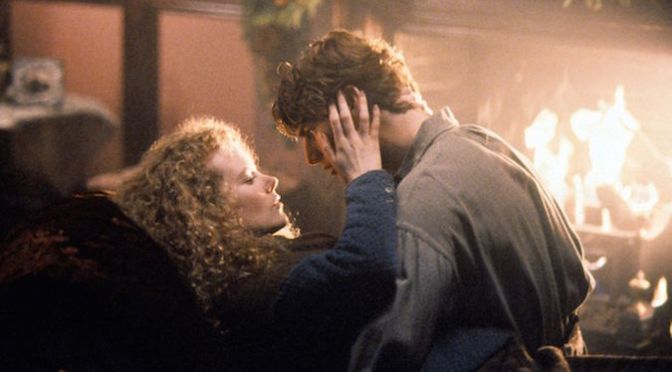
We’ve charted a course backwards through movie time and discovered Far and Away to be one of the earliest and most egregious offenders. If not patient zero per se, Far and Away is effectively worse than the index case for presenting itself on the largest possible stage and thus spreading the Awful Irish Accent disease much more quickly. Prior to Far and Away a shitty accent was a shitty accent. After Far and Away, a shitty accent became a perfectly acceptable feature of a major blockbuster because Ron Howard and Tom Cruise and Nicole Kidman couldn’t be bothered to do better. Why should anyone else?

Continue reading Far and Away (1992)

Tootsie (1982)

Tootsie was a milestone for Sydney Pollack for a variety of reasons, some of which were trumpeted by adoring critics in 1982 and some of which took the ensuing decades to gestate. Today, with the benefit of Pollack’s entire career in retrospect, Tootsie holds strong as one of the director’s finest achievements. It is arguably his masterpiece, sure, but perhaps more significantly it is arguably his first masterpiece. That’s important for a film about a struggling actor finally doing what is necessary to create his first unadulterated success, finally testing himself to a limit he’d never considered before, being rewarded for it, and unexpectedly touching other lives along the way.

Of course “masterpiece” is relative. Three Days of the Condor might be a masterpiece, as might Jeremiah Johnson to a somewhat lesser extent. One of Pollack’s unsung achievements is The Electric Horseman, not a masterpiece in and of itself but masterful at times nonetheless. Saying one is better or worse than the other is uninteresting. What’s truly fascinating — and what makes Pollack one of the greatest American directors of his time — is the clear way in which elements of those earlier films come together in collaboration on Tootsie. Consider the most basic triumphs of each of those three films: Condor was unrelenting from start to finish, Jeremiah hung itself on the power of a single actor, and Horseman was simultaneously a comedy and a tragedy.

Continue reading Tootsie (1982)

Christine (1983)

Looking back now, it’s almost hard to believe that John Carpenter’s career was in such a rough state back in 1983 that he needed to take on a project like Christine just to keep it afloat.

Carpenter was coming off The Thing, which while rightfully regarded now as one of the best horror films ever made, was a massive critical and financial bomb upon release. He needed his next film to turn a profit and find a larger audience or else, and at the time, no one commanded more attention in the horror genre than Stephen King. His popularity was so immense that production on Christine began before the novel was even published. When the film finally hit theaters in December 1983 — less than eight months after the novel’s release — it was already the third Stephen King film adaptation of that year, following Cujo and The Dead Zone, respectively.

Christine was by no means a passion project for Carpenter, and in the years since, he’s referred to it as his worst film. Strictly speaking, it’s kind of clear why: the premise is gimmicky and by the numbers, a total retread of some of King’s already better known works. In many ways, Christine is like a spiritual sequel to Carrie (1976), but for tortured teen boys.

Continue reading Christine (1983)

Ivan’s Childhood (1962)

No one is expected to be great at something at their first attempt. Especially not in the arts. When parents buy their child a violin, it’s almost a guarantee that they will spend the next month or so plugging their ears at the cacophonous sounds they will be hearing at least an hour a day. Filmmakers are not exempt of this concept. We’ve seen the first films of the likes of Quentin Tarantino and Martin Scorsese, and they’re not very good. Even the master Stanley Kubrick notoriously hated his first film Fear and Desire, going so far as to buy all prints of the film so no one could see it. However, every once in a while, we get someone who seems to have a complete understanding of their art in their first foray into it, like when Mozart first sat down at a piano and began placing notes on a ledger line. This is the case with the great Russian filmmaker Andrei Tarkovsky and his debut feature-film Ivan’s Childhood.

Ivan’s Childhood, sometimes known as My Name is Ivan, was made in 1962 and is a tale of a boy named Ivan who is used as a scout during World War II. It follows Ivan’s war-torn youth and the lives of the people around him as they all have to deal with the conditions this event puts them in. It is based on the short story “Ivan” by Vladimir Bogomolov. The film was, as previously mentioned, Andrei Tarkovsky’s first, astoundingly so. To get to the point, Ivan’s Childhood is a very beautiful film and although when it comes to Tarkovsky’s sadly small filmography, works like Stalker, Solaris, and Andrei Rublev are usually given the most significant attention (deservedly so, may I add), I believe Ivan’s Childhood is just as worthy of this praise and attention.

Continue reading Ivan’s Childhood (1962)

The Deer Hunter (1978)

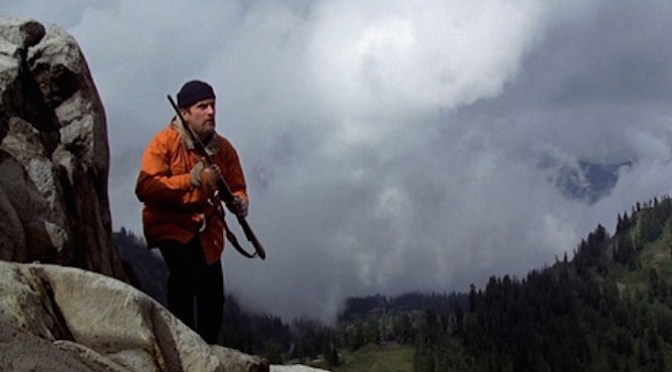
Bob De Niro always gets invited to the best weddings. Alongside all of the countless things young brides concern themselves with in the months leading up to their marriage — what if it rains? Can Trudy and Greta get along if we sit them together? Chocolate or vanilla? — there’s incredible solace to be had in the fact that De Niro will be there, in attendance and in approval. The guy clearly loves weddings. One of his first starring roles was in Brian De Palma’s The Wedding Party and one of his most recent was The Big Wedding, followed by the pre-wedding bachelor party shenanigans of Last Vegas; jury’s out on whether those movies are any good or not (wait — jury’s back — they’re not) but still, the weddings in those movies rock. Come on: Robin Williams is the presiding priest in The Big Wedding. This could be an all-divas-on-deck Kardashian wedding or some other unfathomably incestuous socialite caucus and you’d still attend if Robin Williams was the priest. So too would De Niro, apparently.

One of the better ones is the wedding from Goodfellas, in which the goodwill wishes come in a drunken torrent and the prerequisite for inclusion on the guestlist is being named Peter, Paul, or Marie. Just look at Henry and Karen — they’re perfect together. De Niro’s here, he’s having a pretty good time. But there’s something else on his mind, maybe, like whether the salami on that antipasto platter is fresh or whether he should just go ahead and whack Morrie Kessler already. Remember how he cut loose at Steven and Angela’s wedding down in Pennsylvania? That was a blast! He almost fought that Green Beret at the bar. Then he took his clothes off and ran down the street! Really, when we all invite De Niro to our weddings, the Hammered Brawling Run-Naked-Through-the-Streets De Niro is the one we want to RSVP.

Continue reading The Deer Hunter (1978)

The Thing (1982)

As stated in our review of The Fog, few directors have had their filmography subjected to as many pointless remakes as John Carpenter. The Thing might be the one that seems the most untouchable, the most sacred in its original form. Ironically, the 2011 Thing remake is probably the best Carpenter remake of them all. Still, the further one delves into the (re)making of the update, the more it just seems like doing Thing over again is a bad idea. Eric Newman, one of the producers on the 2011 film, had this to say about the development:

“I’d be the first to say no one should ever try to do Jaws again and I certainly wouldn’t want to see anyone remake The Exorcist…we really felt the same way about The Thing. It’s a great film. But once we realized there was a new story to tell, with the same characters and the same world, but from a very different point of view, we took it as a challenge.”

No, this isn’t going to be a rant about originality (or lack thereof) or a rant about practical effects (or lack thereof) in modern filmmaking — if you were to blindly click anywhere else on your screen right now you’d probably hit one of those. If anything, much as our rundown on Carpenter’s Escape from New York attempted to define “infodump”, what we’re really concerned with here is how far the term “remake” really stretches.

Continue reading The Thing (1982)

Thunderbolt and Lightfoot (1974)

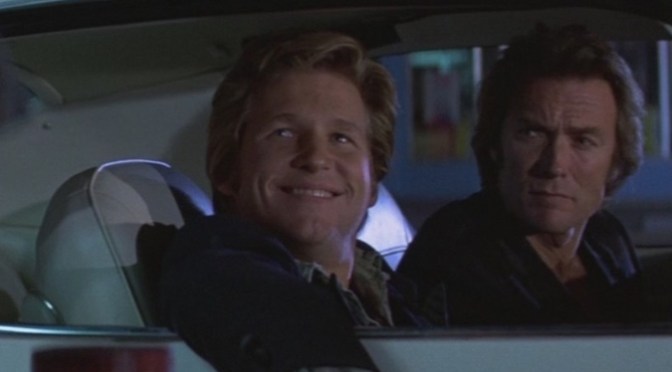
Progress — that’s what Thunderbolt and Lightfoot is about. The buddy dramedy is about more than that, of course, from women-chasing to bank-robbing to cross-dressing. Five years after Butch Cassidy and the Sundance Kid, Clint Eastwood’s stoic Thunderbolt and Jeff Bridges’ anything-but-stoic Lightfoot came closer to capturing the same verve and tragedy of American rebelliousness than most films in the ensuing forty years. It’s part road flick, part heist flick, part character study. In the simplest sense Thunderbolt and Lightfoot is a drive-in movie, complete with laughs and adventure and car chases and a few explosions for good measure; in a more complex light Michael Cimino’s directorial debut yearns for the American Dream, for satisfaction greater than that offered by everyday life, for an accomplishment, for progress.

The comparison with George Roy Hill’s Butch Cassidy isn’t borne entirely of the fact that the protagonists are a pair of BFF criminals, and Lightfoot even takes direct issue with that label — “criminals” — before the final credits roll. Butch and Sundance are battling against the death of the West they love, the West in which they thrive. Bigger guns, bigger armies, bigger bank vaults — the world’s changing whether they like it or not. Still, it’s their own perception of the world that really matters, especially in Butch’s case. “I’ve got vision,” he tells the Kid, “and the rest of the world needs bifocals.”

Continue reading Thunderbolt and Lightfoot (1974)

Escape from New York (1981)

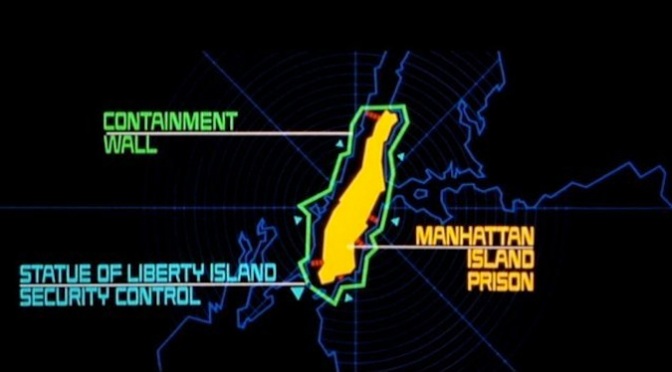
Welcome to A Review of John Carpenter’s Escape from New York, or: A History of the Cinematic Infodump.

As far as narrative exposition goes, the infodump is traditionally one of the more crass methods of conveying the ways in which the world of the film differs from the world of…the world. Here Is Everything You Need To Know, the infodump says before the film gets going. Preludes, prologues, epigraphs, whatever. Presumably, the more akin to “reality” a film pretends to be, the less exposition it should have — and, yeah, even though that’s definitely not always true, it’s science fiction and fantasy that demand large chunks of information be delivered as inconspicuously and efficiently as possible. That way we can get to enjoying the movie without wondering what the heck a Na’vi is, or a replicant, or why legions of Things That Aren’t Humans are fighting over this little gold ring, or why we should care about any of that at all.

Some films elect to disseminate the good stuff throughout the course of the film, like Inception or certain Star Wars installments (looking at you, midichlorians…I mean I’m not actually looking at you, because you’re so small, which I know because Qui-Gon told me mid-movie, but I’m looking in your direction). Escape from New York, the 1981 John Carpenter jaunt destined to become a cult classic and eventual ostensible subject of this very article, certainly has plenty of exposition peppered throughout the film in this fashion.

Continue reading Escape from New York (1981)