Category Archives: Film Review

Awakenings (1990)

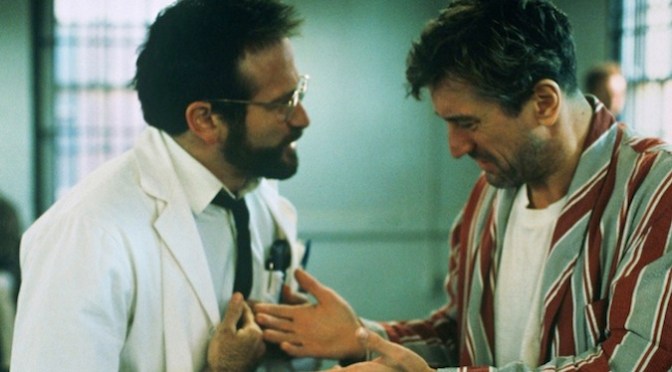
Penny Marshall’s Awakenings is most superficially compared to Barry Levinson’s Rain Man for a few understandable reasons, not least of which being the two films feature a famous lead actor playing a character with a severe medical affliction. The two films also came out within two years of each other, and some may suspect Rain Man‘s success to have influenced Awakenings.

Starring Robin Williams as Dr. Malcolm Sayer (an analogue for real-life Dr. Oliver Sacks, whose memoir provided the basis for Awakenings) and Robert De Niro as mostly-catatonic patient Leonard, the film follows both men as they experience a breakthrough with regards to Leonard’s condition. Sayer’s intuition leads to the application of a new drug which brings Leonard and other patients of the ward out of catatonia and into a clearer existence, “awakened” to the world. The continued treatment of Leonard proves a heartbreaking experience for Dr. Sayer.

Continue reading Awakenings (1990)

One Hour Photo (2002)

The eyes of Sy Parrish deserve a spot alongside the eyes of Dr. T.J. Eckleburg in the hallowed Eye Symbolism Hall of Fame. Over the course of One Hour Photo we become increasingly aware of the fact that Sy, lonely photo tech at the local SavMart, is always peering into other lives, always consuming with his gaze, always watching. His eyes are obviously as much a part of his “hunting” arsenal as his camera – but they also provide a look back the other way into Sy’s dark and tortured soul.

Robin Williams is brilliant with dramatic material (see Awakenings, Dead Poets Society, Good Will Hunting, etc.), but the actor on display in One Hour Photo is a being unlike anything else in the extensive Robin Williams filmography. Sy the Photo Guy is a creep sure enough, a stalker of the first degree, and with a guy as manic and riffy and fantastically off-the-wall as Williams in the role you’d think Sy would be likewise larger-than-life. Not so. The opposite is in fact true – Sy is impossibly withdrawn, deadly quiet, suspiciously reserved as he observes and interacts with a couple and their son whenever they get their photos developed. The fact that we know Williams as a massive screen presence only makes the silences of this turn more unsettling.

And director Mark Romanek deserves as much credit for that as Williams, because the entirety of One Hour Photo is a spare but deceptively rich character study. Romanek has stuck mainly to music videos (and made the greatest music video of all time, Johnny Cash’s “Hurt”) but will hopefully create a film as quality as this in the near future. It’s Romanek’s direction and framing that calls attention to the deeper aspects of Sy’s psyche, in particular through a few key shots and sequences concerning the watchful eyes of Sy Parrish.

Continue reading One Hour Photo (2002)

The Drop (2014)

The Drop is a film borne along by performances rather than by story or visual gusto or sharp dialogue or anything else. The late James Gandolfini gives a very James Gandolfini-like turn as mobster-minded Cousin Marv, which is to say that he’s still an immensely enjoyable actor even in a typecast role. Tom Hardy stars as Bob Saginowski, bartender at Marv’s place and occasional collaborator in things less legal. Marv’s place is a drop bar, where mafiosos and mafioso wannabes from across Brooklyn launder their dirty money on any given night. The Drop starts with a robbery of the bar, which leads to complications for Bob’s otherwise straightforward life.

Watching The Drop certainly isn’t akin to watching paint dry, but for the first couple acts it’s pretty close to watching Tom Hardy watch paint dry. Bob finds a battered puppy whimpering from a trashcan outside a house near the bar and – oh, gee – damn near immediately starts a relationship with the girl who lives there (played by Noomi Rapace). A few double crosses later and the dog turns out to be one of the links in the robbery case, because of course it is. This predictability continues through to the very end when Bob is revealed to be a lot less timid than he appears, because of course he is.

Hardy, as usual, is commanding. So Bob’s character is predictable, yes, predictably one of those potential secret-holding phantom menaces from movies like A History of Violence, but it works in The Drop‘s favor that Hardy plays that type of character so well. He’s more fascinating as the simmering powderkeg than as the explosion, more spellbinding as the lion in the cage, which is exactly what Bob appears to be and indeed does end up being at the end. Granted, Hardy is phenomenal when playing characters that are fully unleashed (as in Bronson) and fully restrained (as in Locke), but Bob Saginowski isn’t written anywhere near as well as Hardy’s most memorable characters. It’s Hardy holding the screen, not Bob.

Gandolfini, likewise, is playing a snapshot of Tony Soprano but playing it well. Dennis Lehane has written some great crime novels that have been translated to successful films like Mystic River, and The Drop certainly has his streetwise vibe about it. He fails to do anything besides check the major boxes, though, and it’s the actors who have to make up for the inevitable sluggishness one experiences when retrodding familiar material.

The Drop is worth watching if you’re sick of your Netflix queue, if you’re bored on a transnational flight, or if you just enjoy Hardy and/or Gandolfini. There’s little doubt that you will enjoy them here, but past that The Drop is hard pressed to offer anything else.

Filth (2013)

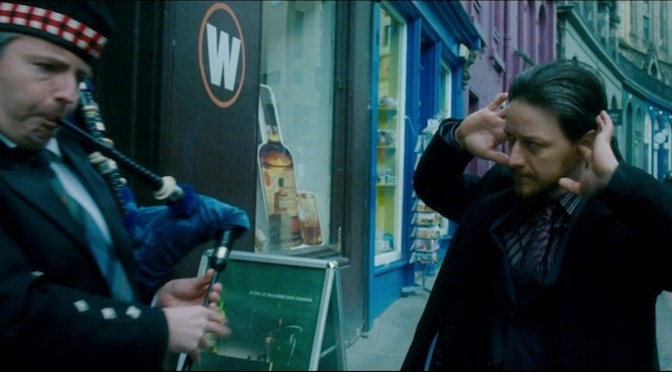
James McAvoy is a good actor. He’s usually playing the good guy, from the excellent biopic The Last King of Scotland to the only-slightly-less-realistic (ahem) X-Men prequels, but in Filth he gets his chance to ditch the morals (who needs ’em?) and become the straight-up despicable Scotland detective Bruce Robertson. Bruce, drug-addled and sex-addicted liar extraordinaire, will do pretty much anything to get a promotion at his job. And McAvoy relishes in the ceilingless grandeur of such a character – but without him Filth isn’t much for originality.

There are two kinds of twist endings in film: those that are truly original and those that are a rehash of Fight Club. In all seriousness, the protagonist-repressing-important-plot-points “twist” is officially tired as hell, and in Filth the rote deployment in Act Three is borderline maddening. The relative believability of the effectiveness of Bruce’s manipulations throughout Filth is what makes them so revolting. Bruce starts hallucinating more and more, and this also lends an interesting angle to his uncivilized crusade – is he as smart as he thinks? Is he as smart as we think? Or has everyone been on to him the entire time? But, oh, wait, nope – the hallucinations actually mean something more, something deep, man. Bruce is deep because he has a Tyler Durden-esque trauma trigger. Get it?

So: ditch the stupid ending and the would-be aha! moments, and Filth is pretty great in a disgusting sort of way. It’s essentially Wolf of Wall Street for McAvoy, a time to go absolutely bonkers and meanwhile find some sort of way to make Bruce somewhat likable, even if it’s just a few percent out of the larger character pie. He does just that, and perhaps it’s the fact that Bruce has some sort of a mission (to get the promotion) that it’s not hard to go along with him on the disgusting rollercoaster of drinking and smoking and sexing and snorting and sexing some more. He has a goal and a lack of morality means he can achieve the goal in any possible way, and it’s fun to watch the dominoes fall uselessly before him.

But the mission seemingly dries up as the all-hallowed twist approaches, and eventually the promotion is given away and Bruce is just doing insane shit because he can. The hope may have been that the twist would carry the momentum through to the end after the aforementioned mission is moot. It doesn’t. McAvoy is likable as Bruce because he goes all the way for the character and he’s good at what he does; the insistence on writing something deeper into his character that manifests itself as a freakin’ hallucination very nearly undoes all of his hard work, and very nearly forces him to stand in line with every other protagonist with the exact same affliction rather than standing out from the crowd.

Filth is worth it for the lead performance alone, and really the final letdown is only so disappointing because McAvoy is so spectacular. Guys like Jamie Bell are in there, too, but are pushed aside. It’s The McAvoy Show. More films would probably benefit from being The McAvoy Show.

Youth Without Youth (2007)

Imagine Christopher Nolan or Baz Luhrmann or Roland Emmerich or any other director unwilling to retreat from the staid comfort of big-budget blockbuster filmmaking, and imagine they break their mold for a moment and make a tiny, heartfelt, indie-feel flick with no explosions or battles or tidal waves. Good. Now imagine they do that a second time, and a third, and imagine they do it so many more times that that becomes their new thing, and a return to blockbusters would seem odd. Basically, that’s what Francis Ford Coppola did.

This is by no means a bad thing! Interesting, though, that the guy behind The Godfather and Apocalypse Now would eventually be making movies so subtle that you missed their release entirely. Youth Without Youth is one of those, or at least it was for me, despite an interesting premise and noticeable names beside the Starring and Directed By credits. The film came and went without much hubbub.

Tim Roth plays Dominic, an aging Romanian linguist who has spent his entire life pursuing the origin of all language and “the origin of human consciousness”, denoted at one point in the film as the all-enviable “inarticulate moment”. Despairing at the inevitable failure of his quest, Dominic means to commit suicide when he is suddenly struck by lightning. As his wounds heal Dominic finds that he has grown inexplicably younger, and as World War II dawns it seems Dominic has an opportunity to relive his life and complete his goal.

Sounds ambitious, no? But didn’t we just get through establishing this as a small, blip-like effort from an otherwise giant of Hollywood? Is it big or is it small? We must decide quickly.

We really mustn’t though, or we can’t, or couldn’t if we wanted to. Youth Without Youth is a highly strange movie, not one that entirely makes sense, not one that’s even entirely likable on first pass. It is, however, uniquely both a grand-scale global epic and an intimate and thought-provoking character study. On the one hand Youth Without Youth spans a century and captures much of the fear and frustration holding Europe hostage before and during and after the war; it’s been reported that Coppola filmed over 170 hours of footage for the film, ultimately distilled into a mere 2. For those absent mathematical inclinations, that’s 168 hours of film gone straight to the landfill. That’s massive.

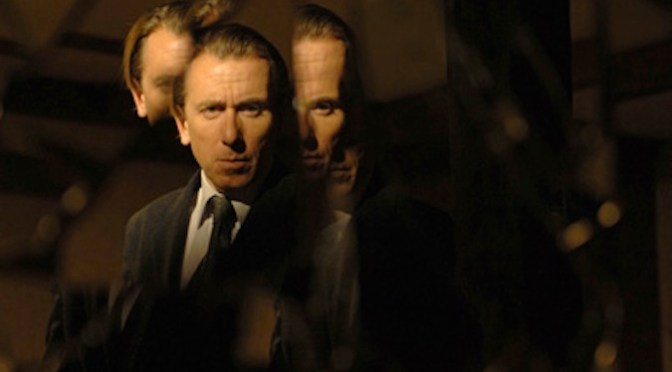
On the other hand, the entire film really is just one guy. There are other characters, yes, but Tim Roth carries Youth Without Youth on his back. I wasn’t paying attention to whether he appeared in every single frame of the film, by my recollection is that he very nearly did. Regardless, through the frequent use of mirrors and actual walking talking doppelgängers, there are plenty of frames in which Tim Roth appears twice or three times. The film should more than satisfy any obsessive Tim Roth stalkers, at least until Coppola gets around to Youth Without Youth 2: The Other 168 Hours.

Thankfully Roth really is a great actor, and not one who gets as many starring roles as he should. Enigmatic doesn’t begin to describe his Dominic, and in the end he’s the only thing that makes Youth Without Youth work. You could easily write this film off as pretentious crap, but that kind of thing doesn’t really concern me. It’s interesting enough to watch Coppola craft something in this way on a decidedly smaller stage than anything he made in his Godfather heyday, and ruminations on “what it all meant” are like a bonus round. If a glimpse into a what a truly honest filmmaker looks like is what makes you sit down to Youth Without Youth, then I’d say that’s good enough for now. At least until Youth Without 2th.

Lucy (2014)

Lucy is a pretty ambitious girl. Granted, her ambition only comes after massive quantities of a powerful superdrug allow her the use of previously uncharted regions of her brain, which in turn morphs her not only into the smartest kid in school but into the most powerful being in the history of the universe. Her quest to use 100% of her brain’s capacity and thus unlock the secrets of life sends her on a mission around the globe – and beyond.

So that’s the plot of Lucy, but don’t worry if it’s still a little unclear – Morgan Freeman is here to explain everything with some hand-holding exposition throughout the first acts of the movie. Still iffy? Never fear. A feature-length biology lesson ensues, emphasis heavy on the first part of “science-fiction” while largely disregarding the second part.

I’ll say that Lucy is a hell of a lot better than the trailers make it look. There’s a good filmmaker somewhere inside Luc Besson and Lucy is a more grounded, “realistic” kind of sci-fi flick than the gonzo Fifth Element, which of course isn’t saying very much about realism. The believability factor hovers around 5% when Lucy herself crosses 20% brain capacity, but someone in the peanut gallery at the Morgan Freeman lecture already said that we’re just simply hypothesizing here, so roll with it. The hypothesizing has fun parts, and Besson has a nearly-sure hand for long and exciting stretches.

The problems are probably inherent to the story, then. For instance: how can the stakes go higher as the movie progresses if Lucy has more and more control of her world? Okay, she’s dying at an accelerated rate, and okay, there’s a policeman along for the ride in order to highlight the fact that there is danger here. But a mid-film car chase (which happens to be pretty thrilling and inventive as far as car chases go) still lacks a major something in the believability department. There is no chance that Lucy will lose control of the car, and thus instead of engaging in the chase and flinching every time the car veers narrowly we’re really just waiting for the chase to end.

We also don’t see enough (or any at all) of the actual Lucy, i.e. the pre-superhuman person, i.e. the character that we could actually feel for. Zombie computer-brain Lucy, we got. Johansson pretty much nails the role, but it would have been nice to have something a little more relatable to latch on to at the very beginning of the film.

And what else is there to say? The stakes, again, are basement-low by the ersatz climax of Lucy. Choi Min-sik, South Korean actor known primarily for Oldboy, is in the villain role here and is his usual spellbinding self – but unless you’re a massive fan of his (like I am) or a Luc Besson completist (those exist?) or a bored teen looking for a Transcendence-level sci-fi flick, Lucy just doesn’t have a whole lot else to say. That may be a bit harsh, but given the galaxy-sized ambition of both Lucy the film and of Lucy herself, there’s certainly a whole lot of territory left to conquer.

A Most Wanted Man (2014)

There’s no doubt that the late Philip Seymour Hoffman was one of the most gifted American actors of our generation. The Oscar winner for Capote was equally at home playing lovable rogues and despicable villains, taking increasingly challenging roles as his career went on. One of his final complete roles was that of Günther Bachmann in Anton Corbijn’s A Most Wanted Man, and Hoffman is his usual dedicated self as the Hamburg-based anti-terrorism agent.

Unfortunately A Most Wanted Man is a colossally slow and unexciting film, for the most part. Hoffman is superbly sluggish as the unhappy and overworked Bachmann; Grigori Dobrygin is likewise effective, if a bit underwritten, in the part of the illegal migrant Issa Karpov; Willem Dafoe seems present simply to be a famous face; and Rachel McAdams, beautiful though she is, remains utterly unconvincing as a foreigner. The plot of the film revolves around Bachmann’s maneuvering of the players involved in the appearance of the young Karpov in Hamburg, as Bachmann’s colleagues suspect him to be a credible threat to national security.

The film starts on a promising note. The first shot is nearly brilliant, telling a simple story without giving away any details at all. Again, Hoffman is thoroughly great – one reviewer noted a resemblance between Bachmann and a hungover panda, a sentiment which could not be more on the mark. There is a long shot midway through the film of Bachmann walking from a helicopter pad into a building, and the effort the guy takes just to keep his pants from falling down tells so much about his character. He can’t manage to keep himself dressed, and yet he’s pretty damn good at protecting his city from terrorists.

So the fault I find with A Most Wanted Man isn’t at all with Hoffman. He’s expected to do what Daniel Day-Lewis did for Lincoln, another long politically-driven film devoid of anything remotely resembling an action sequence. The problem is that Anton Corbijn is a far cry from Steven Spielberg, and A Most Wanted Man really drags for long stretches at a time. The opening scenes are set to quick string riffs you’d find in a Bourne movie, and the stage is set for that spy action chase scene…which never happens. I’m all for a movie that can carry itself without a fight scene, but the pace has to support such a thing by finding “action” elsewhere.

The film also falls to multiple spy-movie cliches, including the obligatory “Do you ever ask yourself why it is we do what we do?” question posed by the main character. Do you ever ask yourself why every spy movie feels the need to delve into this life-from-the-shadows routine? The reply, which could have turned the cliche on its head, ends up being even more of a cliche: “To make the world a safer place. Isn’t that enough?” The characters then repeat this near the climax of the film, because, you know, someone thought that was poignant.

Ultimately, in spite of a fantastic turn from the indomitable Hoffman, the sense of urgency just isn’t present in A Most Wanted Man. Perhaps if the film had been titled A Somewhat Wanted Man or You Should Really Only See This for Philip Seymour Hoffman, at least there’d be some truth in advertising to fall back on.

Torremolinos 73 (2003)

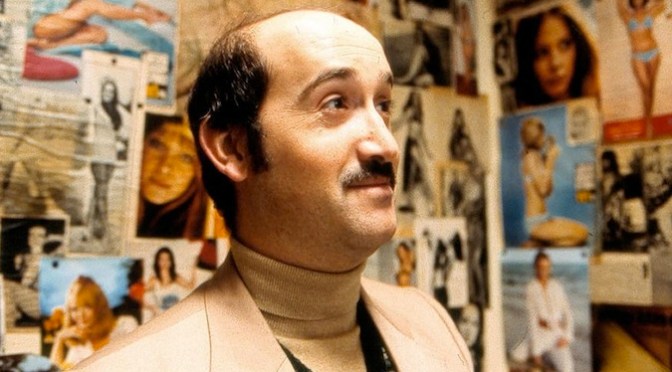
When flailing door-to-door encyclopedia salesman Alfredo learns his position is being terminated, he and his wife Carmen are willing to do pretty much anything to keep their meager income from petering out completely. Carmen wants desperately to have a baby and Alfredo basically just wants to keep his wife (and his landlady) happy. The solution? Take up an offer to produce “educational” tapes detailing the reproductive habits of Spanish couples.

Needless to say, hilarity ensues. Thankfully, the hilarity of Torremolinos 73 isn’t your run-of-the-mill oh-no-someone-found-our-sex-tape shenanigans. The romps that the couple film become increasingly elaborate, the landlady is paid but mortified, Carmen becomes a sex symbol throughout Scandinavia – and Alfredo? Alfredo becomes infatuated with cinema. He’s filming his incredibly beautiful sexy wife in every skimpy uniform imaginable and it’s the filming aspect of it that fascinates him.

Javier Cámara and Candela Peña are fantastic as the two leads, which aren’t overly complex characters but are still more layered than any to be found in a typical American comedy. The 1973 setting of the film also gives Torremolinos 73 some unexpected flair. All in all, the overall aesthetic and comedic arc of the movie are quite obviously more important to director Pablo Berger than the quick (and often cheap) laughs.

The funniest parts stem from Alfredo’s fascination with Ingmar Bergman as his own cinematic techniques become increasingly mature. Picture a softcore porno flick filmed with as much care as The Seventh Seal – complete with a young Mads Mikkelsen in the black-garbed role of Death himself – and you’ll have an idea of what Alfredo’s directorial debut looks like.

Torremolinos 73 is small and simple and enjoyable, outlandish enough in the premise alone without ever needing to rise to the absurd heights it easily could. As stated elsewhere, the Netflix offerings for modern foreign films can be hit-or-miss; while Torremolinos 73 isn’t breaking any new ground or even good for a true bust-up laugh, it’ll definitely put a smile on your face.

Half Moon Street (1986)

Half Moon Street is one of those movies that just doesn’t have a whole lot to say, despite the tendency to delve into “timely” issues throughout the first act. Sorta-kinda based on the Paul Theroux novel Doctor Slaughter, the film stars Sigourney Weaver as an American expatriate with a bright future. Soon, Weaver’s Lauren Slaughter becomes involved with a high-price escort service and a British diplomat played by Michael Caine.

Let’s get this out of the way and state that Half Moon Street is pretty boring. Wikipedia marks the film an “erotic thriller”; it is neither. In fact, the most thrilling parts end up losing all of their magic during the absurdly expository finale, which presents itself as a twist ending but doesn’t begin to pack the punch that it hopes to. The “eroticism”, I suppose, is relative to the viewer, and I certainly understand if some people find a big-haired mid-80s Weaver lecturing airily on Anglo-Arab foreign policy a total turn-on.

Back to the “thriller” part: the opening of the film shows an unidentified figure leafing through videotapes of Londoners, a short scene which is called upon later when Lauren receives a videotape in her mail. We are consistently shown the inside of Lauren’s apartment and shown outings with her male callers from a distance, and very often the camera pans lazily off into an empty part of the room. Increasingly, though, these shots become more and more foreboding. A shot from behind a bush on a golf course not only gives the clear impression that someone is watching Lauren, but that we are in the shoes of the voyeur. We again see the unidentified figure recording Lauren, taping her conversations with Caine’s character, and the longer this goes on without an answer the more interesting it gets.

But again, the ending pretty much blows it. It’s political espionage, of course, and they’re just trying to kill Caine’s character and his reputation (and they make a specific point of stating that they’ll kill both, which seems unnecessary…if you kill the man’s reputation, do you really need to actually kill the man?). The mysterious portions of Half Moon Street are better off left that way, because once they’re solved the entire thing is an utter letdown.

Unless you’re in for a few interesting cameos (Vincent Lindon!) or the impossible sexiness of Weaver’s baggy trench coat and Caine’s baggy mustache, Half Moon Street is one you can skip.

Nighthawks (1981)

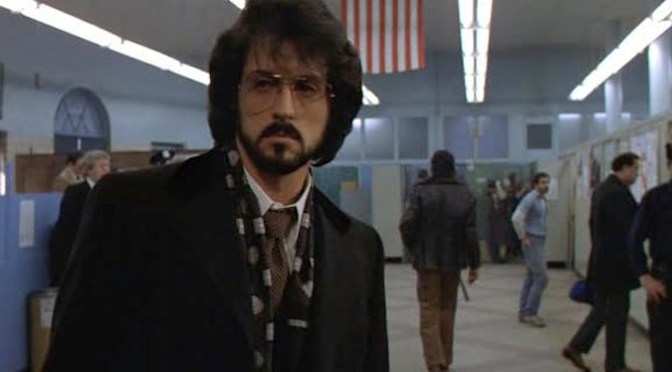
Oh man! If you’re looking for a New York cop movie that absolutely screams “1980s”, you’ve found it in Nighthawks. The hair! The outfits! The slap bass-laden soundtrack! The lack of anything resembling actual police protocol! The Billy Dee Williams! The hair!

Sylvester Stallone stars as macho cop DaSilva, who spends his nights catching the bad guys “his own way”. He’s smart, say his superiors, but he’s got an authority problem. Shocking, says anyone watching the movie. Absolutely shocking. When famed and feared foreign terrorist Wulfgar makes landfall in the United States with a mind to kill UN delegates in NYC, it’s DaSilva (of course) who somehow gets put on the case.

Frankly, Rutger Hauer as Wulfgar is the only thing that saves Nighthawks from being 100% trash, and in fact his portions of the film are really pretty great. He’s having an absolute blast with the role, a perfectly evil-looking actor in a perfectly evil character, and his scenes seem totally at odds with the stupid “detective work” scenes (note that quoted term is used lightly). When Hauer’s Wulfgar takes hostages on the Roosevelt Island Tramway and parades around the car amidst the startled passengers, telling them in a menacing tone to “Back up against the window!” as he brandishes his gun, he’s sure to add to one man in particular, “I like your hat!”

Considering Blade Runner came a year later and The Hitcher followed in 1986, Rutger Hauer was basically the best villain of the 1980s. The way he slithers through a locked door in the final scene of Nighthawks is nothing short of terrifying.

Frustrating, then, that the police work that ultimately brings him down seems devised by an adolescent. The procedure of catching the terrorist quite literally consists of agreeing to the ludicrous claim that the killer “is known to frequent night clubs” – as if shooting the shit with the mass murderer in between tequila shots were a common occurrence – and then happening upon the one club in the entirety of New York City in which Wulfgar happens to be jamming out.

Meanwhile, there’s also a half-assed romance subplot for your viewing pleasure. An imminent terrorist threat in the heart of NYC is a big deal, but DaSilva’s gotta think about his own needs, too.

Once you accept the horrendous script and learn to kind of gloss over the macho bullshit at the precinct, Nighthawks is certainly enjoyable enough as a mindless action movie. There’s probably a reason Bruce Malmuth only directed a few other projects, though, and the directing here would be forgettable if it wasn’t so glaringly bad. Now scroll back up and bask in that glorious lion’s mane – if anyone on the crew deserved to use Nighthawks as a platform to fame and fortune, it’s the hair stylist.