
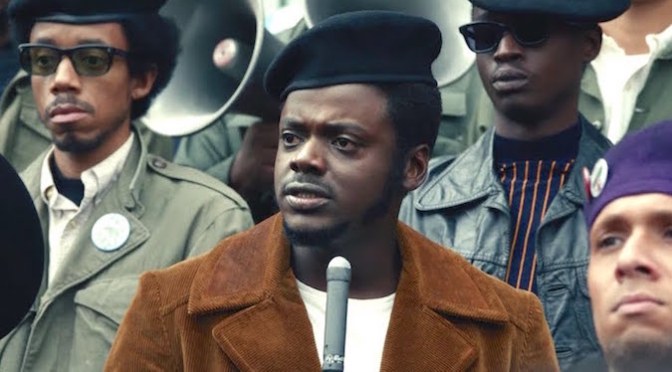
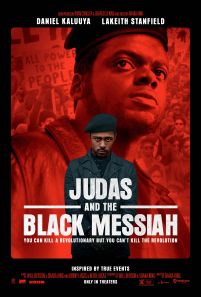
 The trailer for Judas and the Black Messiah made me doubt how effective the film would actually be. Not because it looked bad, mind you, or uninteresting in any way. But I had flashes to Man of Steel, which lured me to the cinema with a stunning trailer and then turned out to be a soupy mess. Same for Only God Forgives, which had a bangin’ trailer — I remember saying the words “looks amazing” to a friend — and ultimately had about as much substance as the two-minute teaser itself. Well, fool me twice. Trepidation filled the air as the Sundance premiere of Judas and the Black Messiah began, because the first glimpse I’d had of the film was this rollicking hype-train of a masterful trailer:
Shaka King’s first major studio feature, thankfully, is indeed a strong and energetic biopic that doesn’t at all renege on the promise of that trailer. Messiah stars Daniel Kaluuya as Fred Hampton, Chairman of the Illinois Black Panther Party, and focuses on FBI efforts to suppress and ultimately silence Hampton as he gains more and more popularity nationwide. It’s a long overdue portrayal of a significant figure in American history; before Kelvin Harrison, Jr. played Hampton in a bit part in this past year’s Trail of the Chicago 7, you have to go back to 1999 to find the only other instance of Hampton in another film or TV show (it’s another bit part in the miniseries The ’60s, which is mostly about hippies).
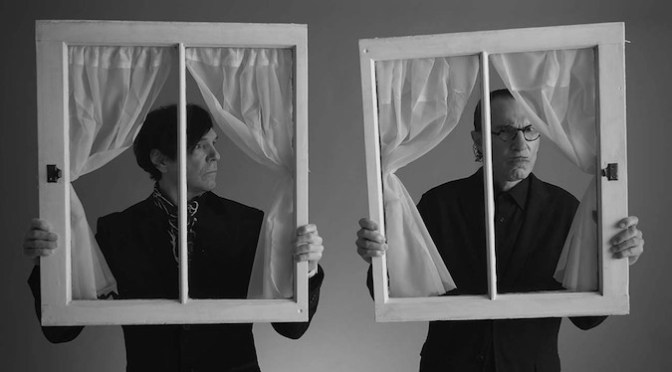

 There’s an intentional obscurity at the start of Mass, the debut feature from writer/director Fran Kranz, that instantly placed it amongst the most intriguing premieres at this year’s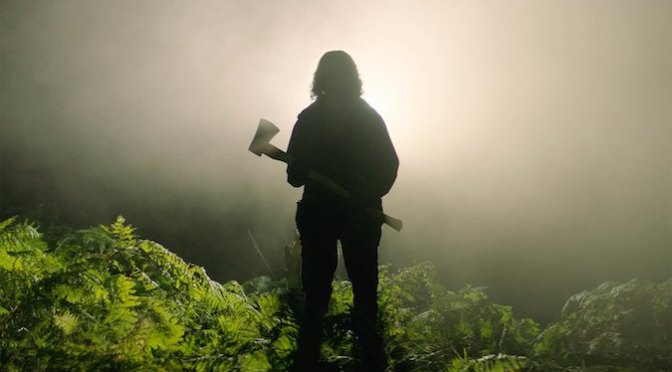

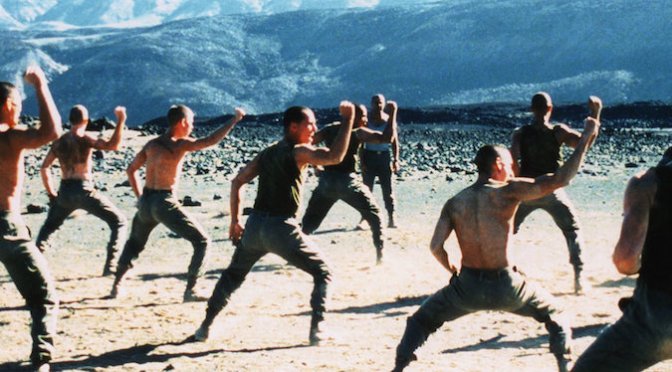
 War movies don’t vary much. Customarily, this genre has a singular focus: examination of an individual (a soldier, usually) inside of a system (the military, usually). Wherever the film goes from there, it can typically still be traced back to that configuration of a singular unit as part of the greater whole. The individual is entrenched — to nick a military phrase — within the system, even if the premise of the film is to have that character reconcile with or refute the system itself. And in some ways this is technically true of Beau travail, the 1999 drama by Claire Denis, as it follows young soldiers training inside the construct of the French Foreign Legion. But the treatment of those individuals and that system is so unlike that which is described above, so unique in its presentation, that Beau travail can hardly be called a war film at all.
 As a White Dude with a full deck of privilege and a shitload of unlearning to do when it comes to an effort at anti-racism, I acknowledge that there’s always going to be imperfection, at best, in my understanding of the Black Experience. Too many people like me use that as an excuse to not even try, of course, preferring the comfort of a bubble in which ignoring racism is hardly ever recognized in and of itself as a racist act. As a White Dude, part of me resides inextricably in this bubble regardless of my physical location. There’s quite an echo in here. And while I do recognize that ignoring racism is itself a contribution to racism — of course it is — I’m still undoubtedly one of those unthinking contributors. And admitting this puts me no closer to our aforementioned understanding. Nine out of ten attempts to place myself outside of the bubble are too weak to even perforate it, and the tenth is a noble failure.
 “Deaf culture is too big to represent,” says Sound of Metal writer/director Darius Marder. He obviously refers to being represented in its entirety, something no culture can hope to be endowed with over the course of a short two-hour film. That comment comes from the Q&A tied to the
 Lee Isaac Chung’s Minari follows the Yi Family, a Korean quartet immigrated to the United States in the 1980s. They settle in California at first, but Jacob (Steven Yuen) grows impatient with city life. He’s desirous of an expanse of land to call his own, of a family farm, of that elusive thing people sometimes call the American Dream. So he uproots the family and moves to rural Arkansas, where fifty acres of the best dirt in America await. His wife Monica (Han Ye-ri) is far more pragmatic, and she has trouble envisioning the farm of the future behind the dilapidated mobile home of the present. Meanwhile, their children David and Anne (Alan Kim and Noel Kate Cho) are at first simply along for the ride, fascinated by the fact that they now live in a house that has wheels.
 Motion State Review