1492: Conquest of Paradise (1992)

I think of Ridley Scott as a badass. Chalk it up to me being a little tyke when Gladiator and Black Hawk Down came out, or to his most famous films being the sleek and surefooted sci-fi flicks Alien and Blade Runner. I watched his most recent film Exodus: Gods and Kings, in which Moses is played by Batman, and the reaction was more or less the same: this dude just made the Bible badass. Let’s be clear in stating that Exodus is a pretty poor effort, and so I don’t mean “badass” as a full compliment. But that sleekness and that direct, immediate pacing holding a healthy amount of action is what I associate Scott with, and if nothing else Exodus certainly was a spectacle.

Then I watched 1492: Conquest of Paradise. Gérard Depardieu plays Christopher Columbus, discoverer of America, fighting to explore what he knows to exist past the European horizon. The film opens in 1490 or so, as Columbus gathers a head of steam for his royally-financed expedition — the always-superb Armand Assante plays the nobleman Sanchez, and Sigourney Weaver plays Queen Isabel. Columbus pushes for his dream. Sanchez and Co. conspire to gain from the ambition of the explorer, and there’s an overwhelming sense in this opening half-hour that — for lack of a better descriptor — shit is about to go down. Maybe Sanchez will plant a spy on the Santa Maria, or maybe he’ll do something even more dastardly.

Continue reading 1492: Conquest of Paradise (1992)

The Man in the High Castle 1.1

This isn’t the first time that Amazon’s pilot season — which sees the simultaneous launch of a dozen or so opening episodes of a variety of new shows — has been mostly a waste of time. Most of these shows don’t deserve a second episode. Finding The Man in the High Castle, the diamond in this season’s rough, might not be an altogether uncommon occurrence either; Amazon’s Transparent just took home a fistful of Golden Globes, so the streaming service is slowly catching up to Netflix when it comes to quality series.

But make no mistake: The Man in the High Castle is anything but common. Like any great what if? story, only one thing has been changed here. This could easily be our world, the exact one we live in today, if not for this one change; though the America of The Man in the High Castle is utterly unrecognizable, that revisionist tectonic shift was borne entirely of the initial tremor, the single change. That change, admittedly, asks the grandfather of all what ifs: what if the Nazis had won the war?

Continue reading The Man in the High Castle 1.1

American Sniper (2014)

Around the 30-minute mark of American Sniper there’s something that’s not quite a montage, not quite a self-contained series of events, not quite comfortable in that first half-hour of the film. Sniper Chris Kyle spots an insurgent in his scope and he takes him out. A few more lone insurrectionaries crop up, and Kyle fires again. Again. Again. It sounds like a montage, but director Clint Eastwood doesn’t let it play out as such. And it’s fairly quick, cutting from one shot to the next inside the space of a minute and a half. Still, though, there’s something brutal and cold and darkly affecting about this life-of-Kyle in 90 seconds, something that almost singlehandedly elevates American Sniper to the level of a modern classic war film.

I assumed that Sniper would be a lot like The Hurt Locker, judging from the trailers and a few reviews and my admittedly vague knowledge of Chris Kyle’s story. Sniper is a lot like Hurt Locker, to be sure, but it’s not exactly in the way I expected. The similarities, really, are resigned mostly to the aesthetic — and visually, they’re so similar that you might expect Kyle to peek through his scope and spot Will James strutting down the sandy street in his EOD blast suit.

Continue reading American Sniper (2014)

Prisoners (2013)

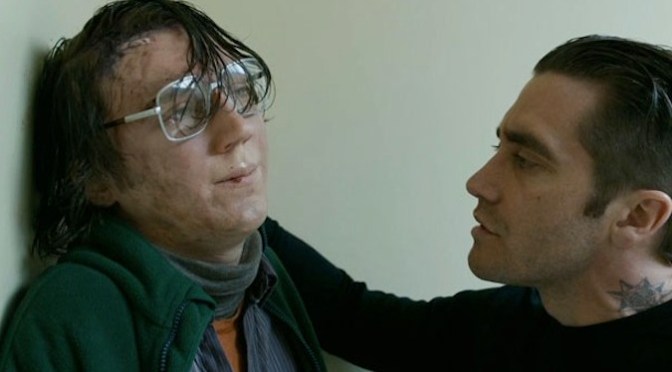
I’m not typically a genre purist. I don’t believe an artist should be constrained to single genres, and I have a great admiration for movies that blur the lines to create something fresh. There are two very different, but very good movies in Prisoners that, in this case, don’t exactly result in synergy. The first is about two families dealing with the disappearance of their daughters. It’s haunting, gut-wrenching, and hyper-realistic. To me, this is the stuff of reality. The second is about the mysterious detective trying to catch the abductor. It’s creepy, riveting, and grotesque. This is the stuff of crime thrillers. Frankly, each one would be nearly perfect on its own. But together, in the form of Prisoners, they feel like a cheap blow below the belt.

Anna’s parents, played by Hugh Jackman and Maria Bello, attend Thanksgiving dinner at Joy’s parents’, played by Terrence Howard and Viola Davis. When the two girls don’t return from playing outside, and it starts to rain, and a mysterious RV is spotted, the families go into panic mode. Days later, with the authorities on the case 24/7 and vigils being held for the missing girls, the families continue mourning and start resigning to the bad news that’s likely to come. But Keller Dover (Jackman) never really leaves panic mode. There was one suspect–the child-like, catatonic owner of the RV (Paul Dano)–but the cops had to let him go. So Keller does what any frustrated father who’s built like Wolverine would do and takes matters into his own hands. Next thing you know, he’s leading Terrence Howard into an abandoned apartment complex where the suspect is chained to a sink and badly beaten. Continue reading Prisoners (2013)

The Affair 1.6

The Affair took home a few surprise awards at the Golden Globes this past weekend, including Best Drama Series (beating out the likes of Game of Thrones and House of Cards) and a Best Actress trophy for Ruth Wilson. Dominic West was nominated as well, but lost out to Kevin Spacey for Cards. As a consolation prize (and because episode six was very much The Dominic West Show), this review will be very Noah-centric. You’re welcome, Dominic.

We catch up with Noah as his best friend Max visits him out in Montauk. They go drinking, clubbing, and guess who they meet during their night of revelry? I may have said this before, but Noah and Alison running into each other constantly just seems a bit contrived. This time, though, that aspect is at least partially left to the imagination. Noah plays it like he has no idea who Alison is, for the sake of appearances in front of family friend Max — but as Max’s taxi pulls away from the club later that night, Noah spins and scampers back up the stairs like a child on Christmas (in reverse) and promptly and passionately kisses Alison. So it could have been the case that this particular run-in wasn’t at all accidental, and Noah’s getting more and more bold in his fling. More importantly, West absolutely nails that giddy super-romantic childlike glee.

Continue reading The Affair 1.6

The Dark Knight Rises (2012)

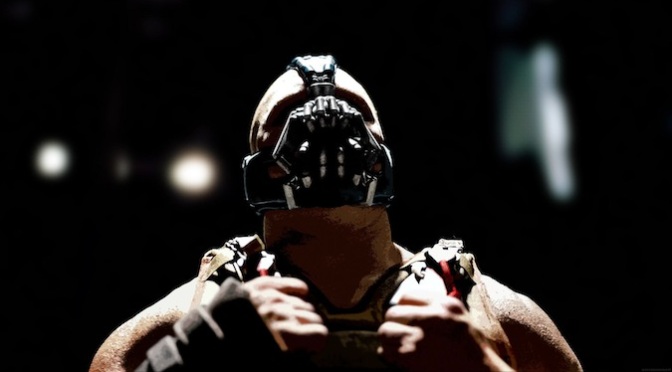
As with our recent article on Batman Begins, this won’t exactly be a traditional “review” of The Dark Knight Rises so much as an examination of the comics that directly inspired the film, previous iterations of the character on the big screen, and the things that Christopher Nolan chose to pinch and blend together from the two of those in order to give us a recognizable version of Cinema Batman. Some of the most legendary moments in Nolan’s trilogy are those of true originality, but it’s good to remember every now and then that Bruce Wayne has been around a hell of a lot longer than Nolan and Co.

And if we’re talking comics that influenced Nolan’s last Batfilm, the only one really worth mentioning is Knightfall. Yes, there are a whole host of comic arcs that can claim to be influences for parts of Rises — the No Man’s Land arc sees Gotham cordoned off from the rest of the world; the four-part story The Cult has a villain operating from the sewers; Bane is the explicit right-hand man of Ra’s al Ghul in 1999’s Bane of the Demon; and Frank Miller’s seminal The Dark Knight Returns has a similar premise and conclusion to Nolan’s Rises, which we’ll come back to in a moment.

Continue reading The Dark Knight Rises (2012)

Dear Zachary: A Letter to a Son About His Father (2008)

Movies have the power to foster a true emotional experience in its viewers at times while at other times movies can bring characters or people, though deceased, back to life. The documentary Dear Zachary reminds all of its viewers of this potential by making us feel both a deep connection to the Bagby family—on which the movie focuses—and unadulterated emotion towards their tragic situation.

Filmmaker Kurt Kuenne follows the heartrending story of the murder of his friend Dr. Andrew Bagby as well as the aftermath of the senseless crime. The documentary takes on several different forms throughout, which is part of what makes it so powerful. Kuenne rightly glorifies the life of the deceased Bagby through interviews with all those people around the country whose lives he had touched in his all-too-short 28 year life.

Continue reading Dear Zachary: A Letter to a Son About His Father (2008)

Agent Carter 1.2 – “Bridge and Tunnel”

Blah blah Agent Carter blah. The second episode of the series (which premiered immediately following the first) was fine — but forget that! The Ant-Man teaser debuted during the commercial! Isn’t that so much more exciting?!

This is how I feel sometimes when I’m watching in-universe Marvel stuff, be it Agents of S.H.I.E.L.D. or even lesser MCU films like Iron Man 2. Even if the plot at hand is going along smoothly, a heavy-handed mention or knowing wink toward an entirely different Marvel thing places a pothole right in the path. “Bridge and Tunnel” progressed the plot of the pilot episode “Now is Not the End” fairly well, but it had the added obstacle of a teaser for the Ant-Man teaser during every single commercial break. Agent Carter could be one of the most distinct and independent entries in the grander MCU once it gets over the Peggy-and-Cap romance, but not if trailers for trailers and endless winks toward other shows and movies keep getting shoehorned into the middle of it all.

Continue reading Agent Carter 1.2 – “Bridge and Tunnel”

The Lavender Hill Mob (1951)

A career retrospective on Alec Guinness runs at the Museum of Fine Arts Boston this week, starting with the Ealing Comedy The Lavender Hill Mob. There are a lot of actors and actresses today who get credit for switching between drama and comedy, and it seems there are more and more dark-and-gritty roles being taken by comedians these days (see: Jonah Hill, Chris Pratt, Jesse Eisenberg, Adam Sandler). It’s worked the other way, too, which is why Tom Cruise shows up in Tropic Thunder and ends up being the best part.

Guinness was something else. This isn’t a dramatic actor trying comedy any more than his role in Bridge on the River Kwai is a comedic actor attempting drama — it’s just Alec Guinness, for lack of a more detailed explanation, completely at home in both arenas. Granted The Lavender Hill Mob isn’t a laughfest of super-zany proportions (Guinness nailed those too, though, with Kind Hearts and Coronets and The Ladykillers), but it’s a far cry from Kwai.

Continue reading The Lavender Hill Mob (1951)

The Affair 1.5

Last episode we talked structure, as the framing of The Affair began to shift under our feet by placing Noah’s and Alison’s tales end-to-front rather than side-to-side. This week shifts again: Alison’s story comes first, while Noah’s half-hour plays second fiddle. But this episode also contained a lot more story and character development, which served to make that structural flourish just an interesting oddity. While still not as gripping as the pilot, the sheer amount of plot progress in episode five makes it one of the best to date.

And we finally know who’s been murdered! We’ll hold until after the break to reveal the victim’s identity, for the sake of anyone still catching up. But it’s worth mentioning up front that tilting the hand this early can mean a) The Affair has a lot more in store for us or b) The Affair is going to get really boring really fast. Hell, based on some other reviews for the first half of the season, some people already find watching the cat-and-mouse-and-Pacey game akin to watching paint dry. But I’m going with a), Regis, final answer. So far The Affair hasn’t given much reason for distrust.

Continue reading The Affair 1.5

Never judge a book by its movie