

 We’re always experiencing history now. Few grasp this concept like Alex Cox, who frequently eschews the traditional idea of “historical accuracy” in favor of something we might pretentiously refer to as historical truth. In 1986’s Sid and Nancy, a bunch of kids meet the title character just outside New York City, and when they hear his name — “Sid Vicious” — they immediately scatter. That never happened in real life, but the metaphorical depiction of Sid’s living legend trumps the facts because it actually tells the real story more effectively in film. The more all-encompassing example is 1987’s Walker, Cox’s searing indictment of America’s quasi-colonialist mindset toward Nicaragua. Walker, set in 1853, is full of intentional anachronisms in the form of modern items — helicopters, automatic rifles, Newsweek — that weren’t around at the time. If you presume this device might take you out of the action of 1853, you’re exactly right — and it more or less plants you in Nicaragua in the 1980s, where much the same U.S. meddling would spur the Contra War for more than a decade.
Tombstone Rashomon, Cox’s latest, is in many ways a logical extension of this view of history as inextricable from the present. The title somewhat bluntly particularizes the story at hand: this is the tale of the famous Gunfight at the O.K. Corral in Tombstone, Arizona, told in the kaleidoscopic style of Akira Kurosawa’s seminal Rashomon. The tale of this shootout — dubbed on its exhaustively-detailed Wikipedia page as “the most famous shootout in the history of the American Wild West” — has been told in film a hundred different ways already, most notably in John Ford’s My Darling Clementine (1946), John Sturges’s Gunfight at the O.K. Corral (1957), and George Cosmatos’s Tombstone (1993). All of these technically depict the same event, but the varying degrees of accuracy and divergence speaks to Cox’s point: short of being present in Tombstone at about 3:00 p.m. on October 26, 1881, the vast majority of what we “know” about this event comes from its depiction in popular culture.

 The Coen Brothers have been on my mind as of late. They usually are, granted, but especially so now that we’ve made the (ill-advised?) decision to dive into

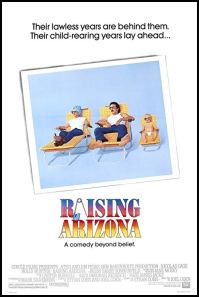 One of the most impressive things about the Coen Brothers is their ability to succeed in both self-aware comedy and super-serious drama, and their first two movies encapsulate both ends of that spectrum. Apart from
 Rather than a standard film review, we’ve been compiling a visual glossary of likely inspirations in Paul Thomas Anderson’s 2012 film The Master. Huge props go to


 As far as indicators of things to come are concerned, Blood Simple has everything you need to know about the Coen Brothers right there in the opening. Okay, maybe not everything — after all, daring to think you’ve nailed down the Coens is,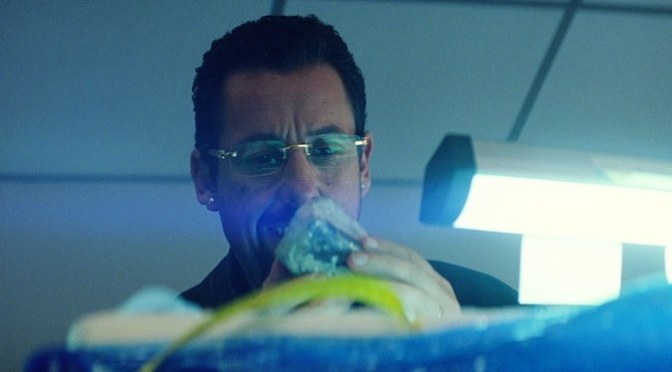
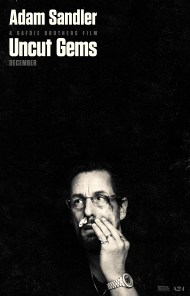 The films of the Safdie Brothers tend to share a few recognizable qualities. Most apparent is the kinetic, stressful energy with which each of their films unfolds, a ride that weaves unexpectedly while continuously approaching a breakneck speed. Those weaves are almost always a result of character decisions, though, and I respect that the Brothers keep memorable figures at the fore through even their most plot-twisty jaunts. They seem drawn to slightly-delusional protagonists, too, if not fully-delusional, and so the common logline usually follows a familiar trajectory: Main Character makes increasingly dumb decisions and pays for it. And then there’s the street-level realism, from the single-parent struggles of Daddy Longlegs to the exploration of addiction in Heaven Knows What to the petty life of crime in Good Time.
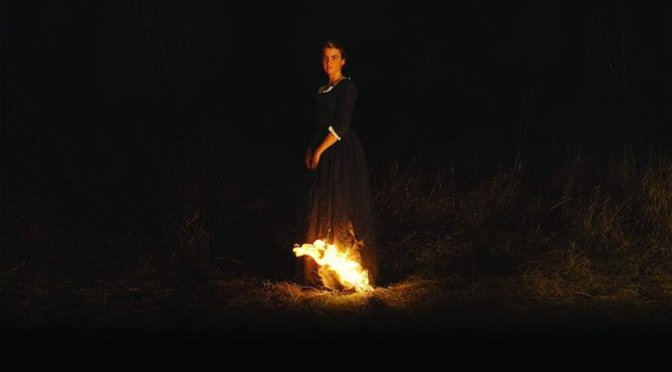
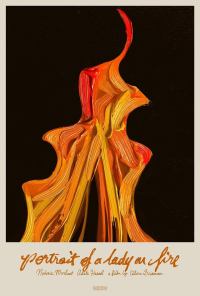 Marianne, the artist and main character of Céline Sciamma’s Portrait of a Lady on Fire, invites us to know her immediately. Look at the way I sit, she says. Take time to look at me while I pose. Look at the way I hold my hands, she says, before her fist involuntarily clenches at the sight of an old painting of hers. A scene later Marianne is no longer posing, but we take time to look at her face when she sees her painting equipment go over the side of a boat. We see her foot find purchase on the boat’s edge, we see the briefest flicker of uncertainty, and we feel we know her a little better when she dives into the water.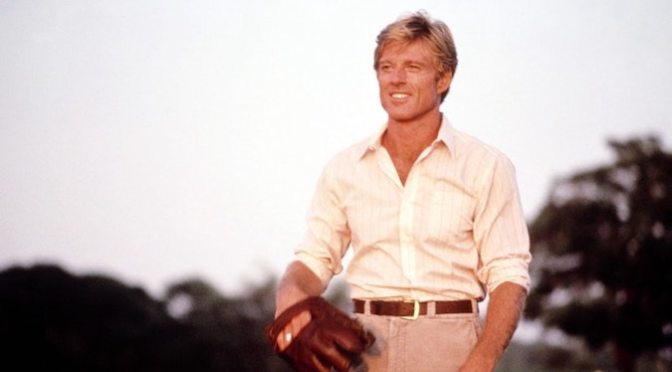
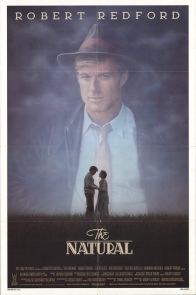 Bernard Malamud wrote The Natural, his debut novel, in 1952, the year the Yankees beat the Dodgers in the World Series. The tale of once-promising baseballer Roy Hobbs was almost universally praised upon the novel’s release, with many championing it as the first great novel about baseball. Critical consensus, though, agreed that the actual baseball — the strategy, the technicalities, the game — mattered less than the fable at hand. In some ways the myth behind Roy Hobbs was more interesting than Roy Hobbs.

 The first scene of E.T. wouldn’t be the same in any other medium. Wordless, shadowy and purposefully obscure, there’s still a ton of information conveyed through visuals alone. Spielberg was (and maybe still is) a fan of this kind of opening, eschewing expository positioning in favor of details that might strike as somewhat disorienting at first. There are fifteen or so characters here, all of them faceless. But even though we don’t get an instance of “Spielberg Face” — his beloved reaction shot of a wonderstruck visage, eyes wide, mouth agape — there’s still plenty to gawk at in these few short minutes.
 Motion State Review