Tag Archives: Birdman

Film & TV News: March 9

News

– Bryan Singer announced his directorial follow-up to X-Men: Apocalypse as the Robert A. Heinlein sci-fi chronicle The Moon is a Harsh Mistress. We predict this will be awesome.

– Production is about to begin on Ang Lee’s next film Billy Lynn’s Long Halftime Walk, prompting casting rumors regarding Garrett Hedlund and Steve Martin.

– Jeremy Renner’s Hawkeye has officially joined Captain America: Civil War, a movie most are already dubbing Avengers 2.5. The rumor that one of the Avengers would be killed off in Age of Ultron is looking less and less likely.

– Check out this awesome video tribute to cinematographer Emmanuel Lubezki, lensman behind the likes of Gravity and Birdman, over at Collider.

Continue reading Film & TV News: March 9

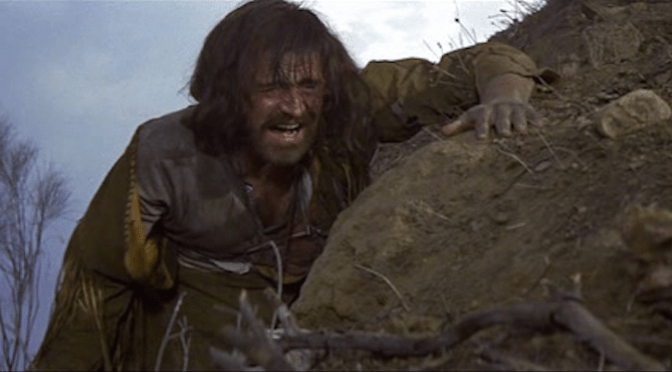
Man in the Wilderness (1971)

Alejandro González Iñárritu‘s follow-up to his Best Picture-winning Birdman will be The Revenant, starring Leonardo DiCaprio as a frontiersman left for dead by his fellow trappers after being mauled by a bear. A revenant is “a person who has returned, especially supposedly from the dead”, according to the OED (I love that especially supposedly bit), a term derived from High Middle Age folktales. These tales generally held that revenants would return from the grave either to seek revenge on a killer or wrongdoer or just simply to harass friends and family members. That latter class of revenants really sounds like a bunch of assholes.

The story upon which Iñárritu’s Revenant will be based (specifically a 2002 book of the same name by author Michael Punke) has already been filmed as Man in the Wilderness, casting Richard Harris in the central role of Zach Bass (DiCaprio will be “Hugh Glass”, but it’s the same character). Wilderness and Revenant are the same story told two different ways, and one would assume that Iñárritu’s approach would hew much closer to the more recent book. It will be interesting to see how influential Wilderness actually is, though, because it holds some sequences and motifs that kind of seem at home in Iñárritu’s wheelhouse.

Continue reading Man in the Wilderness (1971)

JCVD (2008)

All of the Oscar hubbub surrounding Birdman got me thinking about JCVD, a movie built on a somewhat similar concept. You might superficially call this “a comeback movie”, if you think of Michael Keaton’s Birdman role in the same way most think of Mickey Rourke’s revitalization in The Wrestler. This might be the comeback of Jean-Claude Van Damme, action hero of the ’90s, star of movies with such vague titles that his name is printed in larger font on the posters, one-time king of both the roundhouse kick and the action flick box office.

But JCVD is set up like Birdman in another way, and after a certain point it’s not really a comeback film at all. The Muscles from Brussels stars as himself, or at the very least a tired and nearly washed-up version of himself, broke and embroiled in a custody battle for his young daughter. He’s still acting in the same films he’s always been acting in, but nowadays the passion seems sucked out of the entire process. The first long shot of JCVD follows Van Damme as he does an action sequence from his latest film, directed by a kid who doesn’t give a shit about Van Damme, and that opening shot tells two stories at once. It tells the story of the film-in-the-film, in which Van Damme’s hero saves a hostage from an army of faceless henchmen. But it also tells the actor’s story, Van Damme visibly going through the motions to get the film done instead of actually living through the thrill of the action. Every punch and jab and dive is perfect, exactly where it should be, and because of that it’s the most unexciting action sequence ever filmed.

Continue reading JCVD (2008)

Birdman (2014): Riggan the Supernova

Our Take Two column offers second opinions and alternative angles on films and TV series reviewed elsewhere on Motion State. Head here for our original review of Birdman.

There’s a story about these guys, Jack and Murray, who head out to the countryside to visit The Most Photographed Barn in America. They follow the signs and arrive at the barn site, finding a visitor center, an observation deck, droves of people with cameras, the actual barn up on a little rise. “No one sees the barn,” Murray notes. “Once you’ve seen the signs about the barn, it becomes impossible to see the barn.” Jack says nothing as more tourists arrive, snap pictures, buy postcards. Murray continues. “We’re not here to capture an image, we’re here to maintain one,” he says. “Every photograph reinforces the aura.”

That story is from White Noise by Don DeLillo, an author who largely concerns himself with the same exploration of modern celebrity at the heart of Iñárritu’s Best Picture-winning Birdman. And that aura, so built up around the little red barn that the mass awareness begins to eclipse the individual identity, is not at all unlike the celebrity in which Michael Keaton’s actor Riggan Thomson finds himself trapped. The “public Riggan” — an image maintained in tabloids and represented by the superhuman Birdman — is so overwhelming that it obscures the real Riggan, the artist beneath the public persona, threatening to further that obscurity by tempting Riggan with Birdman 4. Plenty of films address Hollywood and modern celebrity in this way, and we’ll mention a few more from this past year in a moment. It’s Riggan, though, who most fully and tragically shows how impossible it is for an artist to escape the machinery of fame.

Continue reading Birdman (2014): Riggan the Supernova

Birdman (2014)

Birdman is not your typical Alejandro Gonzalez Iñárritu film. Correction: Birdman is not your typical anyone film — which is part of what makes it so good. Iñárritu’s inventive cinematography combined with exceptional dialogue between intriguing, fantastically-acted characters make Birdman a masterpiece, and one that deserves all of the praise it is receiving in terms of Academy Award nominations.

The film follows Michael Keaton’s Riggan Thomson, a past-his-prime actor who was once famous for playing the titular superhero Birdman (Keaton himself knows a thing or two about formerly playing a superhero). Riggan’s past character haunts him throughout the film as he tries to become relevant as an actor outside of just the superhero role. He attempts to shake loose of Birdman by directing and starring in Raymond Carver’s play “What We Talk About When We Talk About Love”. Carver’s play provides an appropriate backdrop for Riggan’s attempt at a career revival. Carver, himself, is quoted to start the movie in what reveals a central theme of the movie: “And did you get what you wanted from this life, even so? I did. And what did you want? To call myself beloved, to feel myself beloved on the earth”.

Continue reading Birdman (2014)

Whiplash (2014)

The New York Film Festival opened last week with David Fincher’s Gone Girl and continues until the New York premiere of Birdman to close the festival. In between those films fall a massive spectrum of features, short films, documentaries and retrospective screenings that include entries from some of the biggest names in the entertainment industry.

Whiplash isn’t one of those big huge premieres held up by the strength of name recognition and pre-release buzz. Technically the NYFF screening wasn’t even a premiere at all, as Whiplash first popped up at Sundance last winter. But if any “small” flick can surge through festivals like this and have a strong opening later this month, it’s this one. Less tangentially: Whiplash is one of the leanest and most intense films you’re likely to see this year.

Continue reading Whiplash (2014)