
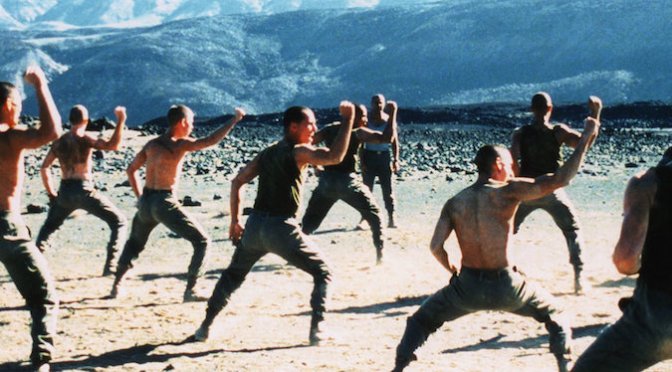
 War movies don’t vary much. Customarily, this genre has a singular focus: examination of an individual (a soldier, usually) inside of a system (the military, usually). Wherever the film goes from there, it can typically still be traced back to that configuration of a singular unit as part of the greater whole. The individual is entrenched — to nick a military phrase — within the system, even if the premise of the film is to have that character reconcile with or refute the system itself. And in some ways this is technically true of Beau travail, the 1999 drama by Claire Denis, as it follows young soldiers training inside the construct of the French Foreign Legion. But the treatment of those individuals and that system is so unlike that which is described above, so unique in its presentation, that Beau travail can hardly be called a war film at all.
Unit master-at-arms Galoup (Denis Lavant) leads a section of legionnaires stationed in Djibouti, driving them through a regimen of intense and endless physical training. The legionnaires climb, hurdle, and crawl beneath crude obstacles. They stand for hours with their arms raised under the hot African sun. They iron their uniforms a lot, the sharp creases a signifier of their shared devotion. Galoup undertakes these exercises with his men, screeching at them as he does his own pushups twice as quickly. He is the Legion, in some senses: a lifelong military man, minded only toward the group, toward uniformity, toward the system.

 As a White Dude with a full deck of privilege and a shitload of unlearning to do when it comes to an effort at anti-racism, I acknowledge that there’s always going to be imperfection, at best, in my understanding of the Black Experience. Too many people like me use that as an excuse to not even try, of course, preferring the comfort of a bubble in which ignoring racism is hardly ever recognized in and of itself as a racist act. As a White Dude, part of me resides inextricably in this bubble regardless of my physical location. There’s quite an echo in here. And while I do recognize that ignoring racism is itself a contribution to racism — of course it is — I’m still undoubtedly one of those unthinking contributors. And admitting this puts me no closer to our aforementioned understanding. Nine out of ten attempts to place myself outside of the bubble are too weak to even perforate it, and the tenth is a noble failure.
 “Deaf culture is too big to represent,” says Sound of Metal writer/director Darius Marder. He obviously refers to being represented in its entirety, something no culture can hope to be endowed with over the course of a short two-hour film. That comment comes from the Q&A tied to the
 Lee Isaac Chung’s Minari follows the Yi Family, a Korean quartet immigrated to the United States in the 1980s. They settle in California at first, but Jacob (Steven Yuen) grows impatient with city life. He’s desirous of an expanse of land to call his own, of a family farm, of that elusive thing people sometimes call the American Dream. So he uproots the family and moves to rural Arkansas, where fifty acres of the best dirt in America await. His wife Monica (Han Ye-ri) is far more pragmatic, and she has trouble envisioning the farm of the future behind the dilapidated mobile home of the present. Meanwhile, their children David and Anne (Alan Kim and Noel Kate Cho) are at first simply along for the ride, fascinated by the fact that they now live in a house that has wheels.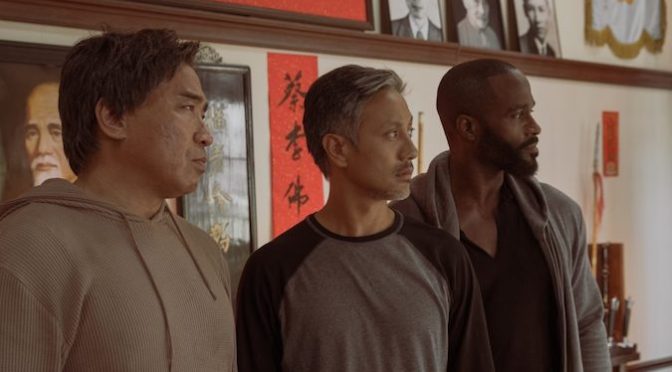
 The Paper Tigers screened as a part of the
 Time is not the type of documentary that could have been directed by anyone. Sure, it could have. Most documentaries are exactly that, and to be fair there’s something to be said for an unobtrusive, understated approach to nonfiction filmmaking. Here, the subject matter is so relevant and the central “character” is so compelling that the documentarian in the director’s chair could simply have flicked the camera on and pointed it at Fox. Time would likely still be an essential watch. But Garrett Bradley, in directing only her second feature, does so much more in bringing Fox and Rob Richardson to the screen.
 Portrait of a Lady on Fire
 Just last week, 30-year-old
 In The Harder They Fall, sportswriter Eddie Willis (Humphrey Bogart) finds himself in a moral conundrum. He’s covering the boxing phenom Toro Moreno (Mike Lane), an absolute barn of a fighter who’s touring across America on an unprecedented winning streak. The conundrum? Toro can’t actually box worth a damn. The glassjawed giant has been set up by his manager Nick Benko (Rod Steiger) and had all of his fights fixed, though that particular fact is kept secret from Toro himself. Benko’s scheme ensures that the audience has a built-in perception of this fighter, that Toro’s reputation — even if it’s engineered behind his back — will equal dollars in Benko’s pocket. People love a clear-cut hero, an undeniable winner, and Benko forms Toro into exactly that. But Eddie’s not convinced, even if the blissfully-ignorant Toro seems to be having the time of his life in this heroic role. Shouldn’t the athlete himself have some say in how he’s portrayed to the world?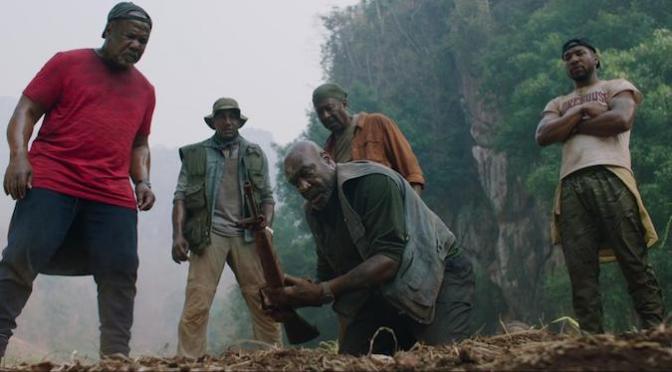
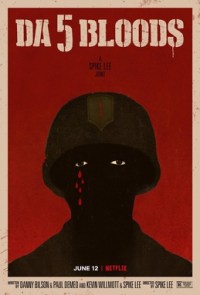 If you threw Spike Lee’s filmography into a pot and cooked it down, stirring occasionally such that all of the ingredients are thoroughly intermingled, you’d be left with Da 5 Bloods. Lee’s new Netflix joint is nothing if not ambitious, and at its shakiest it does feel composed of variations on ideas he’s had in previous films. Take the war-never-ends framing device of Miracle at St. Anna, the style-and-substance mentality of BlacKkKlansman, the epic scope of Malcolm X, a pinch of the melancholy soul-searching of 25th Hour, a dash of the motley cast of Get on the Bus, and Spike’s secret sauce, of course, that blunt intrusion of American history into an otherwise routine narrative. The last ingredient is always a tough one to swallow, but in Da 5 Bloods its sourness is even more noticeable. As with the final scene of BlacKkKlansman, the dark American past we’re witnessing is often only a few months old.
 Motion State Review