

 No matter how closely a film adaptation hews to its source material, the experience will always be uniquely different from page to screen. Nickel Boys, adapted from Colson Whitehead’s 2019 novel by documentarian RaMell Ross, underscored that fact as it opened the 62nd New York Film Festival on Saturday night. Even the decision to drop The from the film’s title, for example, seemingly one of the more minor changes made by Ross and his crew, is a crucial one for a story about the broad nature of identity. Nickel Boys may center around two distinct characters, but the intersection between them and the other boys at Nickel Academy is the real heart of both novel and film.
When Elwood Curtis (Ethan Herisse) happens to hop into the wrong car, he’s arrested and brought to the sadistic juvenile reform school Nickel Academy. There he meets Turner (Brandon Wilson), a young man with a very different outlook on their similar circumstances. While Elwood sees a world ripe for change, spurred by the ideals of Martin Luther King Jr., his friend largely opts for survival by keeping his head down. As Elwood seeks the beauty in the world, he and Turner are forced to reckon with the abuse of Nickel for the rest of their lives.

 It would have been easy for Shoplifters to glamorize the criminal acts of its central characters. Hirokazu Kore-eda’s latest film follows an impoverished Tokyo family surviving on a hierarchical system of thievery, nicking small items where the opportunity arises or, more frequently, setting out on an express mission to steal that which they need. The setup, of course, is worlds away from the heist genre, but it’s still refreshing to experience these criminal acts for what they actually are: desperate, thrill-less acts devoid of meticulous planning or grifter’s luck. And if there is any thrill in stealing shampoo and ramen noodles, it’s a thrill that quickly sinks into the pit of one’s stomach, weighed by the immorality of it all.
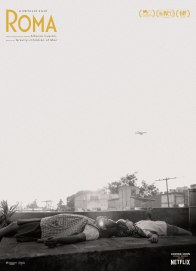 You could call Roma the most colorful black-and-white film ever made. After the Centerpiece screening at the 56th New York Film Festival, writer/director Alfonso Cuarón noted how important the visual presentation was to the overall effect of the movie. Crucial among his points was that this black-and-white is “not a nostalgic black-and-white” but instead “modern” and “pristine,” disabusing the viewer of the notion that this tale is unfolding in a long-forgotten place or time. Despite being assured throughout the film that the place is Mexico City and the year is 1971, Roma simultaneously manages to assure you that what’s happening is happening here and now.



 Motion State Review