

 I am admittedly predisposed to movies like The Northman — bloody, epic revenge tales with a strange angle, a hyper-specific period setting, or both. I’m also a huge fan of The Lighthouse, the previous film from writer/director Robert Eggers, one of the most unique American films of the 21st century. So the hype level for this flick was more or less at carrying capacity at this week’s screening, and Eggers and Co. did not disappoint. Starring Alexander Skarsgård as the vengeance-bent Viking prince Amleth, The Northman has Eggers’s blend of folklore and historical fidelity all wrapped up in a potent, ferocious epic. It’s not quite a perfect film, but it has some of the most stunning storytelling you’ll see onscreen this year.
Much has already been written on Skarsgård’s insane transformation into Amleth, a beastly and primal performance that puts the mere term macho to shame. Of course it’s far deeper than machismo, and Skarsgård imbues Amleth with a vulnerability that makes the character — and thereby the picture — really work. He’s doing everything Leonardo DiCaprio did as Hugh Glass in The Revenant, but unlike Glass, Amleth’s character is wholly defined by his relationships with others. His bond with his father and mother (Ethan Hawke and Nicole Kidman) and his hatred for his uncle Fjölnir (Claes Bang) drive his every action. He’s frequently referred to as a wolf, and we see all sides of that metaphor: the young and uncertain pup, the lone stray seeking a home, the feral creature commanding a pack of other wolves, and finally the wisened alpha. Skarsgård goes all the way and then some, and Northman couldn’t exist without him.

 Independent Film Festival Boston
 The traditional Western is perhaps not known for subtlety, nor for its interpretive qualities, nor for self-awareness, and yet Pale Rider has all of those things and is very much a late-game classic of the genre. “Classic,” here, should indicate that this is not a revisionist Western, despite being released long after the genre had been declared dead. The plot concerns a fledgling California village under the thumb of a ruthless mining corporation, and Clint Eastwood’s mysterious loner rides into town and kicks ass in the name of the little guy. This, as you may have heard, is about as classic as the plot of Western gets (see also: Shane, Django, A Fistful of Dollars, Eastwood’s own High Plains Drifter, etcetera).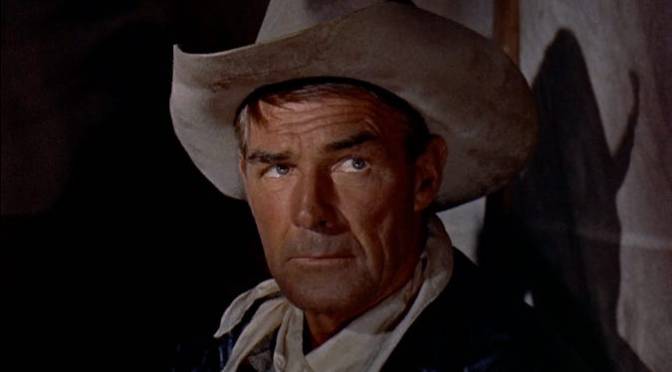
 The arrival of the Spaghetti Western in the mid-1960s might be credited as the major pivot point for the film Western on the whole, but a subtler shift began more than a decade earlier. American director Budd Boetticher was familiar with the genre in 1956, having helmed six or seven Westerns in the early ’50s, films starring the likes of Rock Hudson and Glenn Ford. By and large these fit the mold of what you’d expect from the era, right down to the leading man: young, chiseled cowboys with a strong moral compass and a way with horses. Typified by Hudson, Ford, Gary Cooper, Henry Fonda, Joel McCrea and especially John Wayne, the Western Heroes of the time are jokingly (or not?) said to have had only two emotions on display: “hat on” and “hat off.”

 I’m constantly being surprised by What Lies Beneath. On first viewing it surprised me that Robert Zemeckis, the Spielberg acolyte behind feel-good romps like
 As a White Dude with a full deck of privilege and a shitload of unlearning to do when it comes to an effort at anti-racism, I acknowledge that there’s always going to be imperfection, at best, in my understanding of the Black Experience. Too many people like me use that as an excuse to not even try, of course, preferring the comfort of a bubble in which ignoring racism is hardly ever recognized in and of itself as a racist act. As a White Dude, part of me resides inextricably in this bubble regardless of my physical location. There’s quite an echo in here. And while I do recognize that ignoring racism is itself a contribution to racism — of course it is — I’m still undoubtedly one of those unthinking contributors. And admitting this puts me no closer to our aforementioned understanding. Nine out of ten attempts to place myself outside of the bubble are too weak to even perforate it, and the tenth is a noble failure.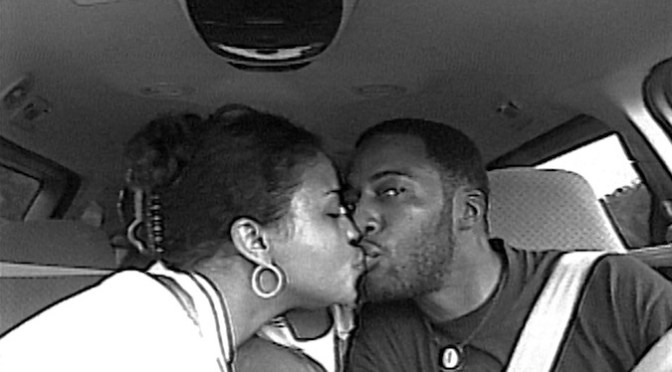
 Time is not the type of documentary that could have been directed by anyone. Sure, it could have. Most documentaries are exactly that, and to be fair there’s something to be said for an unobtrusive, understated approach to nonfiction filmmaking. Here, the subject matter is so relevant and the central “character” is so compelling that the documentarian in the director’s chair could simply have flicked the camera on and pointed it at Fox. Time would likely still be an essential watch. But Garrett Bradley, in directing only her second feature, does so much more in bringing Fox and Rob Richardson to the screen.
 Portrait of a Lady on Fire
 The Earrings of Madame de… is the English-language title for Madame de…, as it was released in France, which heralds the heart-shaped diamond jewelry — not its owner — as the star of the film. The earrings do indeed play a major role, significantly altering the lives of those who possess them, seemingly propelled by their own willpower from one owner to another and back again. With a pinch more malice this would be The Lord of the (Ear)rings, a fantasy tale about tempting jewelry that instills a deadly pride in those who dare purport to wield such power. But the passionately humanist Max Ophüls ensures that this is always really the story of Madame de…, not simply of her diamonds, and the themes of pride and ownership don’t necessarily involve the earrings at all.
 Motion State Review