Category Archives: Featured

American History X (1998)

Director Tony Kaye has certainly not been afraid of being too graphic in his limited body of work. In his 1998 movie American History X, starring Edward Norton and Edward Furlong, Kaye doesn’t shy away from explicit detail in showing both the past and present of Derek Vinyard (Norton), a young founder of the white supremacist group D.O.C. and his influence on his younger brother (Furlong). The graphic depiction in this movie, despite making it difficult to watch at times, is what makes it so great, along with the performances by Norton and Furlong. Through these two important aspects of the film, the viewer gets a real look at racism in this country; but more than that, the viewer is confronted with the immense influence — either positive or negative — that either a father or an older brother can have on a young boy.

The movie takes place between two time periods. The present day spans a mere 24 hours with flashbacks to the past that show several years. Each of the flashbacks is presented in black and white, a nice directorial touch to not only make it evident that what is occurring is in fact the past but also to show the ignorance and narrow-mindedness in Derek’s views. Once Derek is released from prison, marking the present day, the scene shifts from black and white to color. At that moment, we find that Derek no longer sees the world in black and white. During his time in prison, due to the help of his unlikely friend Lamont (Guy Torry) and former teacher Dr. Sweeney, as well as a falling out with the Aryan Brotherhood in jail (which culminates in a graphic rape scene), Derek is able to see the world in all its colors and look beyond race and bigotry.
Continue reading American History X (1998)

Nightcrawler (2014)

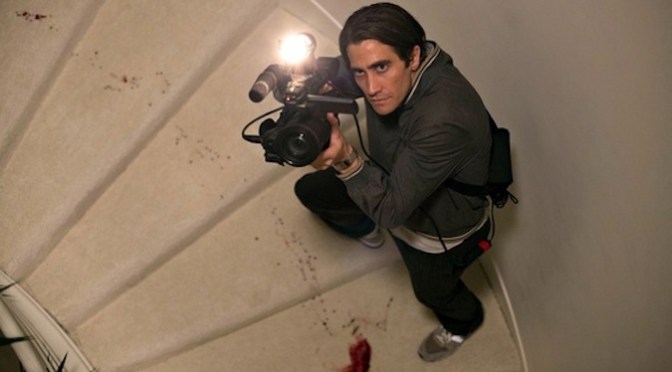
When we first meet the scavenging Lou Bloom, it’s clear that he’s an opportunist. He steals anything – copper tubing, swaths of aluminum fence, manhole covers (“the nice thick ones”) – and sells what he’s stolen to a construction foreman. Then he fights the foreman over the price, and then he asks the foreman for a job. So Lou’s mentality isn’t so much “when life gives you lemons, make lemonade”, but more “I have no lemons, so I’ll take yours”. This is the strongest aspect of Lou Bloom’s character, and indeed at times it’s overwhelmingly strong. Jake Gyllenhaal and writer/director Dan Gilroy don’t nail everything in Nightcrawler, but they nail that.

There’s a definite stylishness to Nightcrawler that aims to capture the seedy neon after-hours of downtown Los Angeles and the surrounding, more affluent suburbs. Lou graduates from scavenging to a real (ahem, “real”) job when he happens upon a highway car accident one evening: crime scene photography, he learns, can be a lucrative business. “If it bleeds, it leads,” says Bill Paxton’s mentor-photographer in a very trailer-suitable explanatory monologue. So Lou buys a camcorder and a police scanner and begins working. He’s all about opportunity, so when it knocks Lou answers. Opportunity, of course, keeps knocking, and Lou keeps answering. Soon he’s creating his own opportunities, which means everyone except Lou is about to get their lemons jacked.

Continue reading Nightcrawler (2014)

Raiders of the Lost Ark (1981)

This article first appeared as a part of the Brattle Theatre Film Notes commentary series, presented by the Brattle Theatre in Boston, MA, for a special screening of Raiders of the Lost Ark. Slight edits have been made from the original posting.

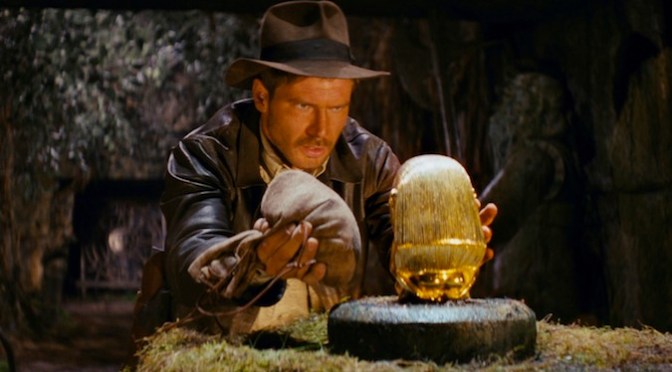
Not long ago Steven Soderbergh removed all of the color and sound from Raiders of the Lost Ark in an attempt to better study the visual staging of Steven Spielberg’s massively influential adventure film. The theory – according to Soderbergh – is that “a movie should work with the sound off”, that the coordination and arrangement of the visual elements of the story should, essentially, tell the same story that the dialogue tells. With Raiders, the theory certainly holds water: from the thick rainforest and cobwebbed tunnels of the opening action sequence to the quiet Archaeology classroom of the very next scene, from the snake-infested underground temple to the desert chase, the staging and pacing of the film is continuously surefooted. “No matter how fast the cuts come, you always know exactly where you are,” Soderbergh writes – and the attention he calls to the visual aspect of Raiders proves that Spielberg’s dedication to a strong sense of story isn’t compromised by a black-and-white color palette or a bass-laden electronica soundtrack.

To put it another way: Indiana Jones, even with these major elements stripped away, is still Indiana Jones. The color is one thing, but you’d think the absence of the iconic “Raiders March” would really shake things up for the worse. The John Williams score is inextricable from Indy, arguably as much a part of the adventurer as his hat or his bullwhip. You wouldn’t take the Bond theme away from James Bond any more than you’d take away his tux or his martini, for fear that the character before you wouldn’t seem like the same familiar spy anymore. Indy seems the same way, seems like a character so reliant on these iconic elements – but while Soderbergh’s exercise proved its point with regards to scene staging, it also pointed out what sets Indy apart.

Continue reading Raiders of the Lost Ark (1981)

Murder by Decree (1979)

It can be a strange thing these days: some actors either play a role so many times or play it so effectively once that it becomes nearly impossible to fill the shoes, impossible to recast the role or to even imagine recasting the role. The former scenario – where an actor owns a role by performing it over multiple films – is more and more common now that the shared universe and neverending saga models are actually viable. Robert Downey Jr. and Hugh Jackman had the advantage of being the first to play Tony Stark and Wolverine in their respective franchises, but it’s still damn difficult to imagine what those cinema characters will look like ten years from now once Messrs. Downey and Jackman age out of the parts.

The latter camp – those who own a role after only a single performance – is more interesting, at least when the role we’re considering is that of Sherlock Holmes. The great deerstalker-capped detective has been played by hundreds of actors onscreen, notably by the likes of Basil Rathbone, Christopher Lee, Roger Moore (in Sherlock Holmes in New York), and the aforementioned Downey Jr. in the most recent feature adaptations. Peter O’Toole voiced the character in a series of animated shorts in the early ’80s, Ian McKellen will portray him in 2015’s Mr. Holmes, and Benedict Cumberbatch plays Sexy Holmes in the BBC show Sherlock. Jeremy Brett’s decade in the role spanning four separate series is certainly one of the most interesting turns – Brett’s health declined noticeably as each series progressed, and his time in the role ended up charting a tragic bearing through his final years.

Continue reading Murder by Decree (1979)

The Intouchables (2011)

Netflix has beefed up their foreign language film offerings lately, adding within the past few months a new cache of hundreds of popular films from around the globe. One such movie is The Intouchables (no, not the French re-make of The Untouchables starring a French Kevin Costner) a 2011 French film directed by Olivier Nakache and Eric Toledano. In fact, by sheer numbers The Intouchables is the Mona Lisa of foreign language films, grossing $281 million worldwide, more than any other non-English movie in history.

The movie’s worldwide success raises the question: how did this film about the true story of wealthy quadriplegic Philippe Pozzo di Borgo and his underqualified, rough around the edges, ex-con caretaker Abdel Sellou shine above the rest? For starters, the original story itself is fascinating. An old wealthy man taking a chance on a young criminal as the man responsible for his own wellbeing is intriguing, but, in most cases, would seem too far-fetched. In the case of The Intouchables, the story is practically completely true, even when it seems overblown.

Continue reading The Intouchables (2011)

Before Sunrise (1995)

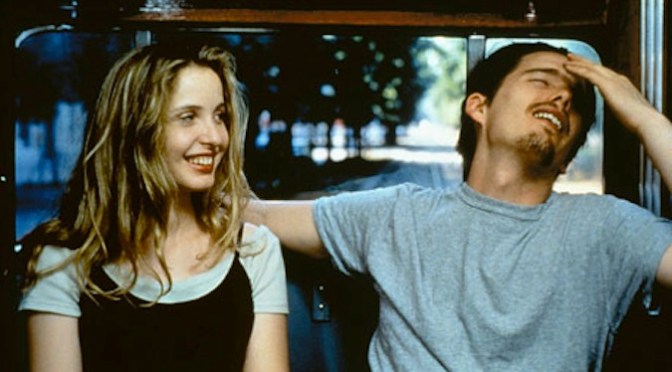
The first installment in Richard Linklater’s acclaimed “Before” trilogy, Before Sunrise is one of the most uniquely structured films in recent memory. Entirely dialogue based, the film discusses important social issues with great depth while examining the nature of a newly formed romantic relationship. Although Before Sunrise is masterfully written, acted and shot, there is no real plot; nothing really happens. Both Ethan Hawke and Julie Delpy turn in exceptional performances that demand close attention, and yet all their characters do throughout the film is walk around Vienna and talk about life. Linklater’s aim here is not to make greatest film ever made, as one might assume is the aim of many directors embarking upon a new project. It is meant to be a simple film, a small film with a small scope. It is short and it is brilliant in its own right.

The only two real characters in the film, Jesse (Hawke) and Celine (Delpy) are total strangers that meet on a train and subsequently fall in love. The film is somewhat inspiring as a result. This detail of the film speaks to the spontaneity of love, the romance of romance, so to speak. Once the two get to talking, the film takes off. Their discussion covers the innate differences between men and women and the good and bad aspects of American and French society and everything in between. The dialogue is serious and provocative at times and humorous at others, and Hawke and Delpy’s performances are smooth and keep it realistic, despite the remarkable intelligence and obvious care put into the writing. A fantastic, stand-out moment comes in Jesse and Celine’s pretend phone calls to their friends back home, in which they reveal their thoughts about and feelings toward each other. Another comes when Jesse asks Celine to get off the train with him. This moment almost becomes a cheesy, cliche rom-com-esque scene, but Jesse’s actually quite intelligent reasoning for why Celine should oblige him makes it truly enjoyable to watch.

Continue reading Before Sunrise (1995)

Boyhood (2014)

This is Boyhood. This is right now. This is no ancient Greek tragedy; there is no intricate or precise or necessarily coherent plot structure. What this film is all about is in the title: Boyhood is the narrative of a young man growing up in a difficult and harsh world. This film will make you laugh hysterically, and it will make you cry. Watch this film alone for the first time. That way, you can let yourself truly feel it. That’s important, because this is more than a movie. This is a therapeutic exercise.

It is possible that I am partial to Richard Linklater’s film because: one, I am a boy; two, I share some of the same experiences that Mason (Ellar Coltrane) has had. I know what it is like to have divorced parents, and I know what it is like to see my mom cry. I know what it is like to be bullied and I, too, have often wondered why the world has to suck so much. Many of us have. Many more will. That is why this film is so truthfully beautiful. It captures such incredible, emotional aspects of human life and brings you back in time to the moments in your own life that are relatable to what is going on in the film. I cannot even begin to think of another film that has brought me so close to tears so many times. Boyhood is able to give its audience that inexplicable Dead Poets Society vibe. Just that feeling that makes the film relevant to life in such an actual and immediate way. This is the type of film that leaves you unsure what there is to do next. When you decide to sit down and watch this film, you effectively decide to spend the next three hours completely and totally immersed in and consumed by the universe of Boyhood.

Continue reading Boyhood (2014)

Hero’s Island (1962)

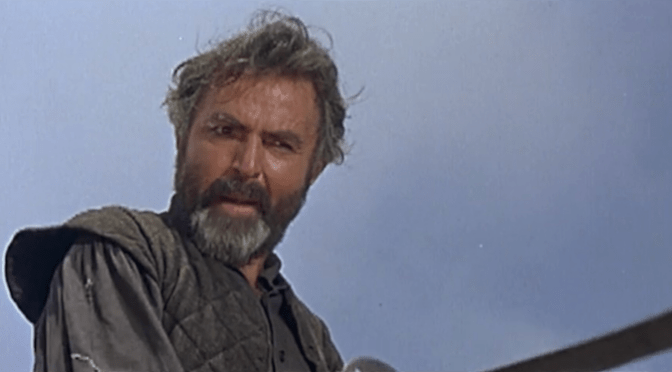
Long before James Mason was cast in the role of Stodgy Old Man in every movie ever, he once played Young Hunk in Hero’s Island. This somehow has nothing to do with his age – Mason was 53 when he played the island-bound Jacob Weber, which is far older than today’s Young Hunk standards – and instead has everything to do with Mason being one hell of an actor. In fact, he appeared as Humbert Humbert in Kubrick’s Lolita in the same year, a role which definitely leans more toward Stodgy Old Man than toward Young Hunk. One can imagine a remake of Hero’s Island casting Chris Hemsworth or Chris Evans or Chris Pratt – basically any of the Marvel Superhero Chrises – in the role of the brawny Jacob, sandy hair and strategically tattered shirt and all. This would be an entirely different kind of film (Superhero’s Island) because Mason’s Jacob is hunky, sure – but is he a hero?

Set on Bull Island in 1719, we meet the Mainwaring Family as they arrive on their new waterlocked home. The deed in Father Mainwaring’s hand entitles him to ownership of Bull Island, but standing on the dirt for the first time he states with a sense of wonder that “it doesn’t feel that I own this”. Ownership, of course, is entirely a matter of opinion – and in the opinion of the fisherman who’ve lounged around the island for years, the “right” of the Mainwaring Family’s presence is no right at all. They’re essentially Crusoe’s savages in the context of Hero’s Island, though their depiction in the opening scenes hews closer to this comparison than their actual function once the film is fully fleshed out. One of the first things the Mainwaring Family sees to is the construction of a large cross, which they kneel and pray in front of once it stands tall. The “savage” fisherman watch from afar, and before we hear them say anything more than a few words we see them bless themselves with the sign of the cross upon seeing the Christian symbol rising from their dirt.

Continue reading Hero’s Island (1962)

Batman Begins (2005)

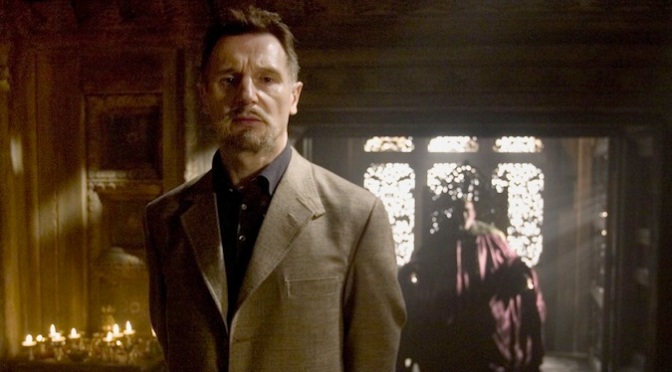
Most of the comic book influences on Batman Begins are fairly evident. Everyone points to Frank Miller’s Year One, the redefining four-part series that put the “Dark” back in Dark Knight, and they’re right to hold that book up as the major influence. Begins relies heavily on Year One for a number of things, not least among them the exploration of the Bruce Wayne/Jim Gordon relationship, the exploration of the Bruce Wayne/Alfred relationship, the Gotham Monorail, the mention of the Joker at the end, the entire character of Flass, the entire sequence where Batman calls a squadron of bats to his aid (a bat-talion, am I right? Guys?) and, of course, the entire bat-flies-through-window genesis of the hero himself.

So Year One is the obvious one. Nolan and David Goyer pilfered little things from other famous Bat-books as well, often just an image or a line of dialogue. Here’s the Scarecrow in Loeb and Sale’s The Long Halloween, another popular arc:

Long Halloween
The Long Halloween (1996/97)

Goyer brought this to Nolan and said “I think Katie Holmes and the little kid who will eventually grow up to be Joffrey from Game of Thrones would look really good if we added them in front of the horse here” (paraphrased) and Nolan said “true dat, brah” (not paraphrased) and ran with it:

Batman Begins (2005)

The red eyes and flames are an admittedly nice touch.

Continue reading Batman Begins (2005)

Indiana Jones and the Kingdom of the Crystal Skull (2008)

Indiana Jones and the Kingdom of the Crystal Skull has no shortage of detractors. Whenever a beloved film or film series receives a new treatment or installment, most people – myself included – are bound to vocalize their qualms. We said why can’t they leave well enough alone? We said why does everything have to be CGI? With the fourth Indy flick, we said a whole bunch of stuff that shouldn’t be reprinted. So yeah: Crystal Skull is the weakest Indiana Jones for a few reasons. But let’s find something nice to say about it for a change, shall we?

Harrison Ford returns to one of his most famous characters after a quarter-century hiatus (he appeared in one or two movies in the meantime) and most of the old crew returns with him: Steven Spielberg directs from a story by George Lucas, composer John Williams scores the film, and Karen Allen revives the role of Marion Ravenwood. Cate Blanchett plays (ahem, overplays) the primary antagonist Dr. Irina Spalko, and the best things about her are her hair and her name. Among the other new additions to the Indy legend is the consistent use of CGI, which was used sparingly in the first three adventure films in favor of practical effects. It feels at times as if somebody wanted to cram as many CG shots into this thing as possible, and many of those instances are very unfortunately unconvincing. Also: aliens.

Continue reading Indiana Jones and the Kingdom of the Crystal Skull (2008)