Category Archives: Film Review

American Movie (1999)

Stories about filmmakers in their early days have become a part of Hollywood legend. Sam Raimi and his friends got lost in the woods on their first day of shooting The Evil Dead. Kevin Smith sold his comic books and maxed out ten credit cards to finance Clerks. Paul Thomas Anderson dropped out of NYU after only two days and used his college fund to film Cigarettes & Coffee. These stories are charming, funny, and encouraging for aspiring filmmakers. But for every apocryphal story about a celebrity’s climb to the top, there are hundreds of stories about those who didn’t make it. American Movie is one of those stories. Sort of.

In 1996, Mark Borchardt began production on his short film Coven in the working class town of Menomonee Falls, Wisconsin. The plan was to use Coven to inspire investors to fund Borchardt’s feature film, Northwestern. Documentarian Chris Smith, fresh out of film school, chronicled Mark’s year-long struggle to finish his short against all odds. With only friends, family, and townies to help him finish his film, Mark faced a stoned crew, a stubborn uncle, and stiff cabinetry in this hilarious, yet oddly inspirational documentary. Continue reading American Movie (1999)
Primal Fear (1996)

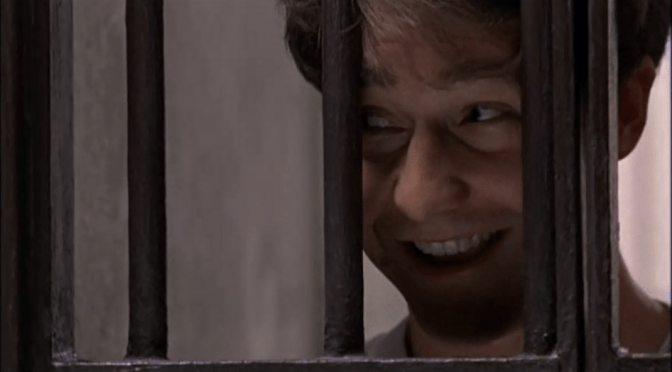
Edward Norton wowed audiences this past year with his supporting role in Birdman, one that earned him an Oscar nomination for Best Supporting Actor and, at times in the movie, stole the show, even from lead actor nominee Michael Keaton. It was an impressive, but not necessarily unexpected, performance from Norton. He has established himself over the past two decades as a great actor. But how did he get to this point? Where did he start? Two words: Primal Fear.

Truth be told, Norton’s start and end points in his journey have had identical impacts on audiences. On both ends of his career—in his first movie and his most recent one—he has absolutely captivated audiences with his performance. It is his first performance that seems more impressive, though, for the sheer fact that no one saw it coming. Continue reading Primal Fear (1996)

Bloodsport (1988)

After watching the surprisingly affecting JCVD last week, a return to the glory days of action hero Jean-Claude Van Damme seemed in order. A dozen movies and a kamillion roundhouse kicks later, I emerged in a blearyeyed stupor with a stark reminder of the true nature, dark and terrible, of a Van Damme flick. The horror…the horror…

Bloodsport is definitely the one that shot JCVD to fame, and by all accounts it’s a pretty typical outing for the Muscles from Brussels. Most of his films from the early ‘90s are either about a) a young fighter looking to high-kick his way to the top or b) a studly defender of the meek who high-kicks the shit out of the oppressive. There are some decent movies in there, to be sure, namely John Woo’s unapologetically action-oriented Hard Target and Van Damme’s Die Hard attempt Sudden Death. For every one of those there are two stinkers, though, like the Aggro Crag-set Cyborg and the unbearably campy Street Fighter.

Continue reading Bloodsport (1988)

Hunger (2008)

Although I feel like it cannot be, I have to suppose that it is just a coincidence that this film, entitled Hunger, completely lacks any meat whatsoever. This film had me quite excited to see it; I am a total Fassbender fan and it had garnered a strong 82 Metascore. I thought it was going to be one of those slightly dull, but really fantastically unique and emotional films with great writing and better acting. Well, I got the acting out of Fassbender, but literally every other single aspect of this film fell heavily flat for me. Which did come as a surprise considering who the director is: the great Steve McQueen. With 12 Years A Slave, McQueen, in my genuine opinion, made one of the greatest movies of the twenty-first century. Everything just worked so well, from the otherworldly penmanship to the astounding, Oscar-winning performances. The Wolf of Wall Street was my favorite in 2013, but 12 Years was undoubtedly the best.

The biggest gripe I have with Hunger is probably the fact that it refuses to settle on a protagonist until about thirty minutes in. Inexplicably, the film starts with, and carries on with, the tale of two characters who ultimately become totally irrelevant. Granted, they do set up the scene; their situation portrays how terrible the conditions were for those imprisoned men. That does not change the fact that the exact same effect could have been as, if not more, easily achieved focusing instead on Fassbender’s character, Bobby Sands (the ultimate protagonist). The two initial characters essentially share a few lines of dialogue, smear their shit all over the walls of their cell, and grow long hair and beards.

Continue reading Hunger (2008)

Man in the Wilderness (1971)

Alejandro González Iñárritu‘s follow-up to his Best Picture-winning Birdman will be The Revenant, starring Leonardo DiCaprio as a frontiersman left for dead by his fellow trappers after being mauled by a bear. A revenant is “a person who has returned, especially supposedly from the dead”, according to the OED (I love that especially supposedly bit), a term derived from High Middle Age folktales. These tales generally held that revenants would return from the grave either to seek revenge on a killer or wrongdoer or just simply to harass friends and family members. That latter class of revenants really sounds like a bunch of assholes.

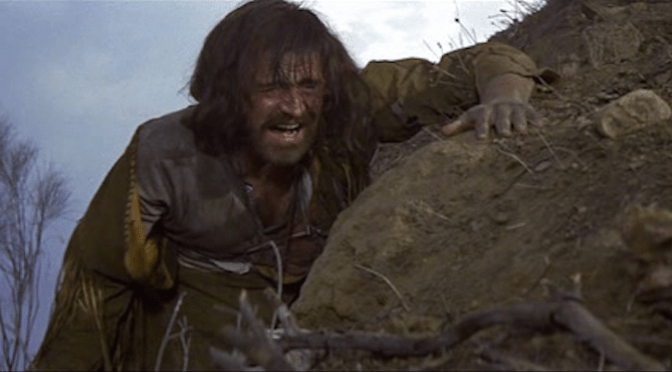
The story upon which Iñárritu’s Revenant will be based (specifically a 2002 book of the same name by author Michael Punke) has already been filmed as Man in the Wilderness, casting Richard Harris in the central role of Zach Bass (DiCaprio will be “Hugh Glass”, but it’s the same character). Wilderness and Revenant are the same story told two different ways, and one would assume that Iñárritu’s approach would hew much closer to the more recent book. It will be interesting to see how influential Wilderness actually is, though, because it holds some sequences and motifs that kind of seem at home in Iñárritu’s wheelhouse.

Continue reading Man in the Wilderness (1971)

Misery (1990)

According to my mom Misery was the first movie I ever watched start to finish, late one night in one of my first few weeks when I just didn’t want to sleep. Apparently all I wanted to do was watch an utterly insane Kathy Bates hold James Caan against his will in her snowy, isolated Colorado home. A lifetime of watching movies later, I returned to that first movie that started it all for me as a viewer (full disclosure: I can’t seem to find my notes on it from a couple decades back).

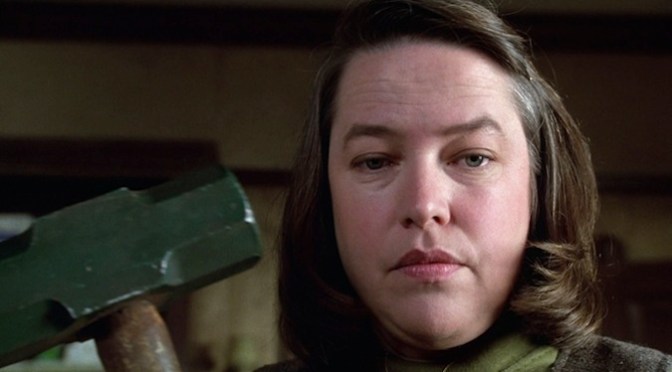
My first thought upon re-watching my first film: it’s no wonder I couldn’t sleep! I probably couldn’t sleep for weeks. Kathy Bates is so terrifyingly good as the psychotic Annie Wilkes — writer Paul Sheldon’s (James Caan) “biggest fan” — that bipolar does not even being to describe her. One second, she is exactly as self-advertised: Sheldon’s biggest fan, in pure admiration. However, one slip up by Sheldon, such as killing off the main character in his “Misery” series of novels, and she becomes a different person all together — violent, inconsolable, and capable of anything. Regardless of which mood Wilkes happens to be in, though, it is always clear that she will not let her favorite writer go, ever. They are meant to be together, or at least that’s what she thinks.

Continue reading Misery (1990)

JCVD (2008)

All of the Oscar hubbub surrounding Birdman got me thinking about JCVD, a movie built on a somewhat similar concept. You might superficially call this “a comeback movie”, if you think of Michael Keaton’s Birdman role in the same way most think of Mickey Rourke’s revitalization in The Wrestler. This might be the comeback of Jean-Claude Van Damme, action hero of the ’90s, star of movies with such vague titles that his name is printed in larger font on the posters, one-time king of both the roundhouse kick and the action flick box office.

But JCVD is set up like Birdman in another way, and after a certain point it’s not really a comeback film at all. The Muscles from Brussels stars as himself, or at the very least a tired and nearly washed-up version of himself, broke and embroiled in a custody battle for his young daughter. He’s still acting in the same films he’s always been acting in, but nowadays the passion seems sucked out of the entire process. The first long shot of JCVD follows Van Damme as he does an action sequence from his latest film, directed by a kid who doesn’t give a shit about Van Damme, and that opening shot tells two stories at once. It tells the story of the film-in-the-film, in which Van Damme’s hero saves a hostage from an army of faceless henchmen. But it also tells the actor’s story, Van Damme visibly going through the motions to get the film done instead of actually living through the thrill of the action. Every punch and jab and dive is perfect, exactly where it should be, and because of that it’s the most unexciting action sequence ever filmed.

Continue reading JCVD (2008)

Birdman (2014): Riggan the Supernova

Our Take Two column offers second opinions and alternative angles on films and TV series reviewed elsewhere on Motion State. Head here for our original review of Birdman.

There’s a story about these guys, Jack and Murray, who head out to the countryside to visit The Most Photographed Barn in America. They follow the signs and arrive at the barn site, finding a visitor center, an observation deck, droves of people with cameras, the actual barn up on a little rise. “No one sees the barn,” Murray notes. “Once you’ve seen the signs about the barn, it becomes impossible to see the barn.” Jack says nothing as more tourists arrive, snap pictures, buy postcards. Murray continues. “We’re not here to capture an image, we’re here to maintain one,” he says. “Every photograph reinforces the aura.”

That story is from White Noise by Don DeLillo, an author who largely concerns himself with the same exploration of modern celebrity at the heart of Iñárritu’s Best Picture-winning Birdman. And that aura, so built up around the little red barn that the mass awareness begins to eclipse the individual identity, is not at all unlike the celebrity in which Michael Keaton’s actor Riggan Thomson finds himself trapped. The “public Riggan” — an image maintained in tabloids and represented by the superhuman Birdman — is so overwhelming that it obscures the real Riggan, the artist beneath the public persona, threatening to further that obscurity by tempting Riggan with Birdman 4. Plenty of films address Hollywood and modern celebrity in this way, and we’ll mention a few more from this past year in a moment. It’s Riggan, though, who most fully and tragically shows how impossible it is for an artist to escape the machinery of fame.

Continue reading Birdman (2014): Riggan the Supernova

Joe (2013)

There’s a movie called Bob and the Trees that premiered at Sundance last month. It’s about a guy named Bob, and it’s about some trees. Bob’s a logger in rural Massachusetts, and when winter sets in he starts encountering problems. The premise alone isn’t particularly exciting, so Bob and the Trees draws compelling cinema from another source: the fact that Bob is played by a logger named Bob, and Bob the character is very much a version of Bob the logger. It’s fiction, of course, but it’s also true (“nonfiction” doesn’t seem like the right word). The characters are reading a script, but they’re more or less reading it as themselves. It makes Bob and the Trees into a kind of hybrid that looks and feels — again, for lack of a better word — real.

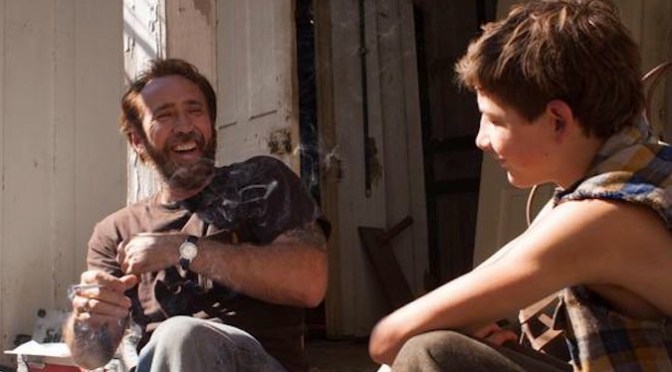
David Gordon Green’s Joe isn’t exactly that. It’s not a true documentary, not docudrama, not cinéma vérité, not kino-pravda (“film-truth”), and not even as factual as Bob and the Trees. But damn if it isn’t close, and damn if it isn’t Green’s most balanced and lifelike film since his 2001 debut George Washington.

Continue reading Joe (2013)

Blackhat (2015)

Sometimes timing is everything when releasing a major studio film. That’s why we get The Prestige and The Illusionist one after the other, Antz and A Bug’s Life, Dante’s Peak and Volcano, The Truman Show and EdTV, all released within a month or two of a very similar counterpart. Is that good timing or bad timing? If the subject of these films is “in”, then it hardly matters. People suddenly like period magician dramas, so they want both Illusionist and Prestige. They suddenly like animated ants and volcanic destruction and reality TV heroes, so they want multiple movies about them. One can imagine a studio holding a film they find to be strikingly similar to one that just came out, hoping to distance this from that, only to be accused of copying the success of the first.

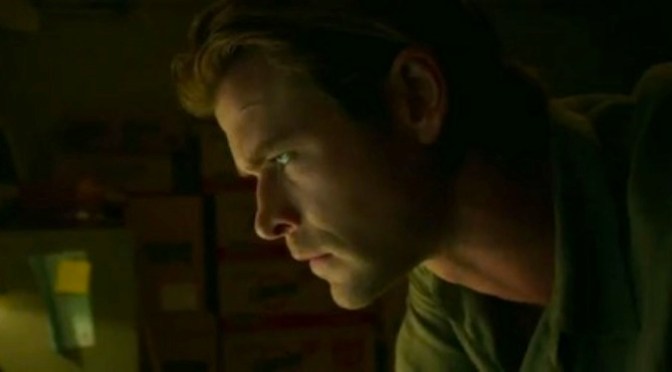
Whatever the studio machinations, sometimes the relevance of a movie is just plain dumb luck. Hacking and cyberterrorism have been in the news quite a bit lately, what with the November data leak at Sony and subsequent hullabaloo surrounding The Interview only just starting to get pushed to page two. Michael Mann’s globetrotting hacking drama Blackhat addresses that current fear, but unfortunately it doesn’t manage to extract a very good story out of the headlines.

Continue reading Blackhat (2015)