
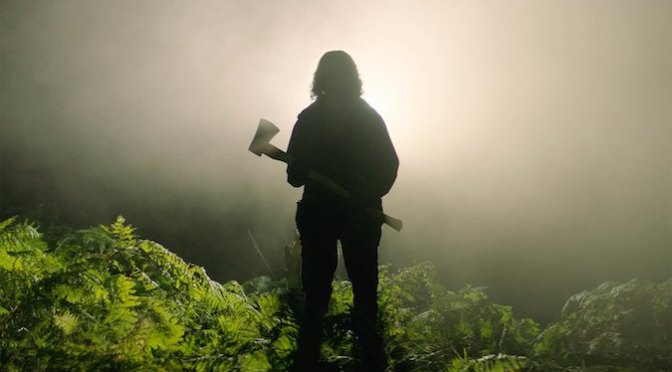
I respect the hell out of Ben Wheatley for his drive to make new film. A good 90% of what he’s done, for better or worse, is actual original cinema — not an adaptation of a beloved novel, not a bastardization of a classic film, not a superhero flick that takes bits and pieces from comic books and cobbles them together into a weak installment of some neverending box-office-driven franchise. A Field in England and Sightseers are sort of the pinnacle of this criteria for Wheatley, with Field as a particular achievement — weird as hell, quite unlike anything you’ve seen to date, but importantly a cohesive experience that you can mine for deeper meaning and rewatch ad nauseam without feeling like you’ve exhausted it. Field does more with five or six actors and a muddy pasture than most movies do with $250 million, and so the prospect of Wheatley returning to ragtag roots with his latest film In the Earth was a promising one.
This is largely due to his most recent efforts: a workmanlike remake of Hitchcock’s Rebecca this past year, in which Armie Hammer wore the same yellow suit in like nine different scenes; High-Rise in 2016, an ultimately joyless adaptation of J.G. Ballard’s novel; and Free Fire, an original movie which zips along on first watch and positively drags on subsequent viewings. If each of these films was successively bigger — in budget terms, but also in scope — they also felt less and less like the scrappy Wheatley who made A Field in England in 12 days on just £300,000.
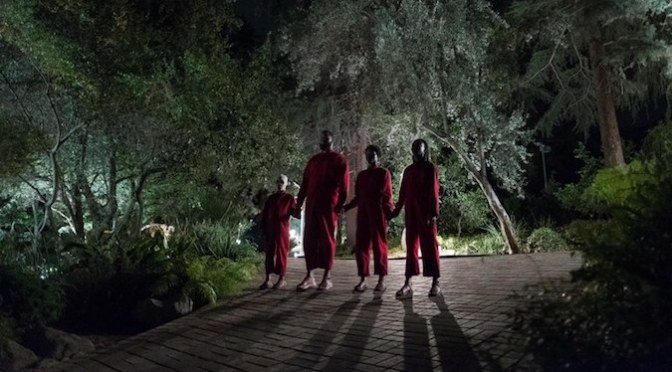
 Jordan Peele’s Us is nothing short of exceptionally entertaining horror. Starring Lupita Nyong’o and Winston Duke as the mother and father of a prototypical American family, Us joins a long tradition of doppelgänger horror while still emerging from that tradition into definitive modernity. Like Peele’s debut Get Out, the American Dream — as a white-picket-fence fantasy and as a dark reality — is crucial not only to the implicit themes of the film, but to the reason both films are scary in the first place. Yes, Us has a preponderance of classic horror moments, from jump-scares to home invasions to creepy coincidences foreshadowing a coming threat. But these tropes become entertaining again only in context of a strong underlying assertion that speaks to something in our everyday life, and while Us may not speak as explicitly as Get Out, the potency of the film is drawn from a similar source.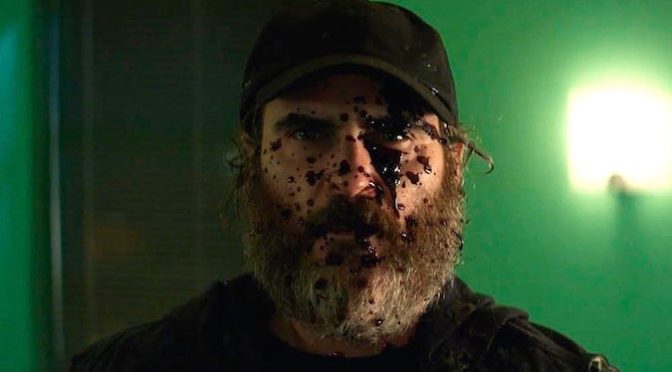
 There were a number of factors that prevented me from rushing out to see You Were Never Really Here on opening night. First was the weather, which is not really an excuse at all if you’re a New Englander like me. The second factor was the review snippet plastered on the poster that referred to the film as “Taxi Driver for a new century.” Do I enjoy Taxi Driver? I do. Do I enjoy “modern updates” to ’70s classics like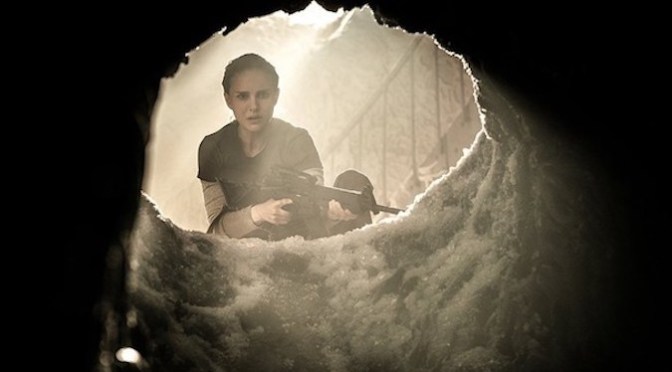
 In the climactic finale of Annihilation, there is a moment in which a shape-shifting alien bioclone with burning arms lovingly embraces a charred corpse in a lighthouse that has been struck by a meteor and overtaken by a mutated blight that threatens all life as we know it. Go ahead and read that sentence again if you have to. I dare you to try to come up with something so outlandish, so unsettling, so straight-up weird, much less deploy it at a crucial moment in a multimillion-dollar motion picture production. We live in a time where pretty much every sci-fi film with a budget this size (about $40 million) ends one way: explosions. The scripts all contain the same line: Big CGI Thing bursts into CGI flame. Heck, explosions probably typify the finale of most Hollywood films, sci-fi or otherwise, and the scripts for their inevitable sequels all contain the same line: Bigger CGI Thing bursts into bigger CGI flame.
 Motion State Review