

 As a White Dude with a full deck of privilege and a shitload of unlearning to do when it comes to an effort at anti-racism, I acknowledge that there’s always going to be imperfection, at best, in my understanding of the Black Experience. Too many people like me use that as an excuse to not even try, of course, preferring the comfort of a bubble in which ignoring racism is hardly ever recognized in and of itself as a racist act. As a White Dude, part of me resides inextricably in this bubble regardless of my physical location. There’s quite an echo in here. And while I do recognize that ignoring racism is itself a contribution to racism — of course it is — I’m still undoubtedly one of those unthinking contributors. And admitting this puts me no closer to our aforementioned understanding. Nine out of ten attempts to place myself outside of the bubble are too weak to even perforate it, and the tenth is a noble failure.
Amongst those measures of not-enough is the discovery, experience, discussion and championing of Black Art. This is too easy and not impactful enough to be considered “putting in the work” for us White Dudes, or to count as allyship in any meaningful sense. So I’m gonna sound really, really desperate to make a grand point here when I turn heel to assert that it’s also not nothing, because not nothing is hardly the bar we should be striving to clear. But when discovering, experiencing, discussing and championing something as vital as Mangrove, even this most passive engagement can result in challenging questions of the sort that are typically drowned out in the din of the benighted bubble.

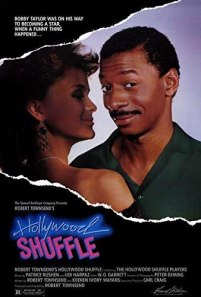 One of the best collections available on the Criterion Channel is one called Film Plays Itself, a self-reflexive assemblage of movies about movies. Here you’ve got your classics, like Sunset Boulevard and 8½. You’ve got your “out-there” stuff, like the experimental Symbiopsychotaxiplasm or Godard’s New-Wave Contempt. And you’ve got some modern triumphs like The Player and
 April 2019 was a pretty earth-shaking month in pop culture terms. We had the first tangible fallout from the Disney/Fox merger and some really interesting developments in the Great Streaming Wars (the launch of the fantastic Criterion Channel, details on the upcoming Disney+), we had new blockbuster releases (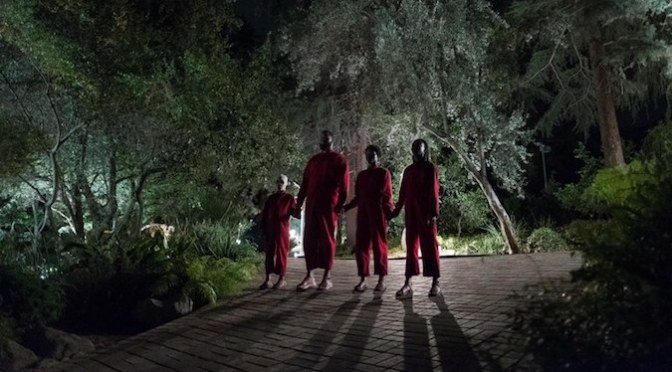
 Jordan Peele’s Us is nothing short of exceptionally entertaining horror. Starring Lupita Nyong’o and Winston Duke as the mother and father of a prototypical American family, Us joins a long tradition of doppelgänger horror while still emerging from that tradition into definitive modernity. Like Peele’s debut Get Out, the American Dream — as a white-picket-fence fantasy and as a dark reality — is crucial not only to the implicit themes of the film, but to the reason both films are scary in the first place. Yes, Us has a preponderance of classic horror moments, from jump-scares to home invasions to creepy coincidences foreshadowing a coming threat. But these tropes become entertaining again only in context of a strong underlying assertion that speaks to something in our everyday life, and while Us may not speak as explicitly as Get Out, the potency of the film is drawn from a similar source.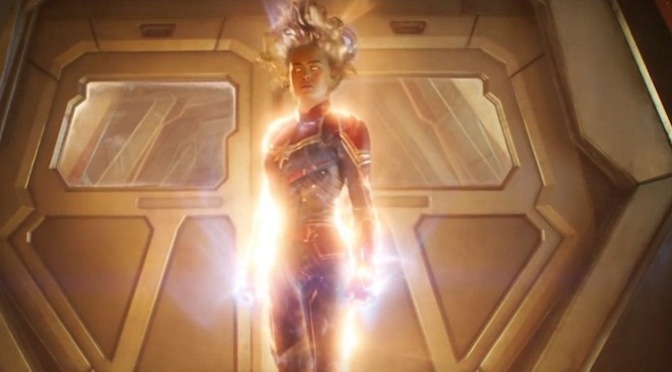
 In 2017 The Last Jedi ignited a culture war between lovers of Star Wars on the one side and…well, lovers of Star Wars on the other side. This war was ostensibly borne of debate over the film, praise versus criticism, and there certainly is a battlefront of this war that does engage in genuine discourse over Jedi. There’s another front, of course, comprised mostly of warriors fighting with a willing blindness to the merits or pitfalls of the film as a film; some people just despise Jedi for puerile personal reasons, some just defend it simply because it’s Star Wars. This is the Ultimate First World Problem, such hatred and ire thrown about over the seventh sequel to a space fantasy from 1977. But intentionally or not, a particular faction of “critics” revealed themselves during this war. We’ll call them the Shitboys, because they’re mostly boys and they mostly shit on everything.

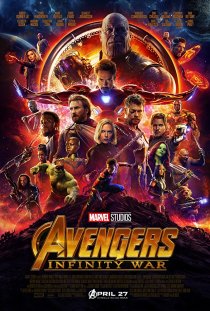 One of the things that soured
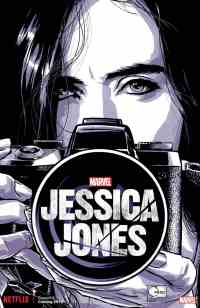 For better or worse, the most apparent quality of the first season of Jessica Jones was how out-of-place it felt amongst the rest of the Marvel Cinematic Universe continuity. If you’re accustomed to (or numbed by) Marvel’s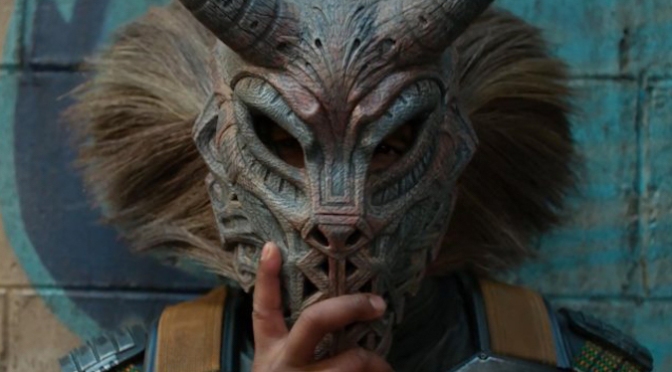
 There’s nothing quite like a good movie villain. If we’re talking about the Marvel Cinematic Universe, maybe you read this statement another way: there’s nothing quite like a good movie villain, anywhere. With the exception of Loki and a few other superbaddies, the MCU’s well-documented track record for weak villains has been the franchise’s persistent shortcoming. In much the same way as the villains of the Bond franchise became less and less interesting with each progressive installment, by this point you basically know what you’re getting in the Antagonist Department. At worst, the MCU gives us a paper-thin doppelgänger for the hero, a bland apocalypse-seeker with vague motivation, or whatever the heck Christopher Eccleston was supposed to be in Thor: The Dark World. At best, the MCU just gives us Loki for like the fifth time.
 Motion State Review