
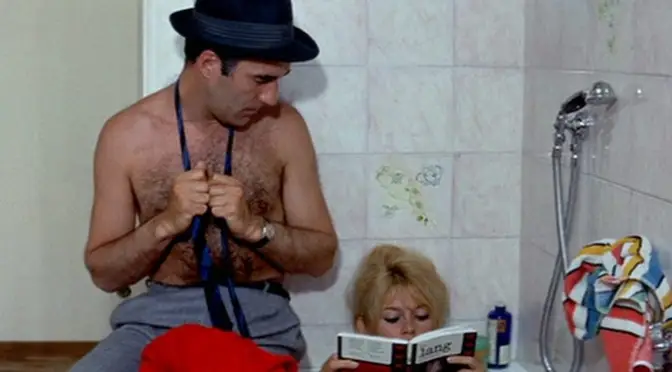
 “Chekhov’s Gun” is a commonly-quoted dramatic principle underscoring the necessity of every element of a narrative story. If a gun is shown in the first act, it must be fired in the third. Elements that do not impact the story — unfired guns — should be removed entirely, so as not to make false promises or clutter the story with unnecessary details. Chekhov’s principle is intrinsically related to foreshadowing, and there are several ways to use it. You can use it well, giving your story the qualities of a fine-tuned machine. You can use it poorly, relying on it as a crutch such that your story loses its natural, organic feeling. Or you can use it like Jean-Luc Godard uses it in Contempt: as a massive fuck you to anyone who dares insist that dutifully following the rules is going to make your story better.
It’s more complicated than that, of course, but the handgun that appears in Contempt is indeed shown several times with great intention. It is never fired, nor is it brandished with the threat of being fired, nor is its owner really the type of man who would ever shoot anyone. That man is Paul Javal (Michel Piccoli), a screenwriter working on a new adaptation of Homer’s The Odyssey while contending with pressure from his American producer Jerry Prokosch (Jack Palance) and navigating marital strife with his spouse Camille (Brigitte Bardot). After a mere glimpse at Paul we understand he is not the type of man to resort to violence, much as we understand after Contempt‘s opening shot that Godard is not the type of director who’d forget that he put a loaded gun in the hand of his hero.

 Jimmy Stewart was in a lot of Westerns. From Destry Rides Again (1939) all the way to The Shootist (1976), the actor’s continual returns to the frontier nearly end up signposting the decades-long rise and fall of the genre itself. In the early 1960s, just prior to the introduction of a violent revisionism courtesy of Sam Peckinpah and Sergio Leone, Stewart teamed with John Ford and turned out classics like The Man Who Shot Liberty Valance and How the West was Won. Prior to that, as the Western was enjoying its heyday in the 1950s, Stewart starred in the progressive-for-the-time Broken Arrow and in a string of Westerns from director Anthony Mann, including the eventual classic Winchester ’73. But the most underrated Stewart Western — and maybe one of the most underrated Westerns period — is another feature from Mann called Bend of the River.
 I am admittedly predisposed to movies like The Northman — bloody, epic revenge tales with a strange angle, a hyper-specific period setting, or both. I’m also a huge fan of
 Columbus, the debut feature from writer/director Kogonada, was so quietly self-assured that I figured I knew what to expect from his sophomore effort After Yang. Carefully composed framing, slow-but-steady pacing, and a general construction so precise that it borders on the architectural (and not just because Columbus was partly about architecture) — these are the hallmarks I readied myself for in After Yang, which premiered last week at the Sundance Film Festival.

 Independent Film Festival Boston
 The traditional Western is perhaps not known for subtlety, nor for its interpretive qualities, nor for self-awareness, and yet Pale Rider has all of those things and is very much a late-game classic of the genre. “Classic,” here, should indicate that this is not a revisionist Western, despite being released long after the genre had been declared dead. The plot concerns a fledgling California village under the thumb of a ruthless mining corporation, and Clint Eastwood’s mysterious loner rides into town and kicks ass in the name of the little guy. This, as you may have heard, is about as classic as the plot of Western gets (see also: Shane, Django, A Fistful of Dollars, Eastwood’s own High Plains Drifter, etcetera).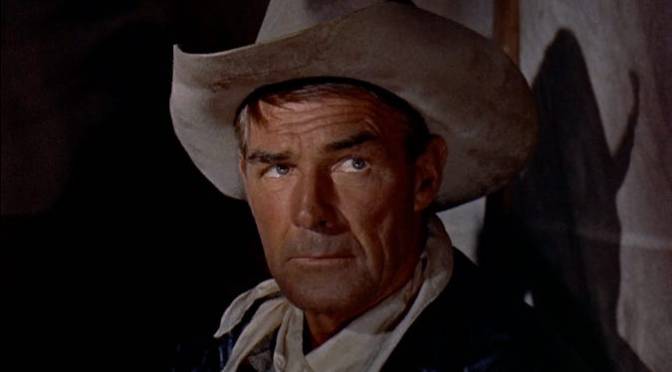
 The arrival of the Spaghetti Western in the mid-1960s might be credited as the major pivot point for the film Western on the whole, but a subtler shift began more than a decade earlier. American director Budd Boetticher was familiar with the genre in 1956, having helmed six or seven Westerns in the early ’50s, films starring the likes of Rock Hudson and Glenn Ford. By and large these fit the mold of what you’d expect from the era, right down to the leading man: young, chiseled cowboys with a strong moral compass and a way with horses. Typified by Hudson, Ford, Gary Cooper, Henry Fonda, Joel McCrea and especially John Wayne, the Western Heroes of the time are jokingly (or not?) said to have had only two emotions on display: “hat on” and “hat off.”


 Motion State Review