

Each Motion State Face Off pits two films, franchises, or television series against each another for no reason other than because we can.
 In The Harder They Fall, sportswriter Eddie Willis (Humphrey Bogart) finds himself in a moral conundrum. He’s covering the boxing phenom Toro Moreno (Mike Lane), an absolute barn of a fighter who’s touring across America on an unprecedented winning streak. The conundrum? Toro can’t actually box worth a damn. The glassjawed giant has been set up by his manager Nick Benko (Rod Steiger) and had all of his fights fixed, though that particular fact is kept secret from Toro himself. Benko’s scheme ensures that the audience has a built-in perception of this fighter, that Toro’s reputation — even if it’s engineered behind his back — will equal dollars in Benko’s pocket. People love a clear-cut hero, an undeniable winner, and Benko forms Toro into exactly that. But Eddie’s not convinced, even if the blissfully-ignorant Toro seems to be having the time of his life in this heroic role. Shouldn’t the athlete himself have some say in how he’s portrayed to the world?
As Bogie’s last film, the noir-ish drama is of a piece with many of his other movies. Eddie isn’t at all riding around gallantly on a noble white steed, nor is he above making a quick buck off a media frenzy now and again. But as his relationship with Toro grows, Eddie softens and soon realizes he has to champion the athlete in response to a ruthless media and Benko’s managerial machinations. It’s not the Quintessential Humphrey Bogart picture, but The Harder They Fall is still deserving of a place amongst his filmography. And as a sports drama, it’s refreshingly not your classic scrappy underdog tale. A string of famous boxers lend some credibility by making appearances throughout the film, too, from Jersey Joe Walcott to Max Baer.
Continue reading Face Off: The Harder They Fall (1956) and Cinderella Man (2005)
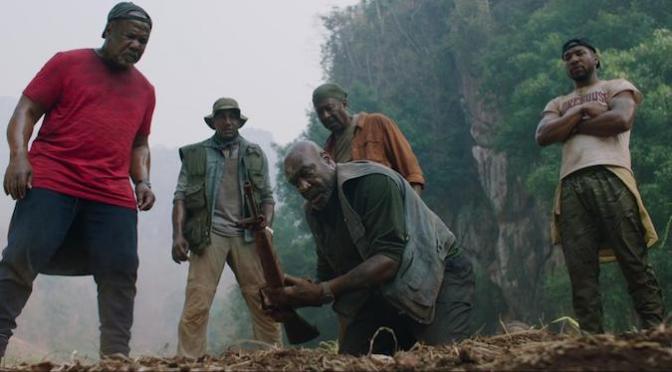
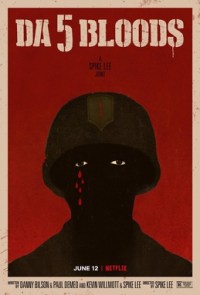 If you threw Spike Lee’s filmography into a pot and cooked it down, stirring occasionally such that all of the ingredients are thoroughly intermingled, you’d be left with Da 5 Bloods. Lee’s new Netflix joint is nothing if not ambitious, and at its shakiest it does feel composed of variations on ideas he’s had in previous films. Take the war-never-ends framing device of Miracle at St. Anna, the style-and-substance mentality of BlacKkKlansman, the epic scope of Malcolm X, a pinch of the melancholy soul-searching of 25th Hour, a dash of the motley cast of Get on the Bus, and Spike’s secret sauce, of course, that blunt intrusion of American history into an otherwise routine narrative. The last ingredient is always a tough one to swallow, but in Da 5 Bloods its sourness is even more noticeable. As with the final scene of BlacKkKlansman, the dark American past we’re witnessing is often only a few months old.
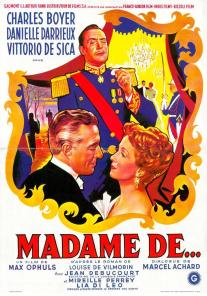 The Earrings of Madame de… is the English-language title for Madame de…, as it was released in France, which heralds the heart-shaped diamond jewelry — not its owner — as the star of the film. The earrings do indeed play a major role, significantly altering the lives of those who possess them, seemingly propelled by their own willpower from one owner to another and back again. With a pinch more malice this would be The Lord of the (Ear)rings, a fantasy tale about tempting jewelry that instills a deadly pride in those who dare purport to wield such power. But the passionately humanist Max Ophüls ensures that this is always really the story of Madame de…, not simply of her diamonds, and the themes of pride and ownership don’t necessarily involve the earrings at all.
 Those with a dream to fulfill have a better chance of survival. This is the idea put forth to Diego Fairman, a once-famous film director, as he lies in his hospital bed. He’s dying of cancer at the moment, given only a few months to live, his body ransacked by the disease at every turn. Diego’s life outside his body has been ransacked, too, the cancer boiling within him such that deep issues in his marriage, his family and his work all bubble to the surface. The ailing artist knows he wants to survive, but he doesn’t yet know that this means more than simply “staying alive.” Even if you’re in perfect health, your chances of survival are better with a dream to fulfill.
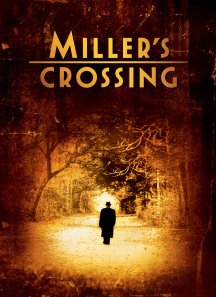 There may be no other gangster film in existence that walks the tightrope Miller’s Crossing walks. On the one hand, the third film from the Coen Brothers is of a piece with the 1930s gangster flicks that influenced it, full of colorful criminals and double-crosses and rat-a-tat action. The dialogue is straight from Dashiell Hammett and the production design is straight from the pre-Code era, à la Scarface and Little Caesar. The gangster subgenre and critical thinking on the subgenre are historically grounded in realism, unlike the mythic and symbolic trappings of the film Western, and Miller’s Crossing honors that in its gritty, ruminative approach to a complex plot. It is, in short, a quintessential gangster film.

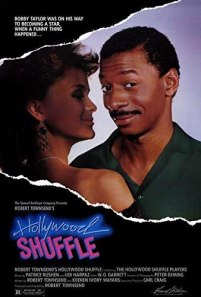 One of the best collections available on the Criterion Channel is one called Film Plays Itself, a self-reflexive assemblage of movies about movies. Here you’ve got your classics, like Sunset Boulevard and 8½. You’ve got your “out-there” stuff, like the experimental Symbiopsychotaxiplasm or Godard’s New-Wave Contempt. And you’ve got some modern triumphs like The Player and
 We’re always experiencing history now. Few grasp this concept like Alex Cox, who frequently eschews the traditional idea of “historical accuracy” in favor of something we might pretentiously refer to as historical truth. In 1986’s
 The Coen Brothers have been on my mind as of late. They usually are, granted, but especially so now that we’ve made the (ill-advised?) decision to dive into

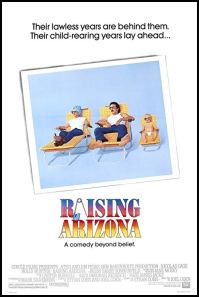 One of the most impressive things about the Coen Brothers is their ability to succeed in both self-aware comedy and super-serious drama, and their first two movies encapsulate both ends of that spectrum. Apart from
 Rather than a standard film review, we’ve been compiling a visual glossary of likely inspirations in Paul Thomas Anderson’s 2012 film The Master. Huge props go to

 Motion State Review