

 I am admittedly predisposed to movies like The Northman — bloody, epic revenge tales with a strange angle, a hyper-specific period setting, or both. I’m also a huge fan of The Lighthouse, the previous film from writer/director Robert Eggers, one of the most unique American films of the 21st century. So the hype level for this flick was more or less at carrying capacity at this week’s screening, and Eggers and Co. did not disappoint. Starring Alexander Skarsgård as the vengeance-bent Viking prince Amleth, The Northman has Eggers’s blend of folklore and historical fidelity all wrapped up in a potent, ferocious epic. It’s not quite a perfect film, but it has some of the most stunning storytelling you’ll see onscreen this year.
Much has already been written on Skarsgård’s insane transformation into Amleth, a beastly and primal performance that puts the mere term macho to shame. Of course it’s far deeper than machismo, and Skarsgård imbues Amleth with a vulnerability that makes the character — and thereby the picture — really work. He’s doing everything Leonardo DiCaprio did as Hugh Glass in The Revenant, but unlike Glass, Amleth’s character is wholly defined by his relationships with others. His bond with his father and mother (Ethan Hawke and Nicole Kidman) and his hatred for his uncle Fjölnir (Claes Bang) drive his every action. He’s frequently referred to as a wolf, and we see all sides of that metaphor: the young and uncertain pup, the lone stray seeking a home, the feral creature commanding a pack of other wolves, and finally the wisened alpha. Skarsgård goes all the way and then some, and Northman couldn’t exist without him.

 Those with a dream to fulfill have a better chance of survival. This is the idea put forth to Diego Fairman, a once-famous film director, as he lies in his hospital bed. He’s dying of cancer at the moment, given only a few months to live, his body ransacked by the disease at every turn. Diego’s life outside his body has been ransacked, too, the cancer boiling within him such that deep issues in his marriage, his family and his work all bubble to the surface. The ailing artist knows he wants to survive, but he doesn’t yet know that this means more than simply “staying alive.” Even if you’re in perfect health, your chances of survival are better with a dream to fulfill.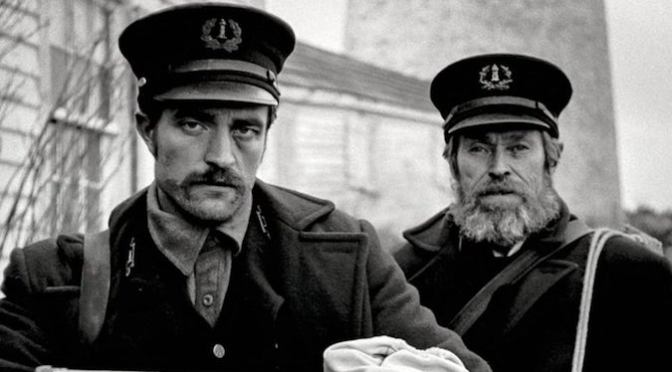
 The ambition of Robert Eggers was apparent after his debut The Witch, a one-of-a-kind horror film steeped in deeply-felt folklore. The dialect, the costumes and settings, the sound design and the themes were all clearly the result of hard research and dedication to period accuracy rarely realized in modern film. Eggers himself, who presented a special

 The superhero genre is not, in fact, a genre. Adapting comics to film has become a billion-dollar industry in the past decade, and the movies comprising that industry have certainly been typified by a familiar formula. Marvel movies are with few exceptions fun but mostly mindless. DC movies are with few exceptions Marvel movies with all the fun wrung out. Those exceptions usually end up being the best of the bunch, but the point is that the “superhero genre” — while technically an applicable term for things grouped by subject matter — is more a “superhero formula” applied across genres. There’s action-thriller, action-comedy, action-adventure, sci-fi action…heck, when’s someone gonna make a superhero rom-com or a superhero road trip flick? Or a super-workplace melodrama devoid of any action whatsoever?

 Motion State Review