
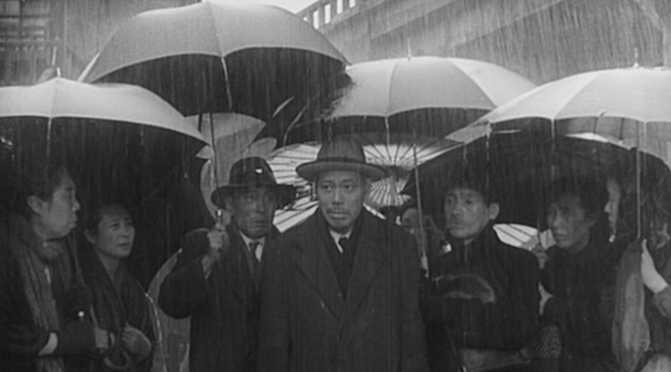
 It’s entirely possible that the West’s fondness for Akira Kurosawa is borne of the fact that he frequently addresses themes of individuality, personal distinctiveness, and the importance of being true to yourself. Those aren’t very Japanese themes, traditionally, even if the popular “nail that sticks out gets hammered down” axiom is a bit simplistic these days. But the corporate-cog-finds-new-lease-on-life narrative seems especially well-suited to the notoriously workaholic Japanese culture, and nowhere is that narrative more effective than in Kurosawa’s Ikiru. Now streaming on The Criterion Channel, Ikiru stars Kurosawa stalwart Takashi Shimura as a spiritless bureaucrat grappling with the futility of his mortal days.
There is a sequence in the film — possibly the most famous in a film full of memorable sequences — where a group of parents approach a number of different government offices in an attempt to get a local cesspool drained and replaced by a park for their children. The first office refers them to another, that office refers to a third, and on and on. The buck is passed until the parents are so worn down by the perpetual runaround that they give up. If you’ve never seen Ikiru or would just like to rewatch the scene, you can stream the sequence here.

 A lot of what Alan Moore has created is now considered classic. V for Vendetta, League of Extraordinary Gentlemen, From Hell, The Killing Joke, his run on Swamp Thing…to say this stuff is at the vanguard of comic-book storytelling is to undermine the fact that this stuff is the vanguard of comic-book storytelling. But it’s important to remember — crucial, actually — that Moore’s never purposefully written a “classic,” meaning his tales are almost exclusively nontraditional narratives that toy with genre and literary consciousness. The writer has a few reasons to despise Hollywood, but the primary point of contention must be that each film adaptation of his comics seems to shove the original tale back into a traditional, classic structure. It happened with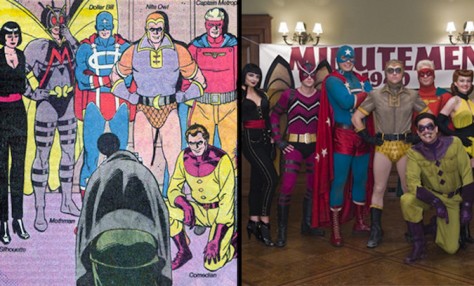


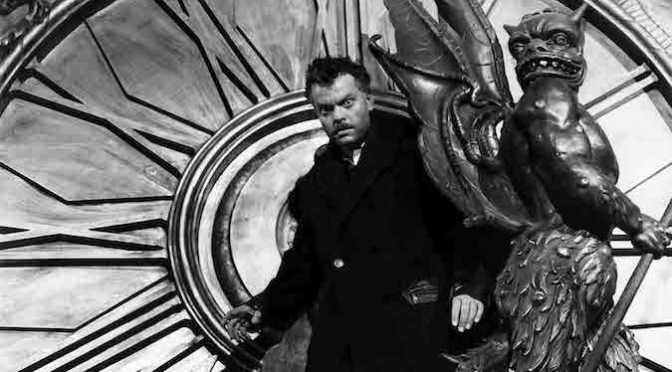
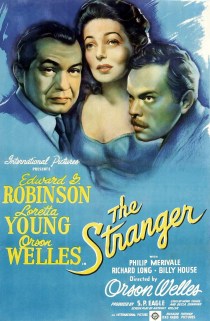 As is the case with the work of many a cinematic genius, the filmography of Orson Welles is especially revealing when considered as a whole. Hits, flops, stretches of obsession, gaps of inactivity, passion projects and moneygrabs — in some ways this kind of retrospective review can tell us more about the filmmaker than the films themselves. It’s the “God’s-eye view,” to steal the name of an aerial shot favored by Welles, and it serves to highlight the ideas that the writer/director would experiment with, return to, or transform entirely in successive efforts. The other edge of the sword, of course, is that each individual film inexorably loses something when viewed alongside a slew of cinema which may otherwise share little by way of plot, theme, style or cultural impact.
 Motion State Review