

 No matter how closely a film adaptation hews to its source material, the experience will always be uniquely different from page to screen. Nickel Boys, adapted from Colson Whitehead’s 2019 novel by documentarian RaMell Ross, underscored that fact as it opened the 62nd New York Film Festival on Saturday night. Even the decision to drop The from the film’s title, for example, seemingly one of the more minor changes made by Ross and his crew, is a crucial one for a story about the broad nature of identity. Nickel Boys may center around two distinct characters, but the intersection between them and the other boys at Nickel Academy is the real heart of both novel and film.
When Elwood Curtis (Ethan Herisse) happens to hop into the wrong car, he’s arrested and brought to the sadistic juvenile reform school Nickel Academy. There he meets Turner (Brandon Wilson), a young man with a very different outlook on their similar circumstances. While Elwood sees a world ripe for change, spurred by the ideals of Martin Luther King Jr., his friend largely opts for survival by keeping his head down. As Elwood seeks the beauty in the world, he and Turner are forced to reckon with the abuse of Nickel for the rest of their lives.

 Truth is stranger than fiction, right? Case in point: at last night’s screening of Wildcat at Boston’s
 As the Writer’s Guild of America enters a strike in L.A., Motion State stands in solidarity with writers and in support of

 In
In 
 Wait! Before you roll your eyes and seek out a piece with a less whiny opening line, know that this is a generally favorable review of the Amazon series inspired by Tolkien’s creations. Much has been written already about the liberties taken by showrunners J.D. Payne and Patrick McKay, and sure: there are diversions, detours and a significant condensing of the timeline of Middle-Earth throughout the show’s first season, some of which result in frustrating missed opportunities. Entire diatribes have been dedicated to lamenting the fact that the Rings of Power elves have short hair, or that the Númenóreans should technically be like nine feet tall, or that mithril or the palantíri work very differently here (
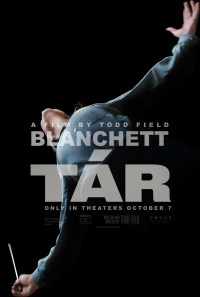 Tár is perhaps not the most exciting title ever conceived for a film, but a character as narcissistic as Lydia Tár wouldn’t dare permit any confusion about who’s in charge here. This is her story, and in Tár’s mind that means she alone is the owner of that story. A story, a piece of music, a relationship, a marriage — these are not conversations or discussions, not malleable things that allow for multiple participants. These are possessions, shouldered entirely by their owner, and in a way those possessions define the identity of the owner herself. Any attempt by another to repossess those things, then, would be akin to destroying that identity.
 Good action direction is its own beast, a delicate balance of choreography, cinematography and editing that usually has two distinct goals: be exciting and be coherent. Those goals can be at odds, of course, as the more frantic and fast-paced an action sequence gets, the more likely it is to lose the viewer. 2002 was a watershed year for the actioner with the release of The Bourne Identity, which sported a super-fast-cutting editing style that worked brilliantly in its best moments; Bourne Supremacy, the sequel, doubled-down on this technique and arguably set the bar even higher than its predecessor. But many of the films that aped Bourne in the ensuing years failed to balance those two goals, resulting in messy fight scenes and chase sequences that were hard to follow. Heck, there are even a few moments in the trilogy-capping Bourne Ultimatum that lose the thread of logic in their haste.
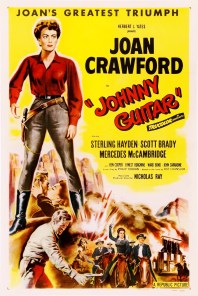 Strong female character is a phrase that gets thrown around a lot in woke film crit, and it’s probable that the arbiter of this particular criteria should maybe be someone other than weak male film critic — but here we are. Watching a movie as fantastic as Johnny Guitar, it’s hard not to wonder if the phrase is in fact more often applied to female characters who basically act like male characters, resorting easily to physical and verbal violence. The leads in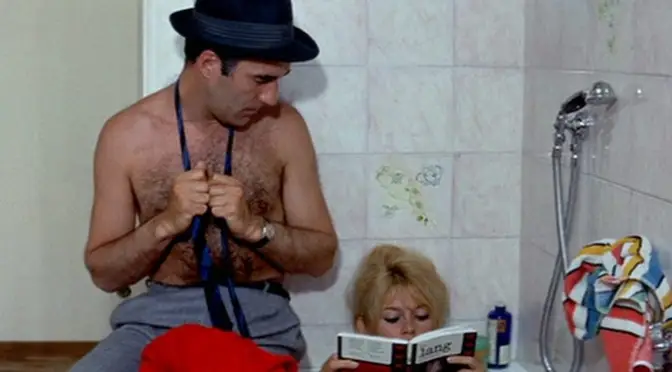
 “Chekhov’s Gun” is a commonly-quoted dramatic principle underscoring the necessity of every element of a narrative story. If a gun is shown in the first act, it must be fired in the third. Elements that do not impact the story — unfired guns — should be removed entirely, so as not to make false promises or clutter the story with unnecessary details. Chekhov’s principle is intrinsically related to foreshadowing, and there are several ways to use it. You can use it well, giving your story the qualities of a fine-tuned machine. You can use it poorly, relying on it as a crutch such that your story loses its natural, organic feeling. Or you can use it like Jean-Luc Godard uses it in Contempt: as a massive fuck you to anyone who dares insist that dutifully following the rules is going to make your story better.
 Motion State Review