
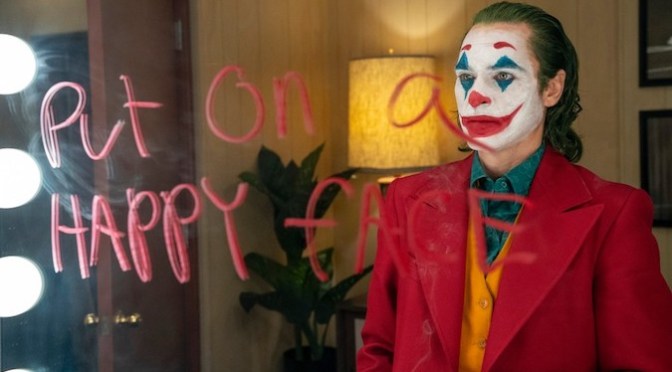
 Early buzz on Joker made frequent mention of a guy named Martin Scorsese, a film director you may have heard of, though not one who’s ever actually directed any films called Joker. Partly the comparison stems from the aesthetic of this new grimdark pseudo-origin for Batman’s nemesis, which is set in the ballpark of 1981 in a Gotham that looks suspiciously like the New York of Scorsese’s Mean Streets and Taxi Driver. Partly it’s the theme, too, I suppose, as Scorsese’s obvious preoccupation with insecure males and violence fits Joker‘s bill pretty well. And partly people simply love saying “it’s just like ______!” when a new movie comes out. Heck, the last Joaquin Phoenix movie we reviewed (the phenomenal You Were Never Really Here) discussed exactly that: people said it was “just like Taxi Driver!”
It wasn’t, of course, and Joker isn’t really like Taxi Driver, either. But I’m willing to bet Todd Phillips — Joker‘s actual director — isn’t exactly bummed at the comparison. If anything he’s consciously invited it, crafting Joker as a rip-off spiritual offspring of Marty’s in more ways than one. We might jump to Taxi Driver because of the interchangeable logline — unstable loner is shunned by society and devolves into madness as a result — but the shout-outs to Scorsese’s King of Comedy are even more explicit. Robert De Niro was in Phoenix’s shoes for that one, playing the failed comedian obsessed with Jerry Lewis’s talk show host, but in Joker he fills the exact seat Lewis filled in King. Now may be a good time to note that subtlety is not one of Joker‘s strengths.

 April 2019 was a pretty earth-shaking month in pop culture terms. We had the first tangible fallout from the Disney/Fox merger and some really interesting developments in the Great Streaming Wars (the launch of the fantastic Criterion Channel, details on the upcoming Disney+), we had new blockbuster releases (

 I never much expected Yorgos Lanthimos to become a great filmmaker. He was always a very good filmmaker, and it must be noted that we’re reserving the term great here for someone truly deserving of the moniker, as in one of the all-time greats. Nowadays great gets bandied about a lot. Is Ridley Scott great? From time to time, sure. Maybe we weigh the greatness of
 It would have been easy for Shoplifters to glamorize the criminal acts of its central characters. Hirokazu Kore-eda’s latest film follows an impoverished Tokyo family surviving on a hierarchical system of thievery, nicking small items where the opportunity arises or, more frequently, setting out on an express mission to steal that which they need. The setup, of course, is worlds away from the heist genre, but it’s still refreshing to experience these criminal acts for what they actually are: desperate, thrill-less acts devoid of meticulous planning or grifter’s luck. And if there is any thrill in stealing shampoo and ramen noodles, it’s a thrill that quickly sinks into the pit of one’s stomach, weighed by the immorality of it all.
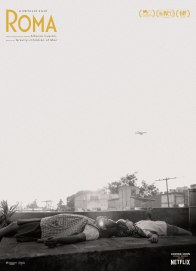 You could call Roma the most colorful black-and-white film ever made. After the Centerpiece screening at the 56th New York Film Festival, writer/director Alfonso Cuarón noted how important the visual presentation was to the overall effect of the movie. Crucial among his points was that this black-and-white is “not a nostalgic black-and-white” but instead “modern” and “pristine,” disabusing the viewer of the notion that this tale is unfolding in a long-forgotten place or time. Despite being assured throughout the film that the place is Mexico City and the year is 1971, Roma simultaneously manages to assure you that what’s happening is happening here and now.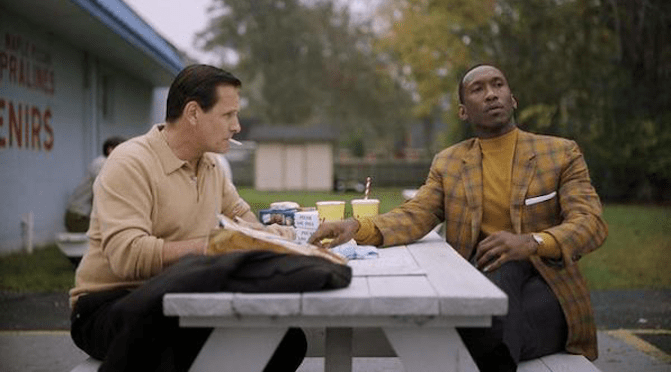
 After winning the People’s Choice Award at the Toronto International Film Festival last weekend, public opinion on Green Book quickly pivoted from a general curiosity in a dramatic effort from the guy who did Dumb and Dumber to genuine anticipation for an early Oscar frontrunner. The film’s first trailer, full of emotional monologues and swelling orchestral strings, already gave off a For Your Consideration vibe before Green Book even premiered. But TIFF has certainly become a stronger indicator of awards season success in recent years, and nine of the last ten People’s Choice Award winners went on to become Best Picture nominees. Universal went into overdrive this past week to get their sudden contender out to smaller festivals and screenings, so this week’s presentation at the 34th Boston Film Festival was a pleasant surprise.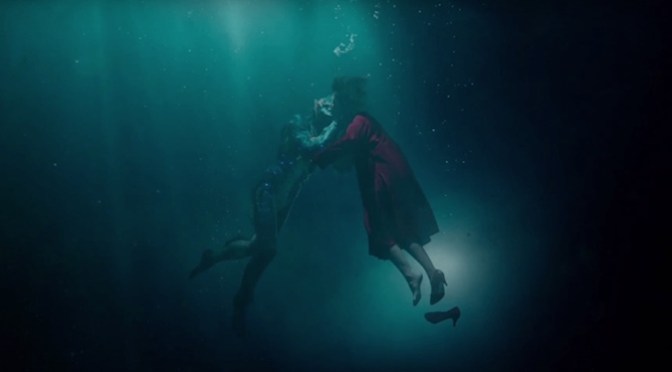
 I arrived late to the party for The Shape of Water, having finally caught the movie a few weeks ago after months and months of dodging reviews online. Guess I’d better add my voice to the fray, huh? Maybe a piece on how writer/director Guillermo del Toro’s creativity allowed him to get away with a smaller budget…but, no,
 There’s nothing quite like a good movie villain. If we’re talking about the Marvel Cinematic Universe, maybe you read this statement another way: there’s nothing quite like a good movie villain, anywhere. With the exception of Loki and a few other superbaddies, the MCU’s well-documented track record for weak villains has been the franchise’s persistent shortcoming. In much the same way as the villains of the Bond franchise became less and less interesting with each progressive installment, by this point you basically know what you’re getting in the Antagonist Department. At worst, the MCU gives us a paper-thin doppelgänger for the hero, a bland apocalypse-seeker with vague motivation, or whatever the heck Christopher Eccleston was supposed to be in Thor: The Dark World. At best, the MCU just gives us Loki for like the fifth time.
 Of the nine Best Picture nominees at this year’s Academy Awards, four of them — that’s a healthy 44% — address predatory love. Okay, maybe only three if you don’t include The Shape of Water, though, technically, yes, the protagonist is in love with a literal predator. Down to 33%, which is still a higher percentage than you’d expect from American awards season. Though I suppose Three Billboards Outside Ebbing, Missouri is never really about rape, only using that (as it used a number of other social issues) as a springboard for dramatic explorations of entirely different social issues. So, okay, fine: 22%.
 Motion State Review