Category Archives: TV Review

Bloodline – Season 1

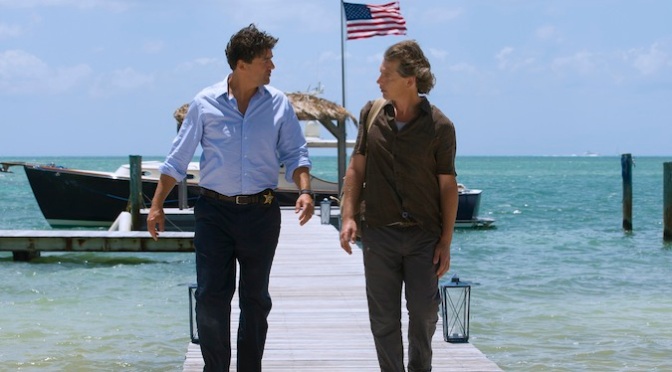
Bloodline is one of the latest original series produced by the ever-strengthening Netflix (it’s alive!), and by all accounts it’s a unique outing for the media giant. Set in and around the sweltering Florida Keys, the first season is less like fellow Netflix pal House of Cards and more like Showtime’s The Affair, another drama that zeroes in on family dynamics and household hostility. At best, though, comparisons aside, Bloodline is a true family drama with well-drawn characters and a driving central premise.

The family in question is the Rayburns, an island institution known and respected for operating the beachfront resort Rayburn House for decades. Father (Sam Shepard) and Mother (Sissy Spacek) are vitally influential in the lives of their four children and, as a bonus, are supportive of any conspiracy theories related to casting actors with alliterative fore- and surnames as husband and wife. They’re pillars of their community, and snippets of conversation and glances at newspaper headlines clue us in to the fact that the Rayburns are the public face of their little stretch of Key West. But Bloodline starts early in the slow uncovering of the real ways in which good ol’ Mum and Dad molded their children.

Continue reading Bloodline – Season 1

Better Call Saul 1.8 – “RICO”

I’m such a huge fan of Michael McKean’s Chuck, brother to Jimmy McGill in Better Call Saul, and “RICO” really underscored why. His casting was great based on looks alone, but soon it was clear that the character had a heck of a lot more to him than “looking like Bob Odenkirk”. The fifth episode “Alpine Shepherd Boy” delved into Chuck’s condition — a strange aversion to electromagnetism — and yet delved even deeper into the relationship between Chuck and Jimmy. Coincidentally, we also recently wrote about shots like the mailbox one above in our discussion of Michael Mann’s The Insider, so, yeah. There’s that.

First, though, before talking about Chuck’s medical/mental affliction, it’s worth recounting “RICO”s mini-flashback. Since “Uno” reached forward into Jimmy/Saul’s post-Breaking Bad life, each succeeding flashback has contributed to a portrait of who Jimmy used to be. As we discussed in last week’s review of “Bingo“, the answer to that question is really multiple answers: Jimmy’s a chameleon of sorts, shifting from street-level con-man to remorseful convict and now to mailboy at HHM, and there’s a sense that the “present-day” events are a continuation of this constant reinvention.

Continue reading Better Call Saul 1.8 – “RICO”

The Red Road 2.1 – “Gifts”

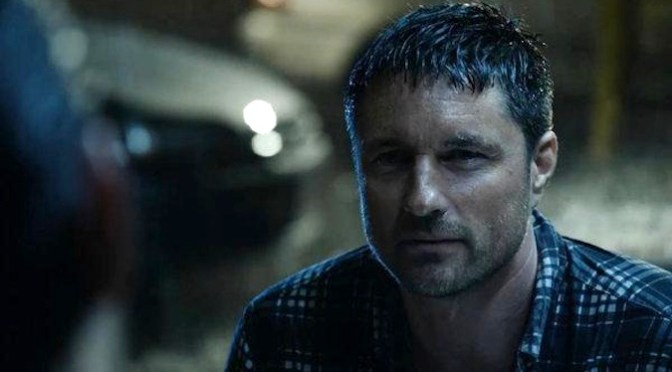
There was no small degree of uncertainty with regards to the direction The Red Road could take after a successful first season. Jason Momoa’s Phillip Kopus, the heart and soul of the show, seemed headed for prison; Martin Henderson’s Harold Jensen somehow came out in front of both Kopus and the ongoing familial strife that had plagued his wife Jean and their household for the past few months. But with a few major storylines seemingly reaching their conclusions — particularly one about the years-ago death of Jean’s twin brother and one about Kopus’s manipulation of Harold —where would season two go? “Gifts” starts by picking up right where the first season finale “Snaring of the Sun” left off, with Kopus being his usual menacing self and Harold showing he’s learned how to lie pretty damn effectively.

But that first scene is more of a coda to season one than it is a prelude to season two, as we’re soon treated to the ONE YEAR LATER tag that introduces the world of season two. And calling it a “world” is intentional, because although many of the same players are here the second season of The Red Road is already very different than the first (there are some new faces too [Wes Studi!]). We spoke a little about the setting of Road and the way in which it relates to the characters in our review of “Snaring”, so it was nice to see “Gifts” really run with that idea.

Continue reading The Red Road 2.1 – “Gifts”

Better Call Saul 1.7 – “Bingo”

I was away from Better Call Saul for two weeks. The Mexican prison in which I was caged had neither televisión nor computadora, and for some reason the chip in my brain that live-streams anything and everything related to Breaking Bad directly into my eyeballs seemed to be out of juice. Por favor, I wheezed, necesito…Saul. My captors never budged. At length I escaped with the help of a beautiful young Mexican woman named Alejandra, by foot, by horseback, by freight train bound for the States, by the skin of my teeth. I collapsed onto my couch seventy-two harrowing hours later. As “Bingo” began I felt like I’d missed something, I felt disconnected, I felt for the first time like I actually needed the previously on montage. I felt lost. I longed for Alejandra.

Oddly enough, “Bingo” was actually partially about exactly that: is Jimmy going anywhere? Even if you forget about him for two weeks, is he still just going to end up in the same place he started? This is a guy who constantly reinvents himself with chameleonic disregard for each successive former self. The episode “Hero” went a long way to depicting this, first showing the con man Slippin’ Jimmy, then the upstart lawyer Jimmy McGill, then the coiffed and suited James M. McGill, Esq. beaming down from that billboard. The trick of the thing, of course, was that it’s all still Jimmy. That billboard thing was a con, plain and simple, just like the kind Slippin’ Jimmy used to pull.

Continue reading Better Call Saul 1.7 – “Bingo”

The Red Road 1.6 – “Snaring of the Sun”

The first season of The Red Road ends with a whole lot of action, but the finale also manages to depict some important moments of character development as well. Junior takes a decisive step toward the dark side, Jean comes to terms (sort of) with the long-ago death of her twin brother, and Harold and Kopus find themselves in new positions as well. “Snaring of the Sun” isn’t as well-written as the penultimate episode “The Great Snake Battle“, but it makes up for that with some fantastic direction by Terry McDonough. McDonough has a solid body of work in television that includes three episodes of Breaking Bad and the Better Call Saul episode “Nacho“, so here’s to hoping he returns to The Red Road in future seasons.

It’s very possible that two of my story-based qualms with Road will have evaporated following “Snaring of the Sun”. First is the unevenness of Jean’s character — she’s necessarily all over the place, emotionally dragged around by Harold and, indirectly, by Kopus. But her smooch with the latter midway through “Sun” is cringeworthy, not just because of the usual kisses-are-cringeworthy reason but because this is the guy she’s pinned her brother’s death on for decades. Sure, she’s just discovered he had nothing to do with it. So she’s suddenly attracted to him? Anyway, the second qualm is the convenience of the taped recordings of Jean’s brother Brian (I called him “Scotty” in a previous review — refuse to change it) and “Sun” actually wrapped up that storyline well. I’d be surprised if those tapes pop up again.

Continue reading The Red Road 1.6 – “Snaring of the Sun”

The Red Road 1.5 – “The Great Snake Battle”

The opening scene of the first season Red Road episode “The Great Snake Battle” reminded me of a scene from James Gray’s directorial feature Little Odessa. Both use a skinny hallway of a rundown New York City tenement as their setting, both depict a passionate confrontation between father and son, and both show how quickly a power dynamic can change from one man to the next. The comparison is strengthened somewhat by the fact that Gray directed Road‘s pilot episode “Arise My Love, Shake Off This Dream“; this fifth episode, focusing almost exclusively on main characters Phillip Kopus and Harold Jensen, is also the best since Gray’s opening hour.

We’ve seen how smart and manipulative Jason Momoa’s Kopus can be in pretty much every episode so far. He always seems to have the upper hand, even when he’s pissed off or cornered or spoken to like a child by his manic father Jack. It’s Jack and Phillip who come head-to-head in that dim hallway, the former ripping the door open with a gun in his hand and demanding his payment, the latter hardly saying a word at all. It’s not the fact that Phillip is quiet that makes this scene different — we’ve talked at length about the silent observations of Kopus, watching from afar and gathering ammunition to use against anyone and everyone. But he’s more than just quiet in this hallway scene. As his father rips into him, Kopus seems truly sad. Sad Kopus is without a doubt a new Kopus.

Continue reading The Red Road 1.5 – “The Great Snake Battle”

The Red Road 1.4 – “The Bad Weapons”

We discussed the significance of the episode titles of the first season of The Red Road in our review of the second episode “The Wolf and the Dog“, one of a handful of Native American legends employed as allusion and metaphor for the events of the series. “The Bad Weapons” is no different, but the episode goes one further in attempting to apply the belief systems of the given tribe (in this case the Blackfoot Nation) to the moral quandaries of Philip Kopus, Harold Jensen, and the other residents of Walpole, NJ.

There’s a Red Road subplot revolving around the years-ago death of Jean’s twin brother that rears its head again in “Bad Weapons”. It’s certainly an important history for the show (or at least the opening season), mainly because of the subtle intimation that Kopus might have been involved in that untimely demise. But as Jean and Harold’s daughter Rachel discovers tape recordings of the twin’s stream of consciousness, that particular storyline slips away from importance and approaches convenience instead.

Continue reading The Red Road 1.4 – “The Bad Weapons”

The Red Road 1.3 – “The Woman Who Fell from the Sky”

The Red Road, great as it is, is like any other show in the history of television: it has weak spots. “The Woman Who Fell from the Sky”, the third episode of the opening season, is likely the first time the chinks in the armor are visible. The writing up until this point has been largely commendable, succumbing to the occasional been-there-done-that moment, but mostly avoiding them, hinting at new roads (red ones) instead of relishing the old ones. “Woman” is a bit shakier, but thankfully Jason Momoa’s Philip Kopus, far and away the best character on the show, does what he can to save this particular episode from sliding wholly into those moments of cliché.

These days, “antihero” is like a curse word. We’re living in a post-Breaking Bad world, so the last word on the TV antihero thing has kind of been said. Does that mean antiheroes should be avoided altogether? Of course not. But is that what Kopus is? Hard to say. He has some qualities of an antihero in that he’s definitely a bad guy, robbing medical wholesalers and dealing in guns and drugs and manipulating kids, but he’s simultaneously someone you root for. It’s fun as hell to watch him do his thing, even if that thing isn’t strictly legal.

Continue reading The Red Road 1.3 – “The Woman Who Fell from the Sky”

Better Call Saul 1.6 – “Five-O”

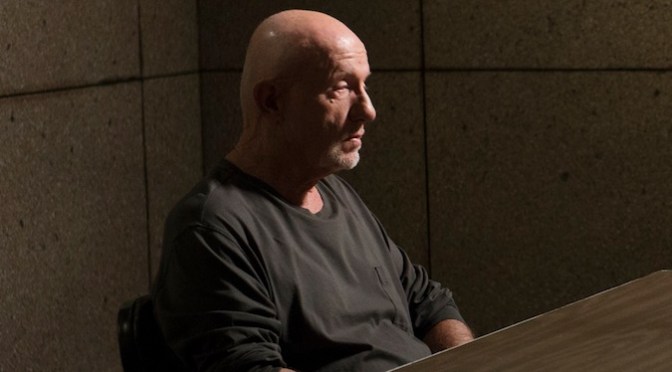
Better Call Saul mixed things up last night by completely switching the focus onto another character. Mike Ehrmantraut was a fan favorite in the later seasons of Breaking Bad, and his presence in the prequel/spinoff up to this point has been sort of a glorified cameo. “Five-O” took the reins away from Bob Odenkirk’s Jimmy and gave them to Jonathan Banks’s tortured, pouty-faced Mike, and it was one of the most ingenious moves yet from a show that’s already pretty fantastic.

At the close of the last episode “Alpine Shepherd Boy” we saw Mike engage in a bit of a staring contest with a young woman we presumed to be his daughter. We knew Mike’s granddaughter Kayleigh is part of his motivation for moneymaking during the events of Breaking Bad, but apart from a game of Hungry Hungry Hippos we never saw much of Mike in his family life. “Five-O” broke that wide open, answering a ton of questions and raising a few more in the process.

Continue reading Better Call Saul 1.6 – “Five-O”

The Red Road 1.2 – “The Wolf and the Dog”

Part of what makes The Red Road so good is the sense that the story being told is both an all-out pedal-to-the-metal crime drama and a meditative slow burn. “The Wolf and the Dog” epitomizes that juxtaposition as well as any other episode of the first season, containing breakneck bursts of action in one scene and calm intensity in the next, toggling effortlessly back and forth throughout the hour. The second episode picks up right after “Arise My Love, Shake Off This Dream“, following Harold as he stalks through a junkyard in the early morning hours looking for a bumper to replace the dented one on his truck. Any doubt he had regarding the guilt of his wife Jean in the Ramapo Mountain hit and run is dispelled when he finds a shred of shirt in the old bumper.

Julianne Nicholson’s Jean and Martin Henderson’s Harold get fleshed out a little more in “The Wolf and the Dog”, and their relationship provides more of that simmering calm and apparent collectedness that just begs to boil over. Nicholson makes Jean’s shaky insanity phenomenally convincing, moving frailly from scene to scene like a marionette. What’s interesting is that the hit and run was never really in question for her. She may have been in denial, stating that she hit a deer or a dog instead of a young boy, but she never denied hitting something. Now that Harold has replaced the bumper and done what he can to dispel the rumor of Jean’s guilt, he’s essentially forced her to doubt the one thing that she actually had a firm grip on.

Continue reading The Red Road 1.2 – “The Wolf and the Dog”