Ivan’s Childhood (1962)

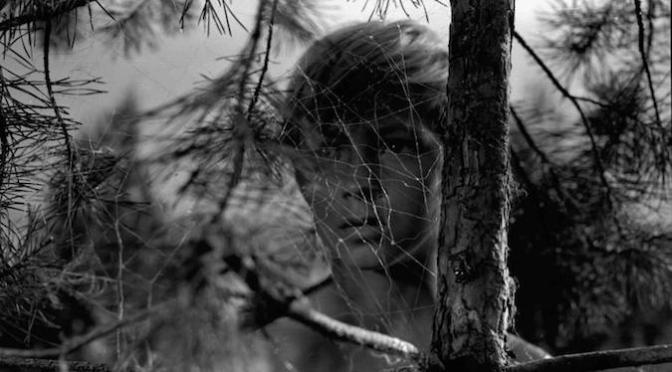
No one is expected to be great at something at their first attempt. Especially not in the arts. When parents buy their child a violin, it’s almost a guarantee that they will spend the next month or so plugging their ears at the cacophonous sounds they will be hearing at least an hour a day. Filmmakers are not exempt of this concept. We’ve seen the first films of the likes of Quentin Tarantino and Martin Scorsese, and they’re not very good. Even the master Stanley Kubrick notoriously hated his first film Fear and Desire, going so far as to buy all prints of the film so no one could see it. However, every once in a while, we get someone who seems to have a complete understanding of their art in their first foray into it, like when Mozart first sat down at a piano and began placing notes on a ledger line. This is the case with the great Russian filmmaker Andrei Tarkovsky and his debut feature-film Ivan’s Childhood.

Ivan’s Childhood, sometimes known as My Name is Ivan, was made in 1962 and is a tale of a boy named Ivan who is used as a scout during World War II. It follows Ivan’s war-torn youth and the lives of the people around him as they all have to deal with the conditions this event puts them in. It is based on the short story “Ivan” by Vladimir Bogomolov. The film was, as previously mentioned, Andrei Tarkovsky’s first, astoundingly so. To get to the point, Ivan’s Childhood is a very beautiful film and although when it comes to Tarkovsky’s sadly small filmography, works like Stalker, Solaris, and Andrei Rublev are usually given the most significant attention (deservedly so, may I add), I believe Ivan’s Childhood is just as worthy of this praise and attention.
Continue reading Ivan’s Childhood (1962)

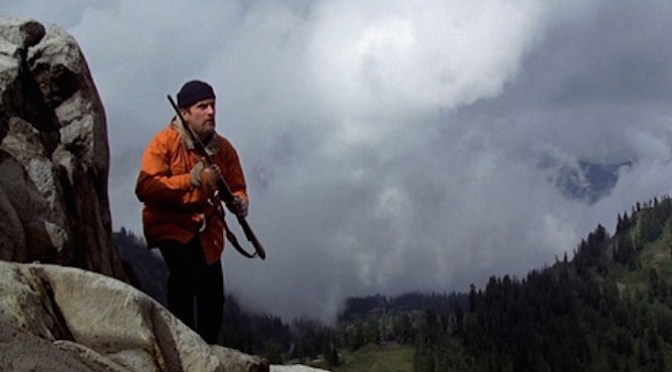
The Deer Hunter (1978)

Bob De Niro always gets invited to the best weddings. Alongside all of the countless things young brides concern themselves with in the months leading up to their marriage — what if it rains? Can Trudy and Greta get along if we sit them together? Chocolate or vanilla? — there’s incredible solace to be had in the fact that De Niro will be there, in attendance and in approval. The guy clearly loves weddings. One of his first starring roles was in Brian De Palma’s The Wedding Party and one of his most recent was The Big Wedding, followed by the pre-wedding bachelor party shenanigans of Last Vegas; jury’s out on whether those movies are any good or not (wait — jury’s back — they’re not) but still, the weddings in those movies rock. Come on: Robin Williams is the presiding priest in The Big Wedding. This could be an all-divas-on-deck Kardashian wedding or some other unfathomably incestuous socialite caucus and you’d still attend if Robin Williams was the priest. So too would De Niro, apparently.

One of the better ones is the wedding from Goodfellas, in which the goodwill wishes come in a drunken torrent and the prerequisite for inclusion on the guestlist is being named Peter, Paul, or Marie. Just look at Henry and Karen — they’re perfect together. De Niro’s here, he’s having a pretty good time. But there’s something else on his mind, maybe, like whether the salami on that antipasto platter is fresh or whether he should just go ahead and whack Morrie Kessler already. Remember how he cut loose at Steven and Angela’s wedding down in Pennsylvania? That was a blast! He almost fought that Green Beret at the bar. Then he took his clothes off and ran down the street! Really, when we all invite De Niro to our weddings, the Hammered Brawling Run-Naked-Through-the-Streets De Niro is the one we want to RSVP.

Continue reading The Deer Hunter (1978)

The Man in the High Castle 1.2 – “Sunrise”

The Man in the High Castle operates on one of the greatest what if? concepts in history: what if the Allies lost WWII? It’s somewhat of a miracle that this particular hypothetical alternate universe hasn’t already been made into fiction, considering the possibilities brought to mind by the premise alone. It was odder still that Philip K. Dick’s story only really came to light when it was optioned for a television show, considering how fantastic the book is. And the show’s pilot, which aired as a part of Amazon’s Pilot Season back in January, didn’t disappoint. We’re whisked across a mid-’60s America that might have been, an Orwellian totalitarian state consisting of an unsettling blend of the familiar and the strange. We’re in New York — but this isn’t New York. We’re in San Francisco — but something’s out of place here. And it’s not just that the buildings are plastered with propaganda (although they are); something darker has taken root and changed society, changed the people.

“Sunrise”, the second hour, throttled back a bit on all of that (everything’s still plastered in propaganda). Joe and Juliana, the NYC- and San Fran-dwelling protagonists of the pilot, have now met up in the Neutral Zone that makes up the middle third of the Once-United States. They’ve fled the Greater Nazi Reich and the Japanese Pacific States, respectively, for reasons that aren’t altogether dissimilar. Copies of the mysterious film known in hushed whispers as the work of the equally mysterious “Man in the High Castle” have been smuggled by each protagonist, which on the surface seems a well-wrought story structure. Here are the show’s two most interesting characters, bringing the show’s most interesting item to a central location, bringing the story inward from each coast.

Continue reading The Man in the High Castle 1.2 – “Sunrise”

Film & TV News: December 16

News

  • Idris Elba is rumored to be circling the role of Roland Deschain’s Gunslinger in the long-stewing adaptation of Stephen King’s The Dark Tower series. This is good news for fans of both Elba and King, as Tower will inevitably turn into a massive franchise.
  • Another casting rumor is swirling around the inclusion of Kurt Russell in Guardians of the Galaxy Vol. 2, which would be the latest in a string of casting coups for Marvel if proved true. Who would he play? Star Lord’s daddy?
  • Yet another cinematic universe in the works: G.I. Joe will lead the Micronauts, Visionaries, M.A.S.K. and ROM into battle, and before you know it you’ll actually have some idea what any of those things are. Thanks, Hasbro!

Continue reading Film & TV News: December 16

Nostalghia (1983)

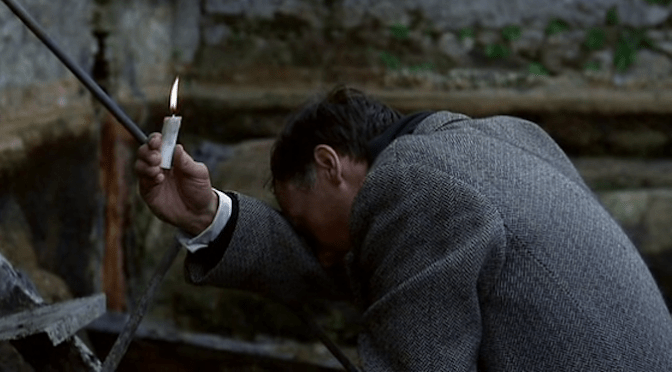
A Russian man named Andrei is in Tuscany. Not the beautiful sunny Tuscany we’re used to seeing, but a foggy and rainy one. He is holding a candle, attempting to carry it from one end of a drained pool to the other. In an astounding nine minute long lateral tracking shot, we see his struggle. He doesn’t get too far in his first attempt, and slowly walks back to the beginning of the pool, going to start again. He starts once more. He makes it a little further, attempting to shield the lit candle from the wind. He fails once again, although he’s made it a bit farther. On this third attempt, Andrei is devoting everything he has to keeping this candle lit. On his face is a look of intense concentration, shielding the candle with his coat and acting as if his life depends on this moment. Finally he makes it. He approaches the other side of the pool, and with every step closer, he struggles more. His legs become weak, sweat is on his brow. He carefully sets this lit candle down onto the side of the pool, and promptly dies. This is the final scene of Andrei Tarkovsky’s Nostalghia. What does this mean? What could it possibly symbolize about our character and his journey? Well, probably nothing if you’re to take the words of the film’s director into account.

Andrei Tarkovsky is widely considered to be one of the greatest filmmakers to ever live. He was hailed by Swedish film maestro Ingmar Bergman as “the most important director of our time.” His movies are rife with incredible imagery and beautiful storytelling. However, one unique characteristic that separates Tarkovsky from most storytellers is his aversion to symbols and symbolism in his films. Tarkovsky disliked the idea and believed it could ruin the composition of a scene and create a distraction for the audience. This is, by all means, a pretty unusual viewpoint. Symbolism has been an incredibly important part of almost all art since words were first put down to tell a story. So why did Tarkovsky think it was so harmful, and how does it relate to his own work and perhaps other films?

Continue reading Nostalghia (1983)

Tangerine (2015)

We’ve all been there before: it’s Christmas Eve and you’ve just been released from jail to discover your pimp has been cheating on you so you flip out and hunt him down. It’s a pretty universal conundrum. That was what Pilgrim’s Progress was about, right? Or doesn’t Plato have some allegorical yarn about emerging from a darkened prison, reaching upward toward the light, finally beginning to perceive the true form of reality, and then bitch-slapping your pimp? The Parable of the Donut Shop, I think. Basic universal plots like Rags to Riches, Voyage and Return, The Quest, and Christmas Eve Pimp Hunting have a certain inherent comfort to them because we’ve all been there before.

Tangerine is fresh, though, even if you somehow don’t have a real-life parallel to the above scenario. I’d love to tell you that the freshest thing about it is the story, and admittedly broad aspects of it are rare in modern multiplexes. The primary cast members are transgender and transsexual individuals, led by Kitana Kiki Rodriguez (as Sin-Dee Rella, the newly-freed pimp-hunter) and Mya Taylor (as Alexandra, the Sundance Kid to Sin-Dee’s Butch Cassidy); the film is rounded out by Karren Karagulian’s Razmik, a cabbie with a penchant for rolling the streets where working girls Sin-Dee and Alexandra “ply their trade”. These aren’t your typical heroes, and that sentiment has little to do with their sexuality or gender. These people are the kinds of people that mothers-in-law everywhere are disgusted by, because the activities they engage in seem supremely self-serving, petty, deviant, etc. Indeed, Razmik’s mother-in-law makes all of this explicit when she shows up and harshly disapproves of what she sees.

Continue reading Tangerine (2015)

Film & TV News: December 6

News

  • Ryan Coogler, the young director behind the surprisingly good Creed and the devastatingly good Fruitvale Station, is apparently in talks to direct Marvel’s Black Panther movie. Is that a good thing or a bad thing? Cooler’s a strong newcomer, so it might be a shame for Marvel to go all Edgar Wright on him.
  • Ethan Hawke will join Clive Owen, Dane DeHaan and Cara Delevingne in Luc Besson’s Valerian, adapted from the epic sci-fi comic. We know next to nothing else about the film, but that’s quite a core cast.
  • Joshua Oppenheimer’s The Look of Silence won the International Documentary Association’s top honors last night, which was a surprise to few after Oppenheimer’s crushing The Act of Killing. Silence is currently on the 15-film contender’s list for this year’s Academy Awards, a list that unfortunately excluded the excellent (and currently streaming on Netflix) documentary The Wolfpack.
  • We’re happy to announce that Motion State is hereby and forthwith declared a Force Awakens spoiler-free zone. If you’re not interested in going to your favorite website and seeing something like “Mark Hamill Breaks His Silence on the Fact that Luke is Evil Now and Also Han Dies” plastered all over the front page, well…get a new favorite website!

Continue reading Film & TV News: December 6

Face Off: Flight of the Phoenix (1965) and Flight of the Phoenix (2004)

Motion State Face Offs pit two films, franchises, or television series against each another for no reason other than because we can.

The original Flight of the Phoenix is sort of an unsung classic. Sure, people still watch it a half-century later, catch it on TCM, and it was at least popular enough for somebody to remake it in 2004. But take even just a quick look at the incredible  cast and try to tell me Flight of the Phoenix has the popularity it deserves today. Jimmy Stewart! Richard Attenborough! Ernest Borgnine! Peter Finch! George Kennedy! Ian Bannen, for chrissake! It’s the ensemble equivalent of Age of Ultron except all of the actors are good and are playing characters instead of cardboard cutouts.

Here’s the trouble: in terms of plot, the 2004 remake is one of the most faithful remakes ever remade. It’s nearly beat-for-beat as far as the major story points are concerned, and even some of the lines of dialogue propelling those story points are simply lifted from the original and plopped back down here. Sure, new people are saying those lines and being influenced by those story points — but then again it’s just the actors that are new, not the characters. Those, too, are transplanted in near-entirety. One imagines an archeological expedition to the bowels of the 20th Century Fox studio costume shop under a banner that says Let’s See What We Can See emerging victorious with the costumes and props from the 1965 Flight of the Phoenix still covered in authentic desert sand. “Now all we need is new people!”

Continue reading Face Off: Flight of the Phoenix (1965) and Flight of the Phoenix (2004)

Jessica Jones – Season 1

What do you want out of a superhero show? There’s no shortage, of course — you’re getting superheroes whether they’re what you want or not. They’re everywhere. Shakespearian actors are nudging each other out of the way for the chance to play a purple-faced mind-controller. At least kids across America are thankful that there’s something to be for Halloween besides Harry Potter. Heck, even the Academy Awards are doling out statuettes for superheroism (although there’s something special about Birdman winning Best Picture, as if the Academy were trying to fight back). There’s no way around it: the increasingly staggering numbers of superflicks hitting theaters over the next half-decade can now be measured in metric shit-tons. The only thing more tiresome than the parade of superheroes is the commentary about how the parade of superheroes is so tiresome.

And, yeah, the shared universe gripes/laudations are just as stale, but here we are. Marvel in particular has reached the point where they seem to want it both ways: they want their superheroes to be intricately connected to every other superhero and yet be distinctly standalone. And, yeah: Jessica Jones. The latest entry in Marvel’s grand scheme has more inherent push/pull to the interconnectedness thing than any other installment in the Marvel Cinematic Universe, and that includes the Netflix predecessor Daredevil. On one hand Jessica is about as far away as you’re gonna get from Captain America, and maybe that marks trouble for an inevitable crossing-of-paths — either the dark tone of Jones would be compromised to accommodate Cap or the other way around.

Continue reading Jessica Jones – Season 1

Film & TV News: November 23

News

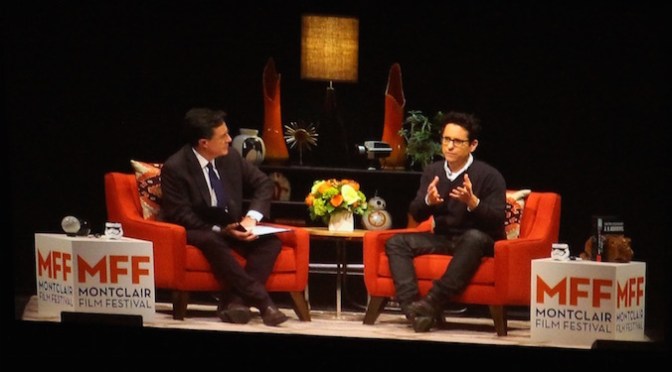
  • Stephen Colbert and J.J. Abrams turned out in force (get it?) this past Saturday for the Montclair Film Festival kickoff fundraiser and buddy-buddy interview. Highlights included an audience prizewinner bluntly inquiring as to how many Ewoks J.J. could take in a fight, Colbert springing J.J.’s acting reel from Six Degrees of Separation on him, and the pair peering up into the fourth tier where I was seated and making remarks like “you’re in low orbit” and “my neck hurts”.
  • Kenneth Branagh will be directing and starring in the long-in-the-works Murder on the Orient Express remake, which hopefully will be so many zillion times better than Shadow Recruit.
  • Ready to feel old? Toy Story turned 20 years old yesterday. Yep. Thankfully, if you want to feel young again, you can just rewatch Toy Story.

Continue reading Film & TV News: November 23

Never judge a book by its movie