Bloodsport (1988)

After watching the surprisingly affecting JCVD last week, a return to the glory days of action hero Jean-Claude Van Damme seemed in order. A dozen movies and a kamillion roundhouse kicks later, I emerged in a blearyeyed stupor with a stark reminder of the true nature, dark and terrible, of a Van Damme flick. The horror…the horror…

Bloodsport is definitely the one that shot JCVD to fame, and by all accounts it’s a pretty typical outing for the Muscles from Brussels. Most of his films from the early ‘90s are either about a) a young fighter looking to high-kick his way to the top or b) a studly defender of the meek who high-kicks the shit out of the oppressive. There are some decent movies in there, to be sure, namely John Woo’s unapologetically action-oriented Hard Target and Van Damme’s Die Hard attempt Sudden Death. For every one of those there are two stinkers, though, like the Aggro Crag-set Cyborg and the unbearably campy Street Fighter.
Continue reading Bloodsport (1988)

Better Call Saul 1.6 – “Five-O”

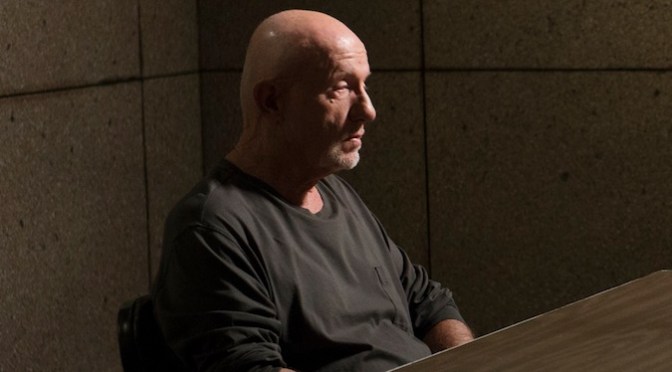
Better Call Saul mixed things up last night by completely switching the focus onto another character. Mike Ehrmantraut was a fan favorite in the later seasons of Breaking Bad, and his presence in the prequel/spinoff up to this point has been sort of a glorified cameo. “Five-O” took the reins away from Bob Odenkirk’s Jimmy and gave them to Jonathan Banks’s tortured, pouty-faced Mike, and it was one of the most ingenious moves yet from a show that’s already pretty fantastic.

At the close of the last episode “Alpine Shepherd Boy” we saw Mike engage in a bit of a staring contest with a young woman we presumed to be his daughter. We knew Mike’s granddaughter Kayleigh is part of his motivation for moneymaking during the events of Breaking Bad, but apart from a game of Hungry Hungry Hippos we never saw much of Mike in his family life. “Five-O” broke that wide open, answering a ton of questions and raising a few more in the process.

Continue reading Better Call Saul 1.6 – “Five-O”

Hunger (2008)

Although I feel like it cannot be, I have to suppose that it is just a coincidence that this film, entitled Hunger, completely lacks any meat whatsoever. This film had me quite excited to see it; I am a total Fassbender fan and it had garnered a strong 82 Metascore. I thought it was going to be one of those slightly dull, but really fantastically unique and emotional films with great writing and better acting. Well, I got the acting out of Fassbender, but literally every other single aspect of this film fell heavily flat for me. Which did come as a surprise considering who the director is: the great Steve McQueen. With 12 Years A Slave, McQueen, in my genuine opinion, made one of the greatest movies of the twenty-first century. Everything just worked so well, from the otherworldly penmanship to the astounding, Oscar-winning performances. The Wolf of Wall Street was my favorite in 2013, but 12 Years was undoubtedly the best.

The biggest gripe I have with Hunger is probably the fact that it refuses to settle on a protagonist until about thirty minutes in. Inexplicably, the film starts with, and carries on with, the tale of two characters who ultimately become totally irrelevant. Granted, they do set up the scene; their situation portrays how terrible the conditions were for those imprisoned men. That does not change the fact that the exact same effect could have been as, if not more, easily achieved focusing instead on Fassbender’s character, Bobby Sands (the ultimate protagonist). The two initial characters essentially share a few lines of dialogue, smear their shit all over the walls of their cell, and grow long hair and beards.

Continue reading Hunger (2008)

The Truman Show (1998)

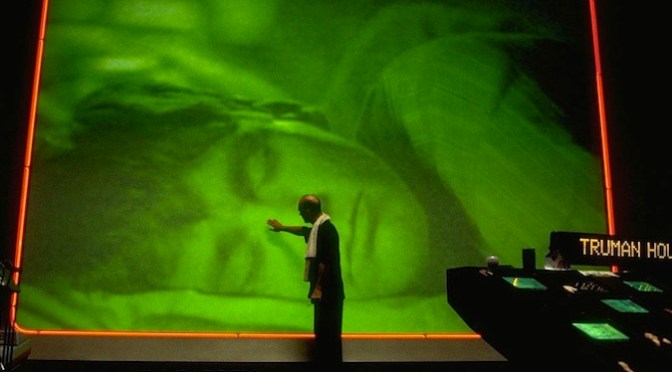
Despite dealing largely with dramatic cinema, Peter Weir had the good fortune of working with two of the most gifted American comedians of this (or any) era. He drew out a defining performance from the late Robin Williams in Dead Poets Society, casting him as Professor John Keating not for the simple unconventionality of Williams in a “serious” role but more likely because Williams could convey passion in a way most actors of “serious” roles rarely can. Likewise, even though The Truman Show is pretty damn funny at times, Jim Carrey’s career in comedy matters little for his role as Truman Burbank — he’s perfect for it for another reason.

I didn’t always think so. On first pass Truman seemed to have more tragedy in him than the actor was able (or willing) to provide, especially considering that Carrey’s Joel Barish from Eternal Sunshine of the Spotless Mind fought a similarly paranoid crusade and through it became a beautiful tragic hero for our modern age. In this retrospective light Truman seemed caught in the middle between Carrey the affable goof and Carrey the tragic everyman.

Continue reading The Truman Show (1998)

Film & TV News: March 9

News

– Bryan Singer announced his directorial follow-up to X-Men: Apocalypse as the Robert A. Heinlein sci-fi chronicle The Moon is a Harsh Mistress. We predict this will be awesome.

– Production is about to begin on Ang Lee’s next film Billy Lynn’s Long Halftime Walk, prompting casting rumors regarding Garrett Hedlund and Steve Martin.

– Jeremy Renner’s Hawkeye has officially joined Captain America: Civil War, a movie most are already dubbing Avengers 2.5. The rumor that one of the Avengers would be killed off in Age of Ultron is looking less and less likely.

– Check out this awesome video tribute to cinematographer Emmanuel Lubezki, lensman behind the likes of Gravity and Birdman, over at Collider.

Continue reading Film & TV News: March 9

Man in the Wilderness (1971)

Alejandro González Iñárritu‘s follow-up to his Best Picture-winning Birdman will be The Revenant, starring Leonardo DiCaprio as a frontiersman left for dead by his fellow trappers after being mauled by a bear. A revenant is “a person who has returned, especially supposedly from the dead”, according to the OED (I love that especially supposedly bit), a term derived from High Middle Age folktales. These tales generally held that revenants would return from the grave either to seek revenge on a killer or wrongdoer or just simply to harass friends and family members. That latter class of revenants really sounds like a bunch of assholes.

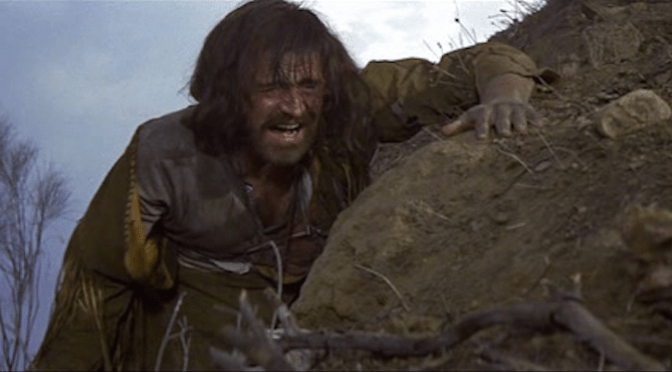
The story upon which Iñárritu’s Revenant will be based (specifically a 2002 book of the same name by author Michael Punke) has already been filmed as Man in the Wilderness, casting Richard Harris in the central role of Zach Bass (DiCaprio will be “Hugh Glass”, but it’s the same character). Wilderness and Revenant are the same story told two different ways, and one would assume that Iñárritu’s approach would hew much closer to the more recent book. It will be interesting to see how influential Wilderness actually is, though, because it holds some sequences and motifs that kind of seem at home in Iñárritu’s wheelhouse.

Continue reading Man in the Wilderness (1971)

The Red Road 1.2 – “The Wolf and the Dog”

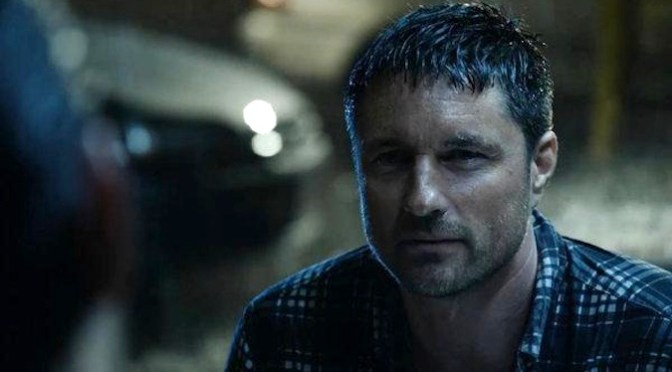
Part of what makes The Red Road so good is the sense that the story being told is both an all-out pedal-to-the-metal crime drama and a meditative slow burn. “The Wolf and the Dog” epitomizes that juxtaposition as well as any other episode of the first season, containing breakneck bursts of action in one scene and calm intensity in the next, toggling effortlessly back and forth throughout the hour. The second episode picks up right after “Arise My Love, Shake Off This Dream“, following Harold as he stalks through a junkyard in the early morning hours looking for a bumper to replace the dented one on his truck. Any doubt he had regarding the guilt of his wife Jean in the Ramapo Mountain hit and run is dispelled when he finds a shred of shirt in the old bumper.

Julianne Nicholson’s Jean and Martin Henderson’s Harold get fleshed out a little more in “The Wolf and the Dog”, and their relationship provides more of that simmering calm and apparent collectedness that just begs to boil over. Nicholson makes Jean’s shaky insanity phenomenally convincing, moving frailly from scene to scene like a marionette. What’s interesting is that the hit and run was never really in question for her. She may have been in denial, stating that she hit a deer or a dog instead of a young boy, but she never denied hitting something. Now that Harold has replaced the bumper and done what he can to dispel the rumor of Jean’s guilt, he’s essentially forced her to doubt the one thing that she actually had a firm grip on.

Continue reading The Red Road 1.2 – “The Wolf and the Dog”

Misery (1990)

According to my mom Misery was the first movie I ever watched start to finish, late one night in one of my first few weeks when I just didn’t want to sleep. Apparently all I wanted to do was watch an utterly insane Kathy Bates hold James Caan against his will in her snowy, isolated Colorado home. A lifetime of watching movies later, I returned to that first movie that started it all for me as a viewer (full disclosure: I can’t seem to find my notes on it from a couple decades back).

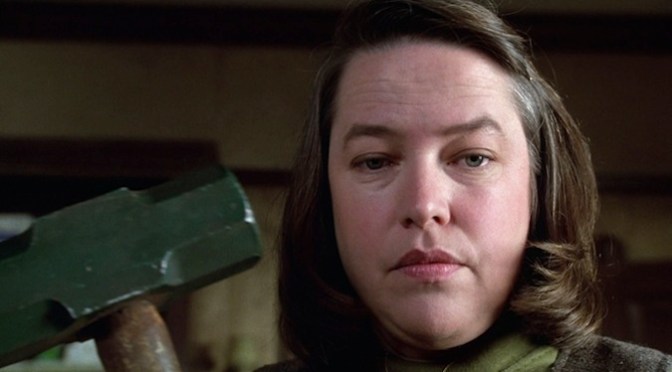
My first thought upon re-watching my first film: it’s no wonder I couldn’t sleep! I probably couldn’t sleep for weeks. Kathy Bates is so terrifyingly good as the psychotic Annie Wilkes — writer Paul Sheldon’s (James Caan) “biggest fan” — that bipolar does not even being to describe her. One second, she is exactly as self-advertised: Sheldon’s biggest fan, in pure admiration. However, one slip up by Sheldon, such as killing off the main character in his “Misery” series of novels, and she becomes a different person all together — violent, inconsolable, and capable of anything. Regardless of which mood Wilkes happens to be in, though, it is always clear that she will not let her favorite writer go, ever. They are meant to be together, or at least that’s what she thinks.

Continue reading Misery (1990)

Dealing: Or the Berkeley-to-Boston Forty-Brick Lost-Bag Blues (1972)

Michael Crichton had an extremely productive early ’70s. Multiple film adaptations of his works were in the making, including a successful version of his 1969 novel The Andromeda Strain, and Crichton himself began foraying into directing and screenwriting. But he continued with prose as well, publishing five novels in the first three years of the decade. Three of these bore his pseudonym “John Lange” and one of them (The Terminal Man) bore Crichton’s actual name; the fifth, a collaboration with his brother Douglas Crichton, was published under another pseudonym that combined the names of both brothers. Suspiciously, an actor named “Michael Douglas” became pretty damn famous not long after.

But that Crichton Brothers book — a somewhat zany story called Dealing: Or the Berkeley-to-Boston Forty-Brick Lost-Bag Blues — sadly is the least effective of those early tales. It’s obvious, even in the film version of the novel, that the pair of writers either couldn’t agree on a direction for the story or just succeeded in writing a story that goes nowhere. Dealing is an absolute slog, and so maybe Michael Douglas’s uptick in fame should be attributed to something else (“like what?”) and not to his deft scriptwriting ability.

Continue reading Dealing: Or the Berkeley-to-Boston Forty-Brick Lost-Bag Blues (1972)

Better Call Saul 1.5 – “Alpine Shepherd Boy”

We’ve talked a lot over the course of the last few reviews about how Better Call Saul fares in relation to predecessor Breaking Bad. We’ve talked about Jimmy’s character, his moral standing and his concern over the presentation of his image. We’ve talked about the supporting cast and about the beautifully Bad-like cinematography, we’ve talked about the brilliant set pieces in episodes like last week’s “Hero“, and we’ve talked about how all of this adds up to something that ties into the original show but also stands alone.

We’ve also mentioned in passing that Saul has a good sense of humor, but the latest episode “Alpine Shepherd Boy” demands a somewhat more straightforward dispatch: Saul is funny. Really funny. Jimmy has the dark wit and sheer quotability we know makes Saul Goodman such a fun character (“Don’t drink and drive — but if you do, call me!”) and in Saul he obviously gets a lot more time to shine. In Bad he was kind of the comic relief (although that phrase kind of plays down his importance, doesn’t it?) and much-needed muscle relaxant amongst the insanity of Walter White’s crusade. Bad focused on the drama — Saul, while still a fledgeling series, has already found a way to play with that focus.

Continue reading Better Call Saul 1.5 – “Alpine Shepherd Boy”

Never judge a book by its movie