
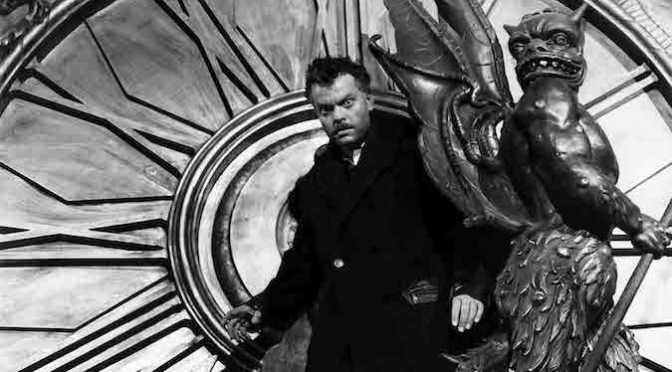
 As is the case with the work of many a cinematic genius, the filmography of Orson Welles is especially revealing when considered as a whole. Hits, flops, stretches of obsession, gaps of inactivity, passion projects and moneygrabs — in some ways this kind of retrospective review can tell us more about the filmmaker than the films themselves. It’s the “God’s-eye view,” to steal the name of an aerial shot favored by Welles, and it serves to highlight the ideas that the writer/director would experiment with, return to, or transform entirely in successive efforts. The other edge of the sword, of course, is that each individual film inexorably loses something when viewed alongside a slew of cinema which may otherwise share little by way of plot, theme, style or cultural impact.
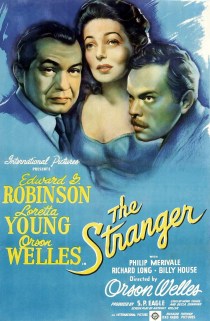
The best case-in-point: The Stranger, Welles’ 1946 Nazi-hunting thriller. It was either his third or fourth feature outing, depending on whether you account for one technicality. His first two were Citizen Kane and The Magnificent Ambersons, utilizing a special technique called setting the bar high. But studio meddling with Ambersons soured Welles on Hollywood, and so his work on 1943’s Journey Into Fear is that aforementioned technicality. Tied up in a tussle over the final cut of Ambersons, Welles received no directing, producing or screenwriting credits in Journey, only appearing in a minor acting role as a Turkish inspector. In actuality Welles directed and wrote portions (at least) of Journey, and the theatrical poster seemingly has no issue declaring this as “ORSON WELLES’ Production…Starring ORSON WELLES.” Coincidentally or not, Journey Into Fear is a fairly feeble thriller that barely justifies a brief hourlong runtime.

 April 2019 was a pretty earth-shaking month in pop culture terms. We had the first tangible fallout from the Disney/Fox merger and some really interesting developments in the Great Streaming Wars (the launch of the fantastic Criterion Channel, details on the upcoming Disney+), we had new blockbuster releases (

 What’s the worst thing that can happen in sports? That’s the question voiced by the title character as the curtain goes up on Molly’s Game, Aaron Sorkin’s directorial debut and latest produced screenplay since 2015’s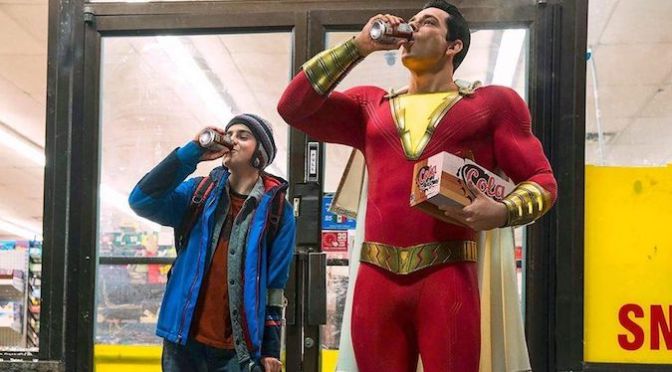
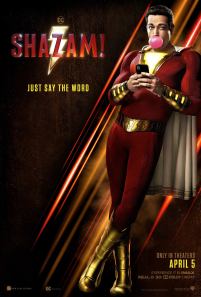 Is the DCEU still a thing? Conceived as the answer to Marvel’s unfathomably successful Cinematic Universe, DC’s interconnected supertales never quite coalesced the way they were intended to. You could point to any number of reasons for this derailment: a lack of a Kevin Feige-type visionary at the helm, or a violent shift in tone from one movie to the next, or poor casting in crucial roles, or the general cart-before-the-horse nature in which this series was rushed into existence. Those are all blameworthy when considering the ineffectiveness of a franchise. But because each individual film in the DCEU —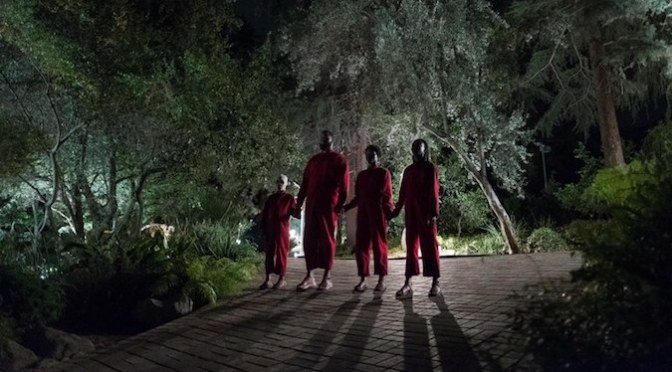
 Jordan Peele’s Us is nothing short of exceptionally entertaining horror. Starring Lupita Nyong’o and Winston Duke as the mother and father of a prototypical American family, Us joins a long tradition of doppelgänger horror while still emerging from that tradition into definitive modernity. Like Peele’s debut Get Out, the American Dream — as a white-picket-fence fantasy and as a dark reality — is crucial not only to the implicit themes of the film, but to the reason both films are scary in the first place. Yes, Us has a preponderance of classic horror moments, from jump-scares to home invasions to creepy coincidences foreshadowing a coming threat. But these tropes become entertaining again only in context of a strong underlying assertion that speaks to something in our everyday life, and while Us may not speak as explicitly as Get Out, the potency of the film is drawn from a similar source.
 The Black Stallion is very much a film of two halves. You could enter the film at the midpoint and still enjoy the back 50% as a self-contained story. Similarly, you could just watch the first chunk and then turn it off feeling surprisingly satisfied. Viewed as a whole, though, Stallion serves as a personality quiz centered around whichever half you ultimately prefer. Think Full Metal Jacket or King Kong, which not only bring characters through two vastly different settings but seemingly bring them through different genres of film as well. It’s possible to enjoy the whole film in each of these instances, but by design one segment probably connects with you more powerfully than the other.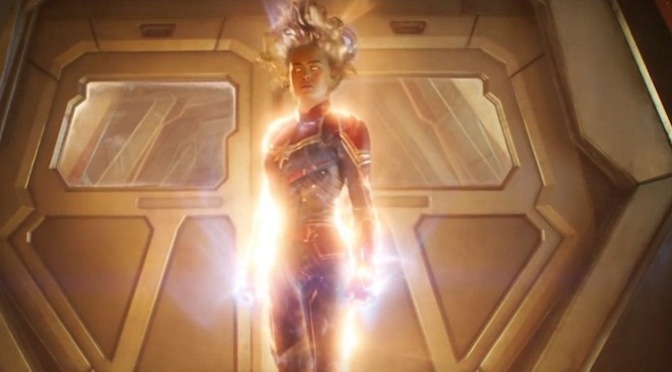
 In 2017 The Last Jedi ignited a culture war between lovers of Star Wars on the one side and…well, lovers of Star Wars on the other side. This war was ostensibly borne of debate over the film, praise versus criticism, and there certainly is a battlefront of this war that does engage in genuine discourse over Jedi. There’s another front, of course, comprised mostly of warriors fighting with a willing blindness to the merits or pitfalls of the film as a film; some people just despise Jedi for puerile personal reasons, some just defend it simply because it’s Star Wars. This is the Ultimate First World Problem, such hatred and ire thrown about over the seventh sequel to a space fantasy from 1977. But intentionally or not, a particular faction of “critics” revealed themselves during this war. We’ll call them the Shitboys, because they’re mostly boys and they mostly shit on everything.

 Motion State Review