Film & TV News: May 18

News

  • The Cannes Film Festival is well under way, and buzz is strong on a lot of the films screened thus far. Yorgos Lanthimos presented The Lobster (Colin Farrell, Rachel Weisz), Woody Allen presented Irrational Man (Joaquin Phoenix, Emma Stone) and Stéphane Brizé presented La loi du marché (with Vincent Lindon of La mustache), all of which played favorably. On the other end of the spectrum is Gus Van Sant’s Sea of Trees (Matthew McConaughey, Ken Watanabe), which was met with a sea of boos.
  • Jude Law has joined the tentatively-titled The Young Pope, a speculative HBO series about an American pope. That premise would be only vaguely interesting were it not for the presence of director Paolo Sorrentino, helmer of 2013’s The Great Beauty, as Pope‘s showrunner.
  • David Lynch does another 180° and says the Twin Peaks revival is happening after all. At this point we’ll believe it when we see it, and even then we might not care.
Continue reading Film & TV News: May 18

Restrepo (2010)

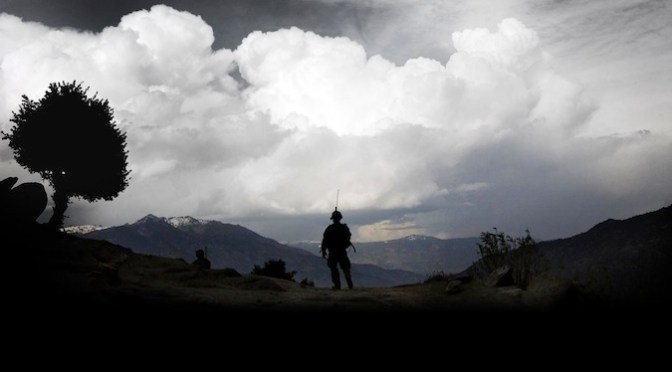
I had the good fortune of meeting Sebastian Junger a few years ago in Boston as he did the press junket for his book War. From mid-2007 to mid-2008 Junger was embedded with a U.S. unit in the Korengal Valley in Afghanistan with his friend and photographer Tim Hetherington, and War was one of the many pieces of journalism that resulted from that year. Another was a series of Vanity Fair dispatches collected as “Into the Valley of Death“, which is an excellent companion to War and an excellent account of that year in the Korengal. But the most affecting portrait from Junger’s tour as a war journalist might be Restrepo, the documentary he and Hetherington directed from the thousands of hours of footage they took during the year and ensuing interviews with the soldiers immediately upon their return home.

The Korengal Valley (sometimes spelled Korangal) was at the time dubbed the deadliest place in the world, an overblown-sounding moniker that is nonetheless entirely lacking exaggeration. U.S. troops in the Korengal took fire from Taliban insurgencies every single day, often engaging in five or six firefights between dawn and dusk. For soldiers on a fifteen-month deployment, that’s an unheard-of amount of action. By the time the U.S. pulled out of the Korengal in April 2010, nearly fifty American soldiers had been K.I.A. there. Seventy percent of ordinance dropped throughout Afghanistan during the course of the war was dropped here. In an interview with CNN, Junger describes the Korengal as “the Afghanistan of Afghanistan, too remote to conquer, too poor to intimidate, too autonomous to buy off.”

Continue reading Restrepo (2010)

Parenthood (1989)

Parenthood might be the first time Ron Howard really showed his talent as a director. Grand Theft Auto and Night Shift were passable as Howard found his directorial voice, and Gung Ho and Willow were larger productions that achieved different levels of success as Howard matured. I’d entertain an argument for Cocoon as the first glimpse of the great director Howard would one day become, mostly for the subtle mix of fantasy, sentimentality, humor and drama. But Parenthood, although admittedly very different, is the better film. With a burgeoning cast that can only be described as an ensemble, Howard’s brilliance lies in making that ensemble feel more like — oh no, he’s going to say it — a family.

There are the young ones — Kevin, Taylor, Justin, Patty, “Cool” and Garry (a pipsqueak Joaquin Phoenix) — each content in their kid ways to run around with head-in-bucket (in Justin’s case) or figure out the square root of 8,649 (in Patty’s case [it’s 93]). There’s Garry’s older sister Julie and her boyfriend/husband Tod. There’s the next generation, the brunt of the Buckman clan led by Steve Martin’s Gil, and the spouses of each Buckman sibling. And then there’s the patriarchal generation, with Grandpa Frank played by the great Jason Robards, utterer of the greatest line in cinema history (from Once Upon a Time in the West — either ya knowhadimean or ya don’t).

Continue reading Parenthood (1989)

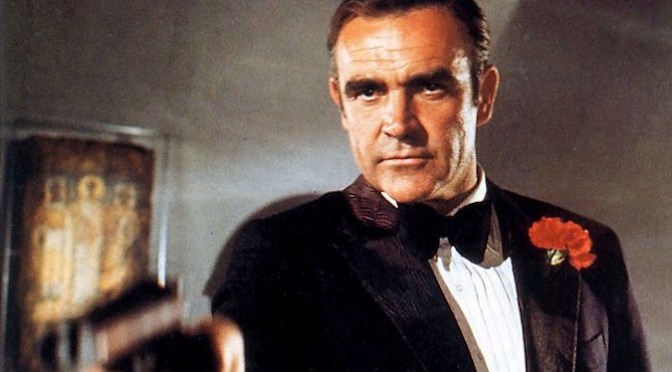
Diamonds Are Forever (1971)

Grantland’s Chris Ryan makes a great point here about the way in which the James Bond franchise has changed, for better or worse, to not only gel with modern viewers but to fit the current model of blockbuster franchising. It was always the case that each 007 flick was a standalone film, made even more explicit with those little “James Bond will return” tags at the end. These are installments, and if this particular one stinks then we still have the next one to look forward to or the previous one to rewatch. If you want to jump in on a random one (like, say, Never Say Never Again — wait, bad example), that’s no problem. You won’t miss a step.

Ryan’s point is that all of that has changed now, as the Spectre trailer makes fairly heavy reference to Skyfall and even to Quantum of Solace and Casino Royale. This is continuity as Bond has never known, and Ryan further posits that the filmmaker might be the one who mainly benefits from such a thing — Spectre now seems “more important” than Skyfall (whatever that might mean) just by virtue of being a continuation of the story. Who wouldn’t rather direct “the Bond movie that the last few have been leading up to” over “the next Bond film in a string of other Bond films”?

Continue reading Diamonds Are Forever (1971)

Kurt Cobain: Montage of Heck (2015)

Kurt Cobain, one of the most iconic and beloved musicians of all-time, experienced near Beatlemania status in the early to mid-ninties with his band, Nirvana, prior to his suicide on April 5, 1994. Cobain was hailed as the spokesperson of Generation X, an alienated and fed-up slice of America’s youth, and he hated how much he loved the title. Bashing mercilessly on the strings of his guitar and screeching and shouting and even burping into the microphone, Cobain captured the very essence of what the pissed off and too-far-gone teenage masses felt; he cut to their core with his metal-punk (coined as “grunge”) riffs, which laid restlessly underneath his growling and raspy, but nevertheless catchy, vocal melodies.

He was just what they needed, and he came at the perfect time. Just when painting had become complacent, Van Gogh turned everything on its head; as soon as the proper place of literature in society had been defined, Thoreau wrote Civil Disobedience; once music ceased to be music, Kurt Cobain jump-started the industry with an overdose of adrenaline. And it was an overdose…

Continue reading Kurt Cobain: Montage of Heck (2015)

True Detective 1.4 – “Who Goes There”

This review appeared shortly after the initial premiere of True Detective in early 2014 — slight edits have been made since the original posting.

After a two-week hiatus, True Detective roared back last night with one of the most intense episodes of television you’re likely to find. Major developments in the Dora Lange case in 1995 and a twist in the recounting of that case in 2012 were highlights — but an unbroken, heart-in-your-throat tracking shot of the eruption of a street battle brought the HBO series to a whole new level. Spoilers follow for the fourth episode “Who Goes There”.

When we left Cohle and Hart two weeks ago (read the review here), the fourth hour seemed set up for greatness. A gun battle alluded to during the interviews of 2012, along with the arrival of one Reggie Ledoux, promised both action and developments in the Dora Lange case. Both were needed, as the Lange case had been stewing at a low boil for a few weeks and the closest we’d come to an action sequence was a brief tussle between Cohle and Hart in the locker room. And we did indeed receive both — but what we got wasn’t at all what was expected.

Continue reading True Detective 1.4 – “Who Goes There”

Willow (1988)

When Disney purchased Lucasfilm in 2012 the primary news item was very definitely Star Wars and the announcement of a new expansion on the galaxy far, far away. The Force Awakens comes this December, but talk is already turning to Indiana Jones, another Lucasfilm franchise, and the possibility of continuing that as well (because distilling Raiders into Crystal Skull wasn’t enough). What’s next? THX 1138Howard the Duck? Radioland Murders? Perhaps even an original idea? Probably none of those for a few years, while Wars and Jones get the attention they deserve. Eventually, though, they’ll probably remake Willow.

Starring Warwick Davis and Val Kilmer, Willow is a fantasy epic set in what seems to be a mystical land of fairies, witches, warriors and little magicians. Willow Ufgood is our unlikely hero, tasked with the safe passage of a prophesied infant through the dangerous lands outside the borders of his home. He seems like a simpleton, a mere farmer, but there’s a lot more to Willow than meets the eye. Importantly, despite the evil tyranny he encounters in his quest, Willow remains one of the most endlessly optimistic characters in all of fantasy cinema. This made Ron Howard the perfect director at the time to handle Willow’s journey, as his previous Cocoon was similarly steeped in magic and optimism. Davis is instantly iconic as Willow. Meanwhile, Val Kilmer plays a drunk version of Aragorn.

Continue reading Willow (1988)

The Red Road 2.6 – “Shadow Walker”

Aaron Guzikowski said he was going to break Jason Momoa in the second season of The Red Road, and in the finale “Shadow Walker” we get a glimpse at what the writer might have meant by that. Momoa’s Kopus spent much of the first season manipulating the people around him in such a way that Walter White would have been proud, but season two showed a few cracks in the otherwise stoic armor. The final hour blew those cracks open and ended up being a solid end to a shaky and uneven season.

And that title — “Shadow Walker” — gets to the heart of Kopus’s character (and Harold’s character, too) and relates beautifully to the title of the show. In my limited understanding of Native American spirituality, the “red road” is the right path, the good path, the road to redemption. Whether we’re talking about the taut first season cat-and-mouse game between Kopus and Harold or the flagging, multifaceted plots of the second, it’s always been clear that this shifting morality is at the heart of the show. Both main characters walk the red road to varying degrees, as does Junior, as does Jean, as does every other character in the show. Kopus and Harold are the most interesting (in theory) because they’re foils: Harold is the police captain and family man who gets to where he is by lying, Kopus is the ex-convict who just might be starting to see the light.

Continue reading The Red Road 2.6 – “Shadow Walker”

Film & TV News: May 11

News

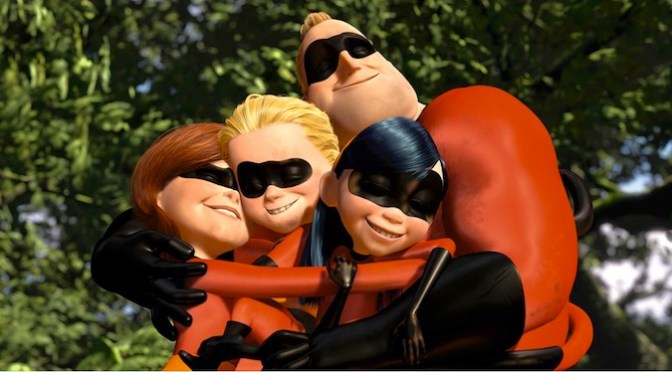
  • Brad Bird has announced (sort of) that The Incredibles 2 will be his next feature film. Any day Bird announces a new project is a good day, but it’s particularly sweet for him to be returning to The Incredibles. We’re eagerly awaiting his latest feature Tomorrowland (debuts May 22) and also eagerly awaiting any and all arguments about Incredibles being the best Pixar movie. Yeah, we said it.
  • Fall television season will mark the cancellation of the likes of Constantine, The Following and The Mentalist and the happy renewal of Better Call Saul and American Crime. Between the renewed series, the new series (Legends of Tomorrow, Supergirl), the revival series (X-Files, Twin Peaks, Heroes Reborn) and all those shows we’ve been meaning to watch for years — [head explodes].
  • In casting news, Daniel Radcliffe and Dane DeHaan have reunited with Kill Your Darlings director John Krokidas for Young Americans, in which they’ll play Lee Atwater and Karl Rove, respectively. Darlings was only okay, but come on — DeHaan as ’70s-era pip-squeak Rove? That’s cool.

Continue reading Film & TV News: May 11

The Lord of the Rings: The Fellowship of the Ring (2001)

Here at Motion State, we don’t f*ck around. We’ve got it figured out. We hang ’em high, we die harder. We bring you the head of Alfredo Garcia. We learn to stop worrying and love the bomb. We’re not afraid of Virginia Woolf and never have been. Hell, we even self-bleep our f*cks. Suffice it to say that we’re professionals.

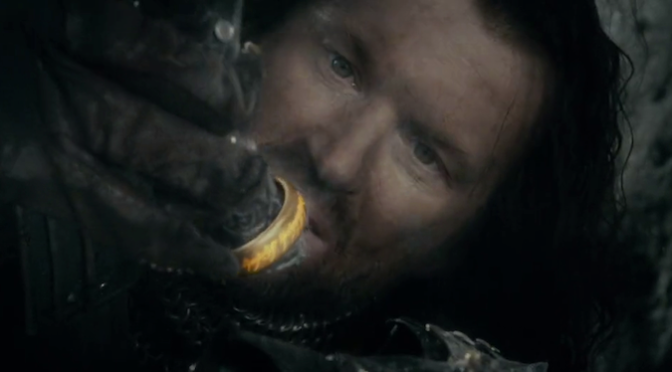
On those infallible grounds, we’re confident in the fact that the best character in the entire Lord of the Rings saga-on-film isn’t the noble wizard Gandalf nor the noble badass Aragorn; it’s not the against-all-odds Frodo nor his tagalong everyman Samwise. It’s certainly not Legolas, despite his superpowered eyesight and epic acrobatics, and it’s not Gimli despite his…it’s not Gimli. Are we about to try to convince you that it’s one of those comic relief companions C-3PO and R2-D2 Merry and Pippin? Maybe pull one of those fast ones where we tell you that it’s the Ring, man, the Ring is the best character, or that we are the best character because Tolkien allowed us to roam free throughout wondrous Middle-Earth…nope. No such luck: the best LotR film character is Isildur, a guy with a fraction of the screentime of the aforementioned candidates, a jerk by all standards of fantasy heroism, dead long before the story really begins.

Here’s why.

Continue reading The Lord of the Rings: The Fellowship of the Ring (2001)