All posts by hangmantitan

High-Rise (2016)

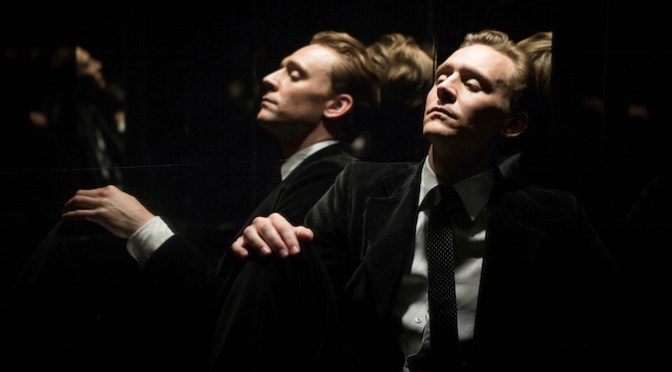
Having just finished and thoroughly enjoyed The Night Manager, I thought I’d know more or less what to expect from High-Rise. This is due largely in part to the sexy sexualization of Tom “Sexy” Hiddleston, who stars in both and is also sexy. I assumed his character in High-Rise to be the sterling yuppie with the isn’t-it-perfect life structured in service of the concealment of darker, truer impulses. In Night Manager Hiddleston’s attractiveness is essentially made into a plot point; so too, probably, would High-Rise note the perfection of the specimen before delving into a personality far less desirable. A six-pack and a violent extreme, per American Psycho, per marketing stills like this:

High-Rise (2016)
Exhibit A: Sexy

But High-Rise isn’t sexy for very long. The prologue is a glimpse of the messy future, wherein Hiddleston’s Doctor Laing seemingly resorts to making food out of the dog, making paper airplanes out of the electricity bill, and making a ramshackle life in the husklike ruins of the tower block. It is suspiciously unsexy. Then again, though, resorts isn’t the right word: Laing has very definitely chosen this. He’s in a sort of hell and is more or less enjoying it.


Continue reading High-Rise (2016)

Look Who’s Back (2015)

Hitler is back. This is the premise, plot, and entirety of Look Who’s Back. There is essentially nothing else — certainly no explanation of why or how the actual Adolf came to awaken in a playground in modern-day Berlin, certainly no plot wherein he has to find his way back to the ’40s or continues time traveling and attempting to conquer Future Berlin after Future Berlin. He’s just back.

This, of course, is elementally terrifying. The man is known worldwide as the incarnation of Evil, as a man intent on power and privilege, as not a man at all. The Return of Hitler is actually not an uncommon film narrative, admittedly not usually depicting the literal return of the human being but his figurative return in one form or another. American History X and any other neo-Nazi-led drama inexorably deals with the resurgence of Hitler’s ideals; it’s not just drama for the sake of drama, either, as documentaries like Skokie: Invaded But Not Conquered prove. The subject of that film is a guy named Frank Collin, but he’s really a thinly-veiled pipsqueak version of Hitler himself. These unfortunate reincarnations are very real, and they are very dangerous, and they are very scary.

Continue reading Look Who’s Back (2015)

The Phantom (1996)

My favorite movie in the Mummy franchise is The Phantom, but hardly anyone else seems to agree with me. “Nay,” says Naysayer, “you’re mistaken — Phantom is a superhero movie.” Though Naysayer’s rationale is increasingly appropriate such that one can visit a cinema and blindly say that’s a superhero movie and usually be correct, the film adaptation of the long-running Phantom comic strip seems much more at home in a category with The Mummy, Pirates of the Caribbean, Tomb Raider, Romancing the Stone and all of the other Indiana Jonesey flicks that muster at least a small degree of fresh fun. When asked to think of a superhero movie, it’s doubtful The Phantom leaps to mind. Is archaeology adventure an acceptable genre label? We know Naysayer’s answer.

But this was 1996, long before the homogenization of the superflick under the all-encompassing tyranny of the Shared Universe Model. Maybe in 1996 there was nothing at all to blink at: Phantom, a comic-strip costumed vigilante, is up on the screen saving people and slamming evil. This is a superhero. Maybe today there’s just a more rote formula for such a thing, and maybe calling Phantom otherwise is an act of desperation.

Continue reading The Phantom (1996)

Midnight Special (2016)

At one point Jeff Nichols was slated to direct Aquaman. Let’s let that oddity sink in for a moment, try to picture a big-budget superhero tentpole in the hands of a small-scale operator, compare it to that one time Edgar Wright was going to direct Ant-Man. Oof — too soon. If you don’t know Jeff Nichols (or just confuse him with Mike Nichols) then there are two movies you have to see. The first is Take Shelter, about a family man plagued by apocalyptic visions. The second is Mud, starring Matthew McConaughey in one of his McConaissance roles, about a backwoods constellation of intersecting characters. If you’re sensing that neither of those exactly scream underwater trident-wielding badass, don’t panic! This indicates only that you are still sane.

One commonality between the films is Michael Shannon, a forceful actor who’s risen to prominence with the likes of Boardwalk Empire and Man of Steel, and yet still the kind of guy who seems underrated.  Nichols certainly doesn’t make that mistake, recognizing his talent to such a degree that he can’t seem to make a movie without him. He’s something of a bit player in Mud, but Shannon leads Take Shelter and returns to the fore in Midnight Special, Nichols’ latest film.

Continue reading Midnight Special (2016)

Face Off: Othello (1952) and O (2001)

Motion State Face Offs pit two films, franchises, or television series against each another for no reason other than because we can.

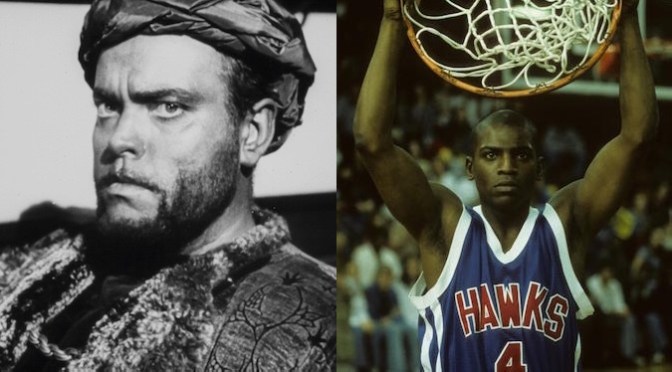
In sharp contrast to the veritable torrent of Hamlet adaptations, it’s somewhat surprising that a Shakespeare tragedy as popular as Othello has so few major film versions. The first is Orson Welles’s 1952 adaptation, featuring the man himself in both the title role and the director’s chair. The most recent, oddly enough, at least as far as explicit-made-for-film versions, is 2001’s O, a modern update that you may or may not consider a true film adaptation of the play. Sure, there are a ton of films that fall in the middle ground. Do filmed theatrical productions count? Do modern updates like O count, and if so, do we consider films that have an even more tenuous link to the play?

Why do we care? might be the actual question on your tongue right now, but if you’ve ever enjoyed Shakespeare at all you’re probably aware of the fact that no two adaptations of the same play are ever the same. How has Othello changed from the first film adaptation to the most recent version? Is there anything that remained from the Welles version, working its way in to the Shakespeare tale such that O becomes an adaptation of both? If this is interesting to you, then this article will explore all of that; if you’re not interested, this article will still explore all of that.

Continue reading Face Off: Othello (1952) and O (2001)

Better Call Saul 2.10 – “Klick”

For a season finale as understated as “Klick”, concluding the second-season run of a show as understated as Better Call Saul, an awful lot happened in one hour. Time and again we find ourselves referring to Saul in terms of a balancing act — between comedy and drama, between moral and immoral, between sympathetic and pathetic, between action and inaction. “Klick” lived in a few of those spaces, none more obvious than the space between subtlety and downright ridiculousness. Saul on the whole thrives in this balancing act, and in part it’s forced to do so by the predecessor Breaking Bad. Saul has to balance restraint with forward progress, treading lightly so as to remain interesting while not intruding on Bad‘s storylines.

Take the first scene of “Klick”, veering toward the latter on the scale spanning subtlety and ridiculousness. Jimmy and Chuck sit by their ailing mother’s hospital bed, Mrs. McGill lying unconscious as she closes in on death. It’s been a while, apparently, and so Jimmy recommends they go get hoagies. Chuck declines — he won’t leave his mother, not now. Jimmy? Yeah: Jimmy wants a hoagie. So Jimmy goes to get a hoagie. When he’s alone with his silent mother Chuck breaks down, perhaps remembering how Jimmy screwed his father over right before his expiration date. Chuck cries because if his mother dies then it will just be him and Jimmy, which in Chuck’s mind is tantamount to it just being him.

Continue reading Better Call Saul 2.10 – “Klick”

The League of Extraordinary Gentlemen (2003)

“The planet of the imagination is as old as we are.”

A writer may find that having a particular way with words is somewhat valuable to the craft, potentially essential, undeniably rare, exhilaratingly natural. Some may be taken aback by the words of others and seek to do the same with their own, maybe even coming to take it for granted if that way with words becomes a familiar way. Writing is sharpening, and just as a pitcher pitches to improve his pitching so too does a writer write to improve his writing. Some, like Ezra Pound, recognize that words are tools and there is a correct tool for a particular job. There is in fact a correct way to tell a particular story. Some, like Alan Moore, recognize that all of that is a crock of bullshit.

Which is not to insinuate that something like The League of Extraordinary Gentlemen is not well-written, at least in the comic format of Moore’s original publication. It is. As with the impressive majority of Moore’s works League seems leagues beyond the typical comic, nurtured with a higher degree of care or just drawn from a more inspired place. It operates on a higher plane. This cannot be said truthfully of the film version, though by now that’s sort of a preconditioned assumption.

Continue reading The League of Extraordinary Gentlemen (2003)

Better Call Saul 2.9 – “Nailed”

As Breaking Bad approached conclusion in September 2013 someone asked me if I sympathized with Walt. I danced around the question because that’s the whole point, in a way, isn’t it? You see where Walt’s coming from, and yet he’s doing some bad shit, and yet it’s for a good reason, and yet maybe it’s also for a bad reason, and yet who’s to say what’s good or bad anyway, and yet how could you not think this is bad? And on and on. The morality of that series — shifting, malleable, sometimes overwhelming, sometimes trivial — isn’t intended to be “solved” by the end of Walt’s arc.

And in much the same manner the warring positions of Jimmy McGill and his older brother Chuck are both simultaneously completely understandable, at least at this point in Better Call Saul. “Nailed” continued to make this disagreement more and more explicit, a fact which itself follows an interesting trajectory over the course of the first two seasons. It was only in “Pimento“, last season’s penultimate episode, that we really discovered the animosity Chuck had for his younger brother.

Continue reading Better Call Saul 2.9 – “Nailed”

Daredevil – Season 2

It’s incredibly tempting to write two completely separate reviews of the second season of Daredevil. The most superficial reason for this urge is simply because that’s more or less the way the season is divided: Part One, the first five or six episodes, focuses on the gun-toting, villain-slaughtering Punisher. Part Two focuses on Elektra, the long-ago flame and now-returned firestarter of Matt Murdock. Not long after the second season received the greenlight after a rollicking first season, these were the only two words you needed to mark your excitement: Punisher and Elektra.

The former was exciting mostly because the three preceding attempts to bring Punisher to life — the 1989 Dolph Lundgren version, the 2004 Thomas Jane version, and the pitiful 2008 movie War Zone with Ray Stevenson — all pretty much sucked. Marvel Studios hoovered up the rights to the character and soon announced that he’d appear in a supporting role in Daredevil, signifying an understandable hesitation to give the dude yet another full-length feature after three straight misfires. The latter inclusion was exciting because Elektra is an inextricable part of the Daredevil mythos, per Frank Miller’s incredible must-read run on the comics series in the early ’80s and, yeah, okay, fine, per Jennifer Garner in two movies. Basically this was a time for redemption for both characters, just as the Daredevil series itself is a redemption for the title character.

Continue reading Daredevil – Season 2

Better Call Saul 2.8 – “Fifi”

It’s endlessly entertaining watching the montage — an old-fashioned, familiar, nearly-cliched storytelling device — and the cold open — a sort of newfangled, disorienting, “edgy” storytelling device — used to such loving and sincere effect throughout Better Call Saul. Both were hallmarks of Breaking Bad, too, from the “Crystal Blue Persuasion” cooking montage to the pesky little housefly of that third season episode. But here in Saul they’re more frequent and often more ambitious, and in “Fifi” there were multiple examples to this point.

Before we dive into those devices it’s worth noting that this is the home stretch of Saul‘s second season, and the arc has become superbly focused and compelling in ways that the earliest episodes of Season 2 (“Switch” and “Cobbler” in particular) hinted at ever-so-subtly. For a show about a guy who wears orange suits and wails on the bagpipes at the office, for a show built on flashy devices like the montage and the cold open, for a show peopled by characters as bombastic and iconic as any of the Salamancas…if the writing were equally outlandish we’d have an entirely different show. Instead, the character arcs intersect with intricacy and propel forward in subtle ways, lending no small degree of unease to the thematic undercurrent.

Continue reading Better Call Saul 2.8 – “Fifi”