All posts by hangmantitan

Tangerine (2015)

We’ve all been there before: it’s Christmas Eve and you’ve just been released from jail to discover your pimp has been cheating on you so you flip out and hunt him down. It’s a pretty universal conundrum. That was what Pilgrim’s Progress was about, right? Or doesn’t Plato have some allegorical yarn about emerging from a darkened prison, reaching upward toward the light, finally beginning to perceive the true form of reality, and then bitch-slapping your pimp? The Parable of the Donut Shop, I think. Basic universal plots like Rags to Riches, Voyage and Return, The Quest, and Christmas Eve Pimp Hunting have a certain inherent comfort to them because we’ve all been there before.

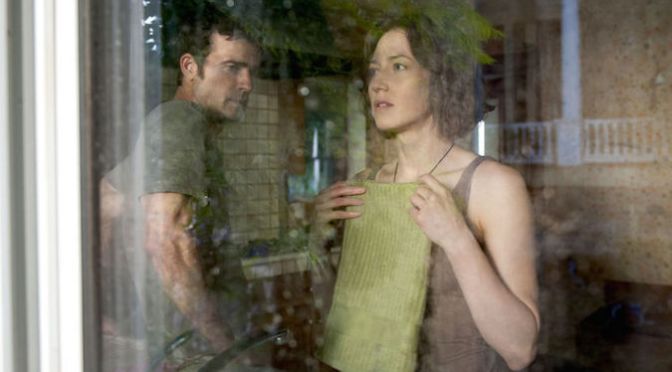
Tangerine is fresh, though, even if you somehow don’t have a real-life parallel to the above scenario. I’d love to tell you that the freshest thing about it is the story, and admittedly broad aspects of it are rare in modern multiplexes. The primary cast members are transgender and transsexual individuals, led by Kitana Kiki Rodriguez (as Sin-Dee Rella, the newly-freed pimp-hunter) and Mya Taylor (as Alexandra, the Sundance Kid to Sin-Dee’s Butch Cassidy); the film is rounded out by Karren Karagulian’s Razmik, a cabbie with a penchant for rolling the streets where working girls Sin-Dee and Alexandra “ply their trade”. These aren’t your typical heroes, and that sentiment has little to do with their sexuality or gender. These people are the kinds of people that mothers-in-law everywhere are disgusted by, because the activities they engage in seem supremely self-serving, petty, deviant, etc. Indeed, Razmik’s mother-in-law makes all of this explicit when she shows up and harshly disapproves of what she sees.


Continue reading Tangerine (2015)

Face Off: Flight of the Phoenix (1965) and Flight of the Phoenix (2004)

Motion State Face Offs pit two films, franchises, or television series against each another for no reason other than because we can.

The original Flight of the Phoenix is sort of an unsung classic. Sure, people still watch it a half-century later, catch it on TCM, and it was at least popular enough for somebody to remake it in 2004. But take even just a quick look at the incredible  cast and try to tell me Flight of the Phoenix has the popularity it deserves today. Jimmy Stewart! Richard Attenborough! Ernest Borgnine! Peter Finch! George Kennedy! Ian Bannen, for chrissake! It’s the ensemble equivalent of Age of Ultron except all of the actors are good and are playing characters instead of cardboard cutouts.

Here’s the trouble: in terms of plot, the 2004 remake is one of the most faithful remakes ever remade. It’s nearly beat-for-beat as far as the major story points are concerned, and even some of the lines of dialogue propelling those story points are simply lifted from the original and plopped back down here. Sure, new people are saying those lines and being influenced by those story points — but then again it’s just the actors that are new, not the characters. Those, too, are transplanted in near-entirety. One imagines an archeological expedition to the bowels of the 20th Century Fox studio costume shop under a banner that says Let’s See What We Can See emerging victorious with the costumes and props from the 1965 Flight of the Phoenix still covered in authentic desert sand. “Now all we need is new people!”

Continue reading Face Off: Flight of the Phoenix (1965) and Flight of the Phoenix (2004)

Jessica Jones – Season 1

What do you want out of a superhero show? There’s no shortage, of course — you’re getting superheroes whether they’re what you want or not. They’re everywhere. Shakespearian actors are nudging each other out of the way for the chance to play a purple-faced mind-controller. At least kids across America are thankful that there’s something to be for Halloween besides Harry Potter. Heck, even the Academy Awards are doling out statuettes for superheroism (although there’s something special about Birdman winning Best Picture, as if the Academy were trying to fight back). There’s no way around it: the increasingly staggering numbers of superflicks hitting theaters over the next half-decade can now be measured in metric shit-tons. The only thing more tiresome than the parade of superheroes is the commentary about how the parade of superheroes is so tiresome.

And, yeah, the shared universe gripes/laudations are just as stale, but here we are. Marvel in particular has reached the point where they seem to want it both ways: they want their superheroes to be intricately connected to every other superhero and yet be distinctly standalone. And, yeah: Jessica Jones. The latest entry in Marvel’s grand scheme has more inherent push/pull to the interconnectedness thing than any other installment in the Marvel Cinematic Universe, and that includes the Netflix predecessor Daredevil. On one hand Jessica is about as far away as you’re gonna get from Captain America, and maybe that marks trouble for an inevitable crossing-of-paths — either the dark tone of Jones would be compromised to accommodate Cap or the other way around.

Continue reading Jessica Jones – Season 1

Meet Joe Black (1998)

I don’t exactly have strong feelings one way or the other about Meet Joe Black. Some despise it for being overly long and uneventful, some enjoy it as a meditation on death and love and living a fulfilling life. I’m neutral. Consistently so, in fact: pretty much every single facet of Black lands in a sort of middle ground. The premise? Interesting enough. The writing? Passable. The great Anthony Hopkins? Yes, he’s certainly Anthony Hopkins. The direction is fine, too, from the reliably careful Martin Brest, though this is him turning in his final film before the reliably careless Gigli; shame that every time you think hey, that’s a nice shot the little homunculus in your head whispers don’t forget Gigli. Anyway, I’m aggressively neutral on Meet Joe Black.

Do you want to talk about something else? Have you seen the commercial with the little baby and the car and the thing? Did you know that Rogaine is fatal to cats? Oh, you really came for Meet Joe Black? On purpose? And you haven’t even seen it? Abridged version: everything is starting to die (Anthony Hopkins) or starting to live (Claire Forlani) or Brad Pitt’s hair (Brad Pitt’s hair).

Continue reading Meet Joe Black (1998)

The Leftovers 2.5 – “No Room at the Inn”

Ah, Matt Jamison. He’s not the main character of The Leftovers. He’s not the one most directly affected by the Sudden Departure, nor is he the one who’s lived most nobly in its wake, nor is he a handsome shining studly hero with a constant grimace (see: Kevin Garvey; John Murphy). But anyone who’s seen last season’s “Two Boats and a Helicopter” knows that Matt Jamison was the most passionate character in the whole of the show, the most tragic, and now that we’ve had another Matt-centric episode in “No Room at the Inn” it’s safe to say that those characteristics carry over into the second season.

We’ll talk about the cyclical writing involved in Matt’s stories, but first: Christopher Eccleston. There’s a lot of strong acting in The Leftovers, with Kevin Carroll’s John Murphy being the particular standout in season two. Eccleston is the veteran to Carroll’s newcomer, but the scenes between the two of them in “No Room” absolutely crackle. And for the duration of the episode Eccleston exudes an easy sense of identification with his character; he’s so natural as Matt that if more people watched The Leftovers Eccleston might stop being “the guy from Doctor Who” and start being “the guy from The Leftovers“.

Continue reading The Leftovers 2.5 – “No Room at the Inn”

Face Off: James Bond and Star Wars

Motion State Face Offs pit two films, franchises, or television series against each another for no reason other than because we can.

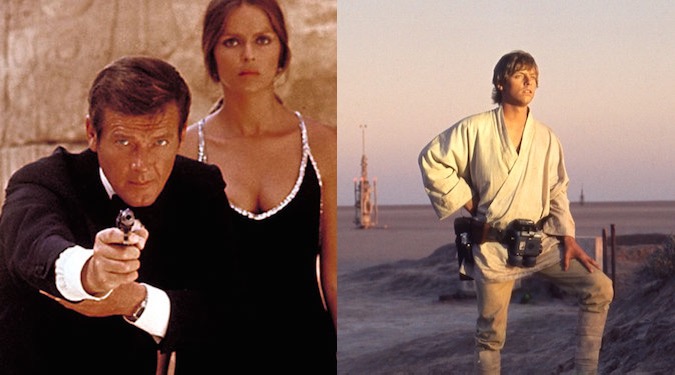
Every single time a Star Wars movie comes to theaters, a James Bond adventure always accompanies it within a year of release. That’s a weird bit of trivia, no? Two of the most gigantic franchises of all time, both in popularity and in cold hard box-office revenue, and the jaunts through a galaxy far, far away are always paired with some good old British womanizing. I smell a conspiracy. Maybe old Bond is just insecure about his lack of Force-wielding prowess and feels the need to release a movie every time a new Star Wars flick hits cinemas.

Regardless, it gives us an opportunity — nay, begs us — to revisit those years and the state of the respective franchises. With the trend continuing this year upon the release of Spectre and The Force Awakens, let’s zip back almost four decades ago to the beginning of the phenomenon.

The Spy Who Loved Me (1977) and A New Hope (1977)

SHLM and NH

A brief look at the weekly box office number-ones throughout 1977 betrays what you’d expect: Star Wars absolutely dominated, reclaiming the top spot again and again weeks after the original release. Great films like SorcererBobby Deerfield, and Cross of Iron have since been relegated to obscurity in the looming shadow of A New Hope. And The Spy Who Loved Me? It’s not even in the Top 10 highest-grossing Bond films (and yet Octopussy is, somehow).

And still The Spy Who Loved Me is one of the better entires in the long-standing franchise, certainly one of the better outings for Roger Moore’s 007. After the idiocy of Live and Let Die and the beautiful weirdness of The Man with the Golden Gun, Moore’s Bond got relatively straightforward in a collaboration with the Russians against the maniacal Karl Stromberg and his trusty metal-toothed henchman. It seemed like Moore’s Bond was finally coming into his own, like the franchise was on its feet again after a long string of so-so spy shindigs. To this day it’s one of the most revered Moore outings.

Continue reading Face Off: James Bond and Star Wars

Soldier in the Rain (1963)

Buddy films almost always have two clashing personalities at the core. Butch and Sundance, Woody and Buzz, Thunderbolt and Lightfoot, Thelma and Louise — more often than not it’s the Hardass and the Free Spirit, or the Mentor and the Newcomer, or the Brainiac and the Simpleton. But as far as the casting goes you can usually say cool: those two guys will be great together. Newman and Redford is a more obvious pairing than Hanks and Allen, but the latter’s not strange enough to raise any eyebrows.

But Jackie Gleason and Steve McQueen? That’s not an immediate sell as a buddy-comedy duo, is it? Each of them is legendary, but in a different fashion. Gleason is a comedic entertainer at heart, delivering highly effective drama in smaller portions in The Hustler and a handful of other notables; McQueen, meanwhile, would build his career on strong silent types even in his lesser-known dramas, from The Sand Pebbles to The Getaway. He would rarely do comedy, and Gleason would rarely share the limelight in any of his comedic films (not intentionally, of course; he just stole the show pretty much every time). So perhaps a Gleason/McQueen team-up isn’t inherently strange until you consider that a) it’s a comedy with the duo sharing top billing, b) it’s fairly dramatic at times in a satirical Catch-22 sort of way (more on that in a minute), and c) McQueen is the loopy goofball and Gleason is the knowing-smile know-it-all. That said, the most important consideration is d) Soldier in the Rain is highly underrated.

Continue reading Soldier in the Rain (1963)

The Leftovers 2.4 – “Orange Sticker”

Last night The Leftovers rickrolled everyone. I can’t exactly put my finger on whether that makes me ecstatic or annoyed, but I’m quite sure it’s the former. More importantly, “Orange Sticker” got back to Storyline A of the second season after a brief detour with last week’s “Off Ramp“. The Murphy Family seems to be fully driving the show now, sort of an odd thing considering we weren’t even aware of their existence in The Leftovers for the entirety of the first season. But their presence was noticeably missed in “Off Ramp”, and the events in Jarden now seem to have the cosmic weight of significance while the Mapleton subplot is just that: sub.

And more important still is that Nora and Kevin entered into respective character arcs that will drive their own actions in the coming episodes. “Axis Mundi” and “A Matter of Geography” caught back up with the Misplaced Mapletonians (great band name), but “Sticker” really took the opportunity to push forward. The episode began with an overlap of the conclusion from both of those first two episodes, making this the third time we’ve seen the earth-shaking occurrence that seemed to pluck Evie Murphy from existence. Interesting that there’s so much overlap this season — come to think of it, we’ve spent less than two hours with the Murphys as we approach the midway point of the season — and yet it still feels consistently fresh. This time the earthquake and the aftermath is seen from Nora’s point of view.

Continue reading The Leftovers 2.4 – “Orange Sticker”

Back to the Future Part II (1989)

Today is the day, the distant future, to which Marty McFly travels in Back to the Future Part II, hurtling through time with Doc Brown to October 21, 2015. As predicted in the first film, Marty sees some serious shit — hoverboards, Pepsi Perfect, Jaws 19 playing in the local Holomax Cinema. Paradoxically, if Marty were to actually arrive today he’d find Back to the Future Part II re-released in cinemas instead, depicting the story of the day he traveled to October 21, 2015. He’d sit in the theater and have his recent past recounted and his impending timeline spoiled, which is an obvious time-travel no-no. His actions in the future would be influenced by the movie depicting his actions in the future, which would in turn change the 2015-set scenes of BttF2, which would in turn jeopardize Marty’s presence in that very theater, which would in turn jeopardize our ability to hypothesize about Marty’s presence in that very theater, which would in turn [head explodes].

The actual plot of Back to the Future Part II isn’t actually much simpler. If there are Ten Basic Ideas about time travel — meeting yourself, erasing stuff from existence, etc. — then three of them made it into the first movie and all ten of them were crammed into Part II, leaving Part III to differentiate itself by pretty much not being a time travel movie. But simple time paradoxes (paradoxi?) are for wimps — let’s have Michael J. Fox play a billion different roles, including three versions of Marty McFly! So silly!

Continue reading Back to the Future Part II (1989)

The Leftovers 2.3 – “Off Ramp”

The episodic nature of a show like The Leftovers could be its downfall. Take Tommy and Laurie Garvey, the only two familiar faces in “Off Ramp”, and consider that a) we’ve seen a lot of their respective stories, from backstories to experiences at the moment of the Sudden Departure to their lives in the aftermath, and then consider b) that the episodes featuring them almost always seem like weaker entries. Why? Lost-style episodes on single characters aren’t inherently weak, and in fact “Two Boats and a Helicopter” (about Matt Jamison) and “Guest” (about his sister Nora) were two of the best episodes of the first season of Leftovers.

But Lost still had its dreaded Sun episodes, or its Shannon/Boone episodes, or a f*cking Rose & Bernard episode right in the middle of a major action arc, and that last example gets to the heart of the problem: some great characters just slow the action down. Tommy and Laurie always kind of did that in the first season, involved with their little cults of various ilks and mindsets, and we always had to cut away to get to them. Cutting away, of course, implies that the stuff we actually care about will be waiting when we get back. It’s not that Tommy or Laurie walked on screen and sucked the life out of the show, but even in their best moments the structure was such that you’d still be waiting to cut back.

Continue reading The Leftovers 2.3 – “Off Ramp”