

 It’s entirely possible that the West’s fondness for Akira Kurosawa is borne of the fact that he frequently addresses themes of individuality, personal distinctiveness, and the importance of being true to yourself. Those aren’t very Japanese themes, traditionally, even if the popular “nail that sticks out gets hammered down” axiom is a bit simplistic these days. But the corporate-cog-finds-new-lease-on-life narrative seems especially well-suited to the notoriously workaholic Japanese culture, and nowhere is that narrative more effective than in Kurosawa’s Ikiru. Now streaming on The Criterion Channel, Ikiru stars Kurosawa stalwart Takashi Shimura as a spiritless bureaucrat grappling with the futility of his mortal days.
There is a sequence in the film — possibly the most famous in a film full of memorable sequences — where a group of parents approach a number of different government offices in an attempt to get a local cesspool drained and replaced by a park for their children. The first office refers them to another, that office refers to a third, and on and on. The buck is passed until the parents are so worn down by the perpetual runaround that they give up. If you’ve never seen Ikiru or would just like to rewatch the scene, you can stream the sequence here.

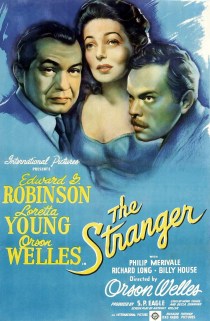 As is the case with the work of many a cinematic genius, the filmography of Orson Welles is especially revealing when considered as a whole. Hits, flops, stretches of obsession, gaps of inactivity, passion projects and moneygrabs — in some ways this kind of retrospective review can tell us more about the filmmaker than the films themselves. It’s the “God’s-eye view,” to steal the name of an aerial shot favored by Welles, and it serves to highlight the ideas that the writer/director would experiment with, return to, or transform entirely in successive efforts. The other edge of the sword, of course, is that each individual film inexorably loses something when viewed alongside a slew of cinema which may otherwise share little by way of plot, theme, style or cultural impact.
 April 2019 was a pretty earth-shaking month in pop culture terms. We had the first tangible fallout from the Disney/Fox merger and some really interesting developments in the Great Streaming Wars (the launch of the fantastic Criterion Channel, details on the upcoming Disney+), we had new blockbuster releases (
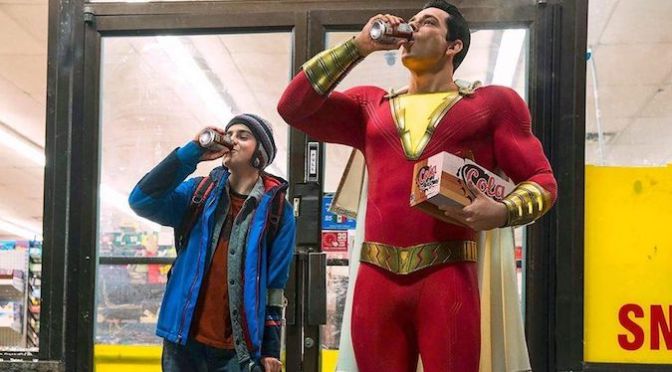
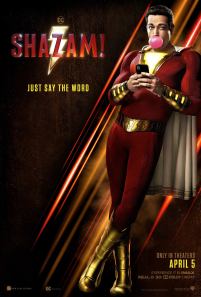 Is the DCEU still a thing? Conceived as the answer to Marvel’s unfathomably successful Cinematic Universe, DC’s interconnected supertales never quite coalesced the way they were intended to. You could point to any number of reasons for this derailment: a lack of a Kevin Feige-type visionary at the helm, or a violent shift in tone from one movie to the next, or poor casting in crucial roles, or the general cart-before-the-horse nature in which this series was rushed into existence. Those are all blameworthy when considering the ineffectiveness of a franchise. But because each individual film in the DCEU —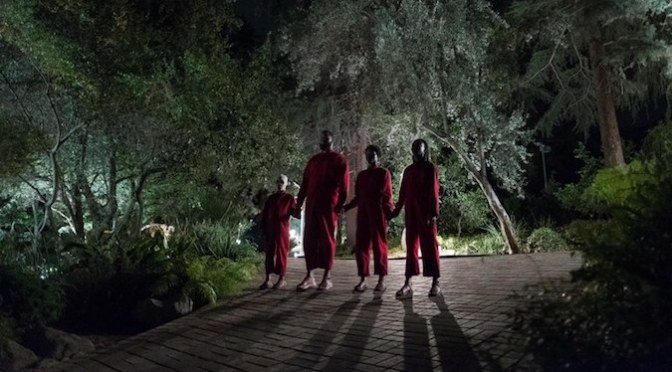
 Jordan Peele’s Us is nothing short of exceptionally entertaining horror. Starring Lupita Nyong’o and Winston Duke as the mother and father of a prototypical American family, Us joins a long tradition of doppelgänger horror while still emerging from that tradition into definitive modernity. Like Peele’s debut Get Out, the American Dream — as a white-picket-fence fantasy and as a dark reality — is crucial not only to the implicit themes of the film, but to the reason both films are scary in the first place. Yes, Us has a preponderance of classic horror moments, from jump-scares to home invasions to creepy coincidences foreshadowing a coming threat. But these tropes become entertaining again only in context of a strong underlying assertion that speaks to something in our everyday life, and while Us may not speak as explicitly as Get Out, the potency of the film is drawn from a similar source.
 In 2017 The Last Jedi ignited a culture war between lovers of Star Wars on the one side and…well, lovers of Star Wars on the other side. This war was ostensibly borne of debate over the film, praise versus criticism, and there certainly is a battlefront of this war that does engage in genuine discourse over Jedi. There’s another front, of course, comprised mostly of warriors fighting with a willing blindness to the merits or pitfalls of the film as a film; some people just despise Jedi for puerile personal reasons, some just defend it simply because it’s Star Wars. This is the Ultimate First World Problem, such hatred and ire thrown about over the seventh sequel to a space fantasy from 1977. But intentionally or not, a particular faction of “critics” revealed themselves during this war. We’ll call them the Shitboys, because they’re mostly boys and they mostly shit on everything.

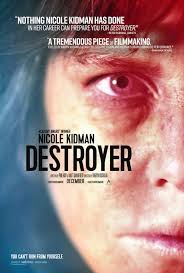 I was pretty darn excited by Destroyer just prior to watching Destroyer. The fact of a female-led, female-directed crime film with such noir grit would’ve been enticing enough. That female lead, of course, is Nicole Kidman, which always helps in the Excitement category. But frankly director Karyn Kusama was even more of a draw, coming off her last effort The Invitation. While not altogether a classic, Invitation stuck in the mind for its slow-burn tension and creepy performances. It was almost a suburban spin on a haunted house tale, Ice Storm meets Amityville Horror, accomplished with confidence by Kusama on a comparatively small budget of $1 million. Destroyer upped the ante, left the suburban mansion for the L.A. streets, but the fact that it was still an original thriller was mighty exciting.
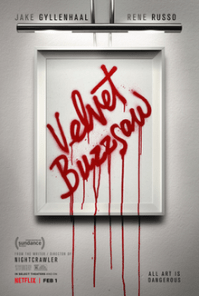 I went to the Tate Modern in London once. Modern art is easy to shit on, the philosophy of experimentation and willful disregard for tradition seeming to some haphazard, easy, cheap or just plain juvenile. That day at the Tate somebody had left a crumpled-up brochure on the ground, dead center of a pristine exhibit hall, and visitors would occasionally encircle it with hushed regard as they mistook it for art. It was the most surreal thing in a museum of exclusively surreal things, watching a piece of trash receive such vigilant appreciation.
 You’d certainly be forgiven for thinking Alita: Battle Angel to be a new movie by James Cameron. It gives off his scent in more ways than one, but primarily in the union of completely gangbusters special effects and a completely lackluster script. Cameron’s credited as a producer, though, not that the title of “producer” can actually ever have one single definition. Based on the manga series Battle Angel Alita, the film adaptation is in actuality directed by
  Motion State Review