

 As far as indicators of things to come are concerned, Blood Simple has everything you need to know about the Coen Brothers right there in the opening. Okay, maybe not everything — after all, daring to think you’ve nailed down the Coens is, as critic David Edelstein put it, “a sure way of looking like an ass.” The most immediate hallmark is a somewhat superficial one, what with Blood Simple sporting the same exact opening (drawling narration over barren establishing shots) as later Coen films The Big Lebowski, The Man Who Wasn’t There and No Country for Old Men. But from there, the way light and shadow pass through Blood Simple serves as a solid marker of the artistry for which the first-time filmmakers would someday be known.
After the opening narration, credits roll over Abby (Frances McDormand) and Ray (John Getz) having a conversation in the car at night. The credits don’t roll, actually, but flash brightly whenever passing headlights illuminate the car’s interior. The pair have a cryptic conversation about Abby leaving Marty (Dan Hedaya) to be with Ray, and in the next scene they’re rolling around in a motel room bed, headlights from the highway still illuminating them briefly.
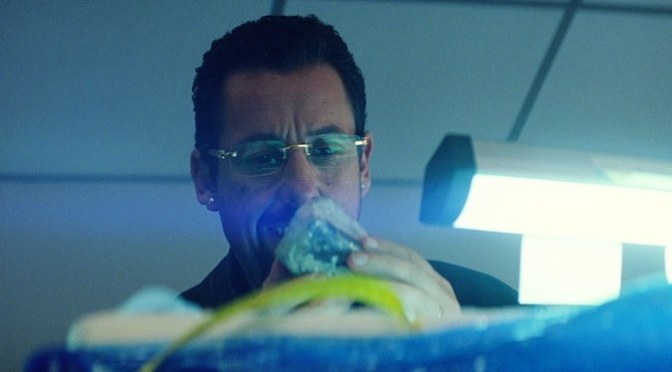
 The films of the Safdie Brothers tend to share a few recognizable qualities. Most apparent is the kinetic, stressful energy with which each of their films unfolds, a ride that weaves unexpectedly while continuously approaching a breakneck speed. Those weaves are almost always a result of character decisions, though, and I respect that the Brothers keep memorable figures at the fore through even their most plot-twisty jaunts. They seem drawn to slightly-delusional protagonists, too, if not fully-delusional, and so the common logline usually follows a familiar trajectory: Main Character makes increasingly dumb decisions and pays for it. And then there’s the street-level realism, from the single-parent struggles of Daddy Longlegs to the exploration of addiction in Heaven Knows What to the petty life of crime in Good Time.
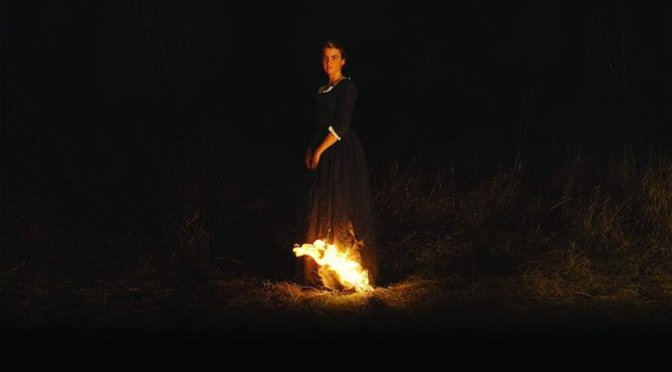
 Marianne, the artist and main character of Céline Sciamma’s Portrait of a Lady on Fire, invites us to know her immediately. Look at the way I sit, she says. Take time to look at me while I pose. Look at the way I hold my hands, she says, before her fist involuntarily clenches at the sight of an old painting of hers. A scene later Marianne is no longer posing, but we take time to look at her face when she sees her painting equipment go over the side of a boat. We see her foot find purchase on the boat’s edge, we see the briefest flicker of uncertainty, and we feel we know her a little better when she dives into the water.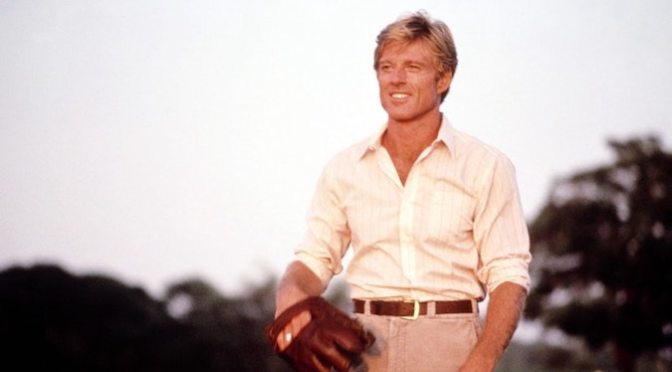
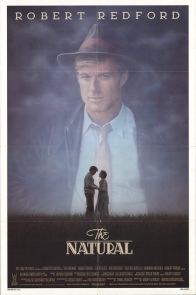 Bernard Malamud wrote The Natural, his debut novel, in 1952, the year the Yankees beat the Dodgers in the World Series. The tale of once-promising baseballer Roy Hobbs was almost universally praised upon the novel’s release, with many championing it as the first great novel about baseball. Critical consensus, though, agreed that the actual baseball — the strategy, the technicalities, the game — mattered less than the fable at hand. In some ways the myth behind Roy Hobbs was more interesting than Roy Hobbs.

 The first scene of E.T. wouldn’t be the same in any other medium. Wordless, shadowy and purposefully obscure, there’s still a ton of information conveyed through visuals alone. Spielberg was (and maybe still is) a fan of this kind of opening, eschewing expository positioning in favor of details that might strike as somewhat disorienting at first. There are fifteen or so characters here, all of them faceless. But even though we don’t get an instance of “Spielberg Face” — his beloved reaction shot of a wonderstruck visage, eyes wide, mouth agape — there’s still plenty to gawk at in these few short minutes.
 One of the most intriguing films of the past year is Dragged Across Concrete, S. Craig Zahler’s violent, hardboiled yarn about two misogynistic and racist cops (Mel Gibson and Vince Vaughn) taking the law into their own hands. The film plays as a far-right (or even alt-right) fantasy, the two white leads lamenting “political correctness” while they harass witnesses and suspects who are exclusively non-white. Even the casting of Gibson and Vaughn is loaded. But Concrete hinges on the question of whether Zahler actually agrees with the mentality of his own film, whether he’s playing a larger game in giving us these exact characters at a time when everything else out of Hollywood is either liberal-minded or four-quadrant neutral. Short of an answer, the question alone makes Concrete into one of 2019’s most provocative films.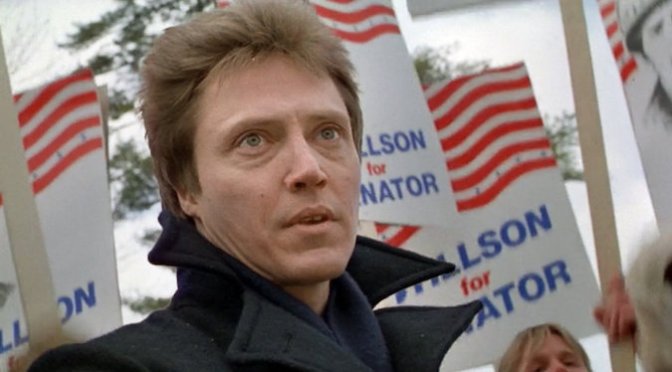
 Political turmoil always breeds strange artistic phenomena, and the movies are no exception. As the current occupant of 1600 Pennsylvania Avenue reclines in the West Wing, bone spurs resting beside the crumpled Wendy’s bag upon the Resolute Desk, one such phenomenon we’ve witnessed recently is that of Art as Response. In this scenario a filmmaker — like, say, Steven Spielberg — will work quickly to produce a movie — say The Post — as an active comment on whatever’s happening (or not happening) in the Oval Office. A second phenomenon involves us, the filmgoers and cinemalovers, and the way we inexorably view almost any new movie in the context of today’s political climate. A given film — like, say,
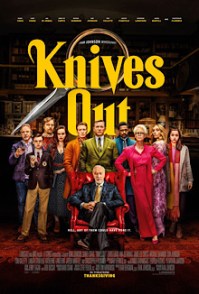 It ain’t always fun, the movies. Amongst this year’s least-fun pictures we probably have the likes of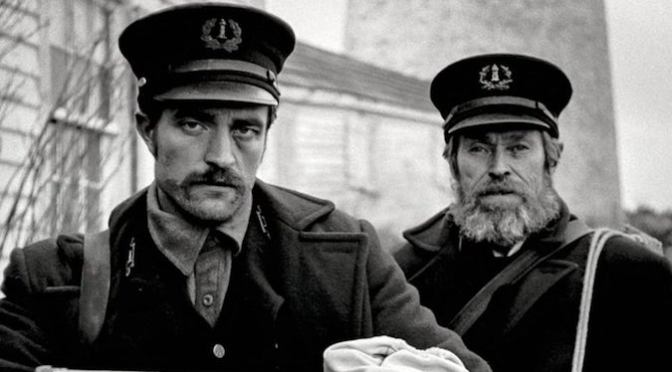
 The ambition of Robert Eggers was apparent after his debut The Witch, a one-of-a-kind horror film steeped in deeply-felt folklore. The dialect, the costumes and settings, the sound design and the themes were all clearly the result of hard research and dedication to period accuracy rarely realized in modern film. Eggers himself, who presented a special
 Motion State Review