
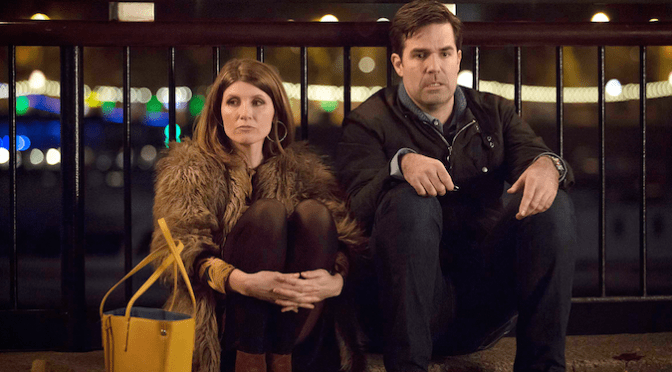
 While Netflix has proven itself worthy of quality television in its queue of original series, Amazon Prime still has something to prove. With Catastrophe, it gets a good start.
Catastrophe, a comedy written by Sharon Horgan and Rob Delaney, stars the duo as a somewhat dysfunctional couple that gets together when Sharon (played by Sharon) finds out she is pregnant with Rob’s (played by Rob) baby after the two have a one-week stand. Catastrophe just wrapped up its second season and is getting ready for a third, so now is a great time to catch up.


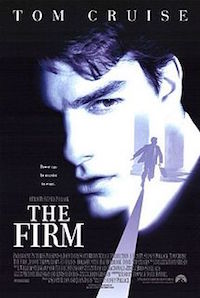 Just now I googled “Tom Cruise best roles”, “Tom Cruise worst roles”, “Tom Cruise best movies” and “Tom Cruise worst movies”, partially because I’m interested to see where his role as Mitch McDeere in The Firm lands and partially because my boredom has reached carrying capacity. I found, unsurprisingly, that the internet does that thing where it reaches consensus about certain things being “good” and certain things being “bad”, which in this case is sometimes inarguable (
 Oftentimes, we yearn for simplicity in movies. There should be good guys, bad guys, and a happy ending. Maybe it was all those fairy tales we heard growing up. Unfortunately, for those looking for the next great American fairy tale, Joel Edgerton’s The Gift is not it.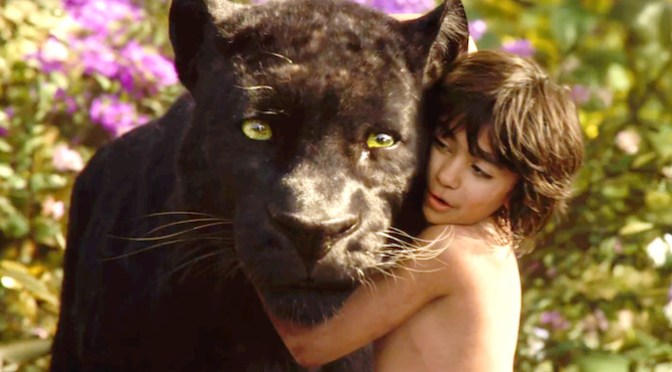
 Today is May 11th, 2016, the 132nd day of the year. In those just-over-100 days a small little company called Disney — heard of it? — has made more money than any single company has any earthly right to make. Not since the Dutch East India Trading Company has a multinational firm held such widespread influence. Disney’s always been a successful company, sure, and even if they had fiscal years of lesser oomph they always had sheer name recognition to fall back on. In a bygone era every kid knew about Disney; today, though, we’re headed toward the era where every kid knows only Disney.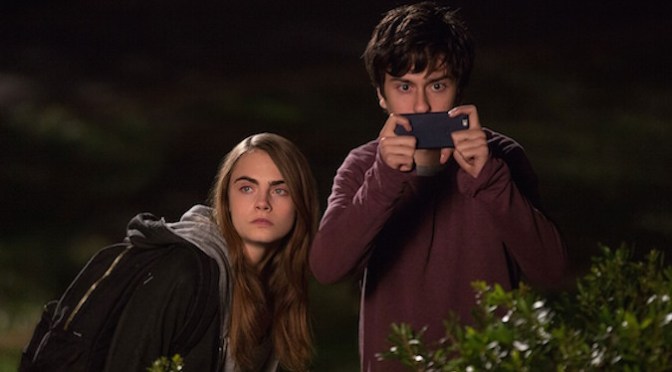
 When the film adaption of John Green’s The Fault in Our Stars went from thickly bound pages to the glowing awe of the big screen in 2014, teenage girls everywhere swooned and sighed as, “Okay,” took on a whole new meaning. Green’s other novel-adapted movie Paper Towns didn’t receive quite as much anticipatory swooning, but also doesn’t require quite as much emotional investment — and that’s okay.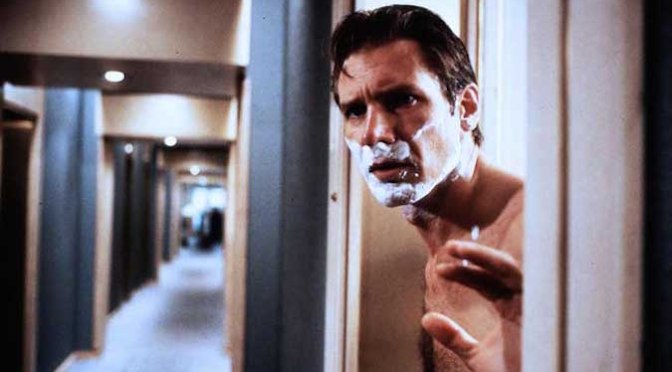
 Frantic is such the quintessential Roman Polanski movie that you’ll swear you’ve seen it before. As with Repulsion, Cul-De-Sac, Rosemary’s Baby, The Tenant and What? before it, Frantic subsists entirely on a sense of dread that grows steadily following an initial oddity. The tagline is “Danger. Desire. Desperation”, which could easily be the tagline for a sizable cross-section of Polanski’s filmography. That said, only one of those three words — “Desperation” — actually feels accurate within the context of the movie, and even the title Frantic is a bit misleading. This isn’t the only kind of film Polanski is capable of, but the series that do fit the mold are less frantic and more foreboding, less manic and more pulsating, less overtly dangerous and more subtly sinister.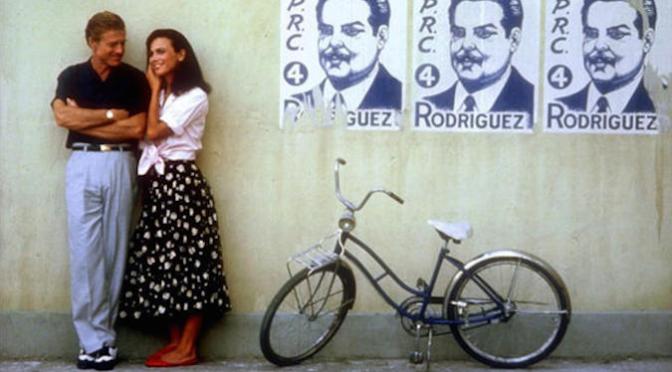
 Any cook will admit that having delicious ingredients doesn’t necessarily make for a delicious meal, even if you are faithful to the recipe. The most masterful chef can combine a snazzy main course with cool, exotic sauces and side dishes, pepper in some flair, and tie it all together with pristine presentation — but if the temperature isn’t just right, or if just one of the ingredients has started to turn, or if the sous-chef finally makes his move by sabotaging his tyrannical chef’s best meal, well, at least those would be reasons. Sometimes it just doesn’t taste good. Questions arise: why didn’t the dish work? Didn’t we follow the recipe to the letter? Did you freeze that thing overnight like I told you to? When does one traditionally bring their extended metaphor to a close? Now?
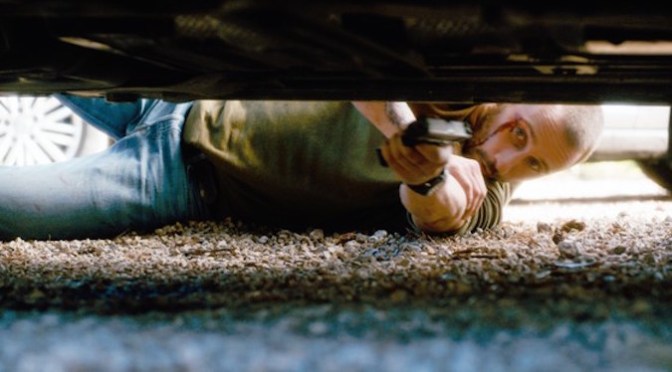
 Motion State Review