

 With the launch of the Criterion Channel this past April, I was finally able to achieve that which humankind has been trying to accomplish since we first emerged from the Garden of Eden: watching every Akira Kurosawa movie back-to-back-to-back-to-back-to-back. Before you ask, Kurosawa directed 31 feature films spanning 1943-1993, and as most of them clock in over two hours (and a few approach four), we’re talking almost 100 total consumption hours of Kurosawaness. And before you ask, yes, that’s going on my résumé.
Bottled retrospectives like this are typically undertaken in order to then distill all of that beautiful creative magic into a ranked list ascending from “worst” to “best.” I’ll spare you that, except to say that the five Kurosawa films that stuck with me most are (in loose order):
- Ikiru (1952)
- High and Low (1963)
- The Hidden Fortress (1958)
- Stray Dog (1949)
- Dersu Uzala (1975)

 We’ve already gushed a bit over
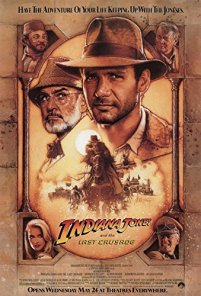 Pretty much everyone knows Indiana Jones. He’s a popular guy! The hat, the jacket, the bullwhip. If you’ve met him, these facets of his character ensure that you’ll remember him; if you haven’t, these facets still get thrown around in rumor and legend and make it feel like you’ve met him. I’m not talking about you and I, of course, or the world in which we happen to live, although pretty much everyone does know Indiana Jones. But Indy’s own world, in-movie, isn’t so dissimilar in that regard, and in fact his popularity might even be greater amongst the countless supporting characters who’ve seen him in action, experienced his -ness, or simply caught wind of his legendary adventures.
 Tarantino’s Once Upon a Time in Hollywood is out this month, and it seems like a culmination of sorts for the film fanatic writer-director. Each of his movies toes the line between self-awareness and immersive cinema, continually winking at the camera and yet lost in a world of its own, packed to the brim with pop culture references but still stylish enough to become a pop culture reference. Tarantino, who worked at a video store as a kid and has been devouring several movies a day ever since, has few rivals when it comes to an encyclopedic knowledge of the art form. To see Once Upon a Time in Hollywood framed around film and television sets in 1950s L.A. is quite the prospect, because that encyclopedic knowledge serves as more than a wink or a reference.

 In our
 When author Thad Beaumont decides to go public with his pen-name “George Stark” in an effort to get back to meaningful writing after churning out a few commercial bestsellers, strange things start happening. After Stark’s “death”, people — real people — start actually dying, largely in brutal fashion and largely in connection to Thad himself. It’s a conundrum of a case to everyone but Thad himself, who’s slow to give in to what he knows must be the truth: George Stark, his pulp fiction pseudonym, is somehow real, walking around, back from the dead. And he’s not going back to the grave quietly.
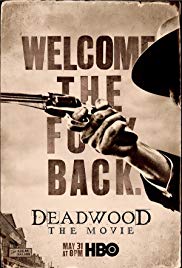 It’d be tough to think about the Deadwood film as that alone, a mere two-hour tour through a corruption-riddled mining town in the waning days of the 19th century. The movie exists very much as a long-awaited finale for the Deadwood series, which was unceremoniously canceled after three seasons at HBO more than a decade ago. To enjoy the film without the context of the show is possible, probably, but it’d also be akin to starting in on the last episode of a television series. It’d be equally tough to refrain from using the f-word multiple times while writing about Deadwood, so consider this a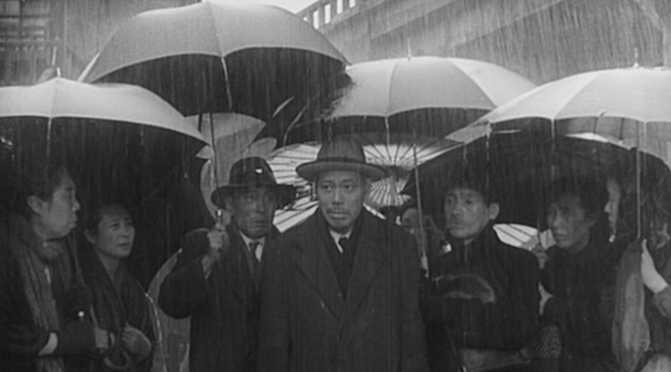
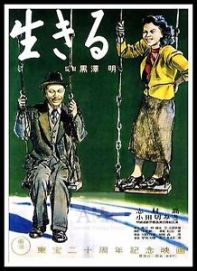 It’s entirely possible that the West’s fondness for Akira Kurosawa is borne of the fact that he frequently addresses themes of individuality, personal distinctiveness, and the importance of being true to yourself. Those aren’t very Japanese themes, traditionally, even if the popular “nail that sticks out gets hammered down” axiom is a bit simplistic these days. But the corporate-cog-finds-new-lease-on-life narrative seems especially well-suited to the notoriously workaholic Japanese culture, and nowhere is that narrative more effective than in Kurosawa’s Ikiru. Now streaming on The Criterion Channel, Ikiru stars Kurosawa stalwart Takashi Shimura as a spiritless bureaucrat grappling with the futility of his mortal days.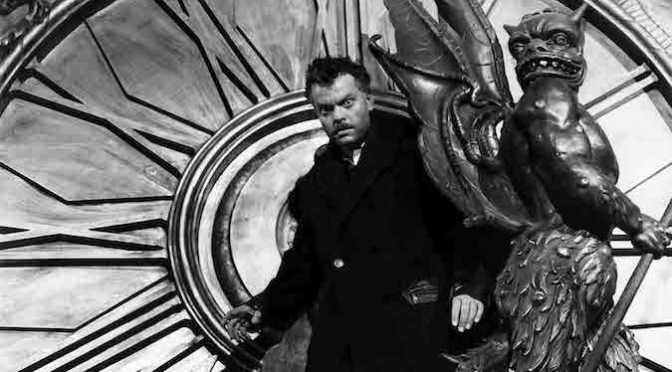
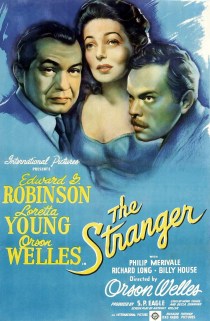 As is the case with the work of many a cinematic genius, the filmography of Orson Welles is especially revealing when considered as a whole. Hits, flops, stretches of obsession, gaps of inactivity, passion projects and moneygrabs — in some ways this kind of retrospective review can tell us more about the filmmaker than the films themselves. It’s the “God’s-eye view,” to steal the name of an aerial shot favored by Welles, and it serves to highlight the ideas that the writer/director would experiment with, return to, or transform entirely in successive efforts. The other edge of the sword, of course, is that each individual film inexorably loses something when viewed alongside a slew of cinema which may otherwise share little by way of plot, theme, style or cultural impact.
 April 2019 was a pretty earth-shaking month in pop culture terms. We had the first tangible fallout from the Disney/Fox merger and some really interesting developments in the Great Streaming Wars (the launch of the fantastic Criterion Channel, details on the upcoming Disney+), we had new blockbuster releases (
 Motion State Review