Pumpkinhead (1988)

Pumpkinhead doesn’t give a shit about your morals. He doesn’t really give a shit about anything, granted, and in true creature feature fashion the gory B-flick Pumpkinhead is more concerned with dreaming up gross ways for a pack of teenagers to bite it than with deriving any message out of the bloodshed. Oddly enough, though, there’s a distinct resistance to the crowdpleasing moments of heroism that usually typify late-’80s schlock-fests of this sort, which is evidence to the claim that somebody cared about something, which in this context is actually high praise.

Why, you ask, would the demonic Pumpkinhead be so prized within this ostensible Innocents vs. Monster tale? Why would we root for him instead of the terrified cabin-dwellers? Why would Pumpkinhead win? Simple: he’s Motherf*cking Pumpkinhead.

Continue reading Pumpkinhead (1988)

Film & TV News: September 16

News

  • The Toronto International Film Festival continues to champion small, independent art-house efforts while the vast majority of us sit back and continue to pretend to care. Meanwhile, the King Kong and Godzilla franchises are merging.
  • In other festival news, the 53rd New York Film Festival kicks off in just over a week. Check out the teaser for the festival below, and be sure to check back in our Event Series archive for reviews of Miles Ahead, The Measure of a Man, a special screening of O Brother, Where Art Thou? and many more.
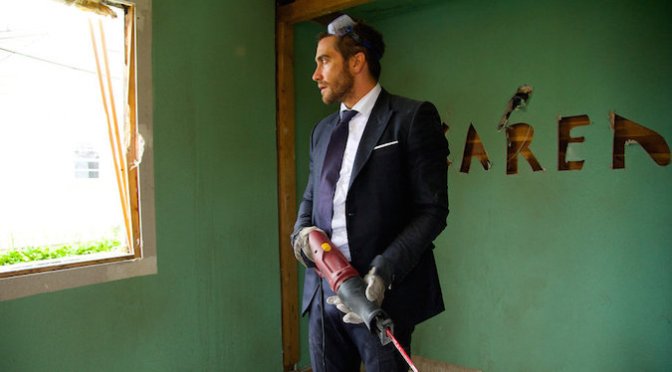
  • War of the Planet of the Apes has cast Woody Harrelson as the primary villain, which is much more exciting after you’ve seen Harrelson’s twisted turn in Out of the Furnace.
  • Oliver Stone’s Snowden has been pushed to 2016 because of a leak or something.

Continue reading Film & TV News: September 16

Shame (2011)

It’s just a shame that this film wasn’t a bit better.  I’m not saying I hated or even disliked Shame, but it had the potential to be a great film that handles an issue that is rarely discussed and is entirely taboo.  One thing, for sure, that impressed me about Shame was the way that it made me actually feel the shame and remorse and immense self-loathing that Brandon experienced on an hourly basis.  That was powerful, and I mainly attribute that to the sheer talent of one of my favorite actors, Michael Fassbender.  In his second collaboration with the talented Steve McQueen, Fassbender is almost frightening.  When he attacks his visiting sister in nothing but a bath towel (one that is starting to fall down, at that) and begins screaming in her face, I genuinely felt like he might have lost his mind.  His rage, which clearly stems from his own unimaginably great disappointment in and repulsion of himself, is fairly constant and, while far less intense than that of his later performance as a plantation owner in McQueen’s follow-up film 12 Years A Slave, is shocking.

At the same time, Fassbender is also wise to portray Brandon thoroughly enjoying the acts that ultimately lead to his frustration.  This is vital to his performance because it is clear that the film is attempting to show that sex addiction is, in fact, an addiction.  It is an affliction, much like alcoholism or drug addiction.  Brandon is not a freak, he’s not a pervert…he is suffering.  But, as all addicts do, Brandon enjoys doing these acts while he is doing them.  Just because a cocaine addict might desperately want to stop using the drug, this doesn’t mean that he will suddenly no longer enjoy cocaine when he does use it.  In order to achieve the goal that this film is trying to accomplish, Fassbender needs to be as dead-on as possible.  He nails it.

Continue reading Shame (2011)

The Leftovers 1.5 – “Gladys”

To my mind, two things played a major role in spawning a resurgence in post-apocalyptic storytelling in the past decade. The first is Cormac McCarthy’s The Road, a bombshell of a novel from 2006 that depicted an ashen, desolate earth struggling to grasp the faintest glimmers of hope. It became a decent John Hillcoat film a few years later, but the craze spun off into more than just that: The Book of Eli, I Am Legend, Tom Cruise’s Oblivion, last year’s brilliant Snowpiercer, last year’s crappy Young Ones, that crappy now-cancelled NBC show Revolution, etc. etc. They’re not all directly borne of The Road, of course, but the genre itself certainly received a huge boost from McCarthy’s novel. That’s why the time was right to revisit Mad Max with Fury Road, and why the likes of Blade Runner is getting a new treatment as well. Heck, just this week there’s talk of Christopher Nolan being involved with the long-awaited Akira adaptation.

The second influential piece of post-apocalyptic storytelling is The Walking Dead, the massively popular AMC show that launched a thousand other zombie-related things and an official spinoff of its own (Fear the Walking Dead, which is pretty good if almost exactly what you’d expect). The thing that pushed TWD ahead of the pack was the format of a television series: movies and books are comparatively finite, but the long-term storytelling at hand in a TV series (or a comic book series, like the one TWD is based on) serves the genre in the perfect way. In both cases — Road and TWD — the aim was to create a new world out of the old one, to watch characters deal with the differences, to play witness to what fantastic and terrible things might arise after something alters life as we know it.

Continue reading The Leftovers 1.5 – “Gladys”

Moonraker (1979)

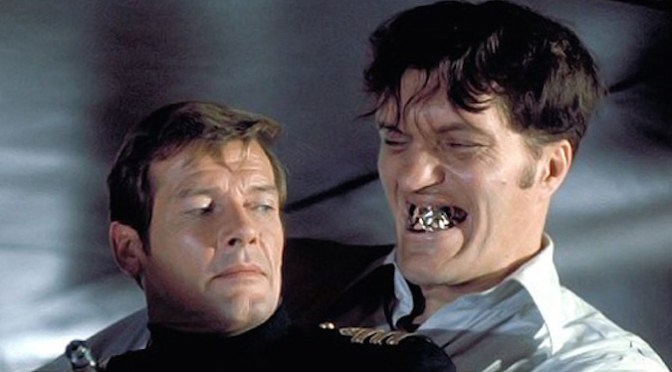
Ah, Moonraker. Shall I compare thee to another Bond film? Thou art more absurd and more simplistic. Sometime too seriously does Bond brood, and often is his complexion covered in facepaint like in Octopussy. And every fair from fair sometime declines, by chance or waning box office returns on the Dalton Versions. But your eternal ridiculousness shall not fade, Moonraker, nor will your incorrigible fan service be overlooked, so long as men can breathe or eyes can see — so long lives this and this gives life to thee…or, well, not exactly life, per se, but at the very least a juvenile rundown of Bond henchmen.

Jaws bites stuff. It’s sort of his thing. He chomped his way through The Spy Who Loved Me and was meant to die at the end of that film, but apparently test audiences preferred an ending where Jaws survives to bite another day. That might not necessarily have meant that audiences wanted to see Jaws again in the very next Bond outing, but see him they did. Consistently. I mean really, he’s in like every scene simply because.

Continue reading Moonraker (1979)

The Thing (1982)

As stated in our review of The Fog, few directors have had their filmography subjected to as many pointless remakes as John Carpenter. The Thing might be the one that seems the most untouchable, the most sacred in its original form. Ironically, the 2011 Thing remake is probably the best Carpenter remake of them all. Still, the further one delves into the (re)making of the update, the more it just seems like doing Thing over again is a bad idea. Eric Newman, one of the producers on the 2011 film, had this to say about the development:

“I’d be the first to say no one should ever try to do Jaws again and I certainly wouldn’t want to see anyone remake The Exorcist…we really felt the same way about The Thing. It’s a great film. But once we realized there was a new story to tell, with the same characters and the same world, but from a very different point of view, we took it as a challenge.”

No, this isn’t going to be a rant about originality (or lack thereof) or a rant about practical effects (or lack thereof) in modern filmmaking — if you were to blindly click anywhere else on your screen right now you’d probably hit one of those. If anything, much as our rundown on Carpenter’s Escape from New York attempted to define “infodump”, what we’re really concerned with here is how far the term “remake” really stretches.

Continue reading The Thing (1982)

The Leftovers 1.4 – “B.J. and the A.C.”

Right down to the title of the show, The Leftovers isn’t necessarily one for subtlety. Any time something isn’t where it’s supposed to be, a parallel is drawn to the mysterious Departure that inexplicably claimed 2% of the world’s population. This is Drama, capital D, and these people have Problems, capital P, and sitting down to an hour of cap-D plus cap-P — especially “B.J. and the A.C.” — can end up being too much CAPS LOCK to handle if you’re not ready for it. But on one level The Leftovers sacrifices subtlety intentionally, I think, allowing for clarity instead. Supreme clarity, in fact, and one that should make nearly every other show on television envious.

Take the opening Breaking Bad-esque montage of “B.J. and the A.C.”:

Continue reading The Leftovers 1.4 – “B.J. and the A.C.”

Deception (1992)

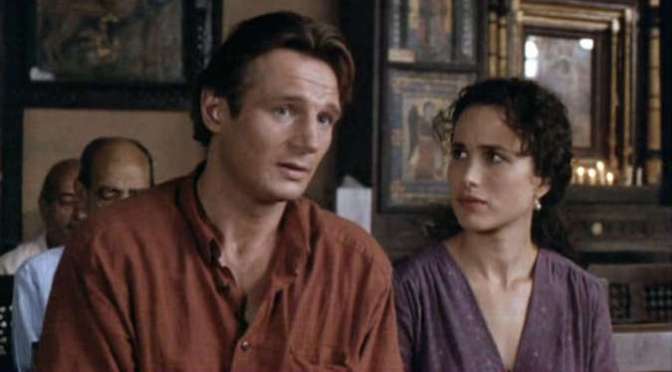
Okay. I just put on Deception, streaming on Netflix. Looks and sounds fairly enticing in an early-’90s Juror/Basic Instinct/Malice sort of way. It’s got Liam Neeson and Viggo Mortensen, both of whom I’m eager to see in a movie together, and Andie MacDowell, whom I really know nothing about. I’ve seen Groundhog Day and Four Weddings and a Funeral, so maybe it will be interesting to see her in a drama. The poster has moody lighting and Neeson is standing behind MacDowell in a subtly menacing way, suggesting that Deception is a cat-and-mouse game of, well, deception.

Okay! This sounds pretty exciting! Let’s get this movie started!

…….wow. Did David Lynch direct the credit sequence? That wasn’t very intense at all — oh, but I get it, I’m being deceived.

Continue reading Deception (1992)

Film & TV News: September 9

News

  • Christopher Nolan has announced his next film will hit theaters in 2017, but that’s all we know. Besides Michael Caine.
  • Netflix has picked up the fantastic Charlie Brooker series Black Mirror for more original episodes, which is welcome news for those dreading the proposed American remake. For those who’ve yet to see the show, take the first episode with a grain of salt. From the second episode onwards, you’ll be hooked.
  • Spectre‘s theme song “Writing’s on the Wall” will be theme sung by Sam Smith, the first British male solo artist to do Bond since Thunderball‘s Tom Jones.
  • The Force Awakens will be opening one day early in the U.K., as if I needed another reason to move to Europe.

Continue reading Film & TV News: September 9

Regarding Henry (1991)

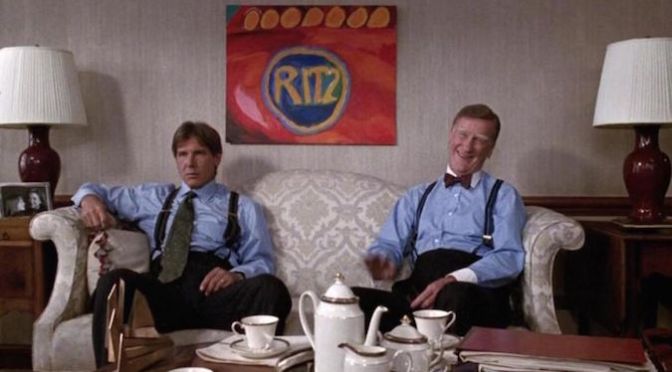
The upcoming Star Wars movie won’t mark the first time Harrison Ford and J.J. Abrams have crossed paths. As the 1980s became the 1990s and Harrison Ford traded in Han Solo, Deckard and Indy for a string of lawyers, doctors, politicians and playboys, the young writer Jeffrey Abrams was just getting his start. His first singlehanded script was Regarding Henry, a story about a heart-of-ice lawyer who is irrevocably changed by a horrific accident, and he scored big time with Ford and director Mike Nichols coming on board to bring his script to the screen.

Thankfully, even though Ford’s ’80s history is repeating itself with returns to Star Wars, Blade Runner and possibly Indiana Jones, Abrams has matured out of his Regarding Henry self and doesn’t appear to be looking back. A solid cast and crew does not a solid movie make, and Henry is far more by-the-numbers than you might expect from the Ford/Nichols/Abrams triumvirate. There must have been something in the water in Hollywood in the ’90s, as Henry takes a prominent station in the decade’s prized Overly-Emotional Tearjerker Oscar-Bait category.

Continue reading Regarding Henry (1991)