

 I’m constantly being surprised by What Lies Beneath. On first viewing it surprised me that Robert Zemeckis, the Spielberg acolyte behind feel-good romps like Back to the Future and Forrest Gump, would direct this self-contained horror flick. Years later, I was surprised to learn that Clark Gregg — Agent Coulson himself — wrote the screenplay. When I revisited Beneath a few months ago, the thing that surprised me was how good it was, how it does a lot with fairly little, how the straightforward nature of the plot obscures nuances that you wouldn’t catch the first time through. And then, of course, I was surprised a final time to learn that I am not in a majority here, that the film received mixed reviews upon release and currently has a dismal 47% approval rating on Rotten Tomatoes, and that the Pantheon of Horror Flicks may not hail What Lies Beneath as a genre masterpiece after all.
Doubtful, of course, that Beneath would ever really slip down the precipice into the Abyss of Forgotten Horror Flicks. It’s got Michelle Pfeiffer and Harrison Ford, and they and Zemeckis secured their places in film history long before 2000. And no, it’s not an outright masterpiece; it probably does little that Hitchcock didn’t do decades earlier. But one feels the need to defend it all the same, no? If not to reinstall it in the Pantheon or rescue it from the Abyss, perhaps just to feel better about being so endeared to it, as I am. We could touch on the film as a whole or dig into some of those criticisms from the mixed-review crowd…or we could sorta just talk about one single scene.
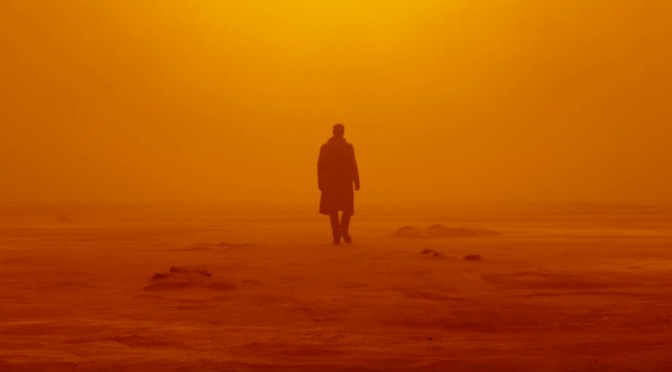
 One of the previews that screened before last night’s Boston premiere of Blade Runner 2049 was for next year’s monsters vs. robots actioner Pacific Rim Uprising, an inevitable if somewhat tardy sequel to Guillermo del Toro’s 2013 original. Based solely on this trailer, it’s evident that Uprising centers on the son of the first film’s protagonist, alludes heavily to that first film, and possibly just revamps the plot with slightly louder explosions. I was reminded, regrettably, of Independence Day: Resurgence, which gave off a similar reek of franchise desperation.
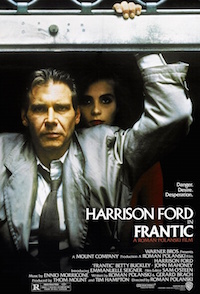 Frantic is such the quintessential Roman Polanski movie that you’ll swear you’ve seen it before. As with Repulsion, Cul-De-Sac, Rosemary’s Baby, The Tenant and What? before it, Frantic subsists entirely on a sense of dread that grows steadily following an initial oddity. The tagline is “Danger. Desire. Desperation”, which could easily be the tagline for a sizable cross-section of Polanski’s filmography. That said, only one of those three words — “Desperation” — actually feels accurate within the context of the movie, and even the title Frantic is a bit misleading. This isn’t the only kind of film Polanski is capable of, but the series that do fit the mold are less frantic and more foreboding, less manic and more pulsating, less overtly dangerous and more subtly sinister.


 Motion State Review