

J.R.R. Tolkien would not enjoy The Rings of Power.
 Wait! Before you roll your eyes and seek out a piece with a less whiny opening line, know that this is a generally favorable review of the Amazon series inspired by Tolkien’s creations. Much has been written already about the liberties taken by showrunners J.D. Payne and Patrick McKay, and sure: there are diversions, detours and a significant condensing of the timeline of Middle-Earth throughout the show’s first season, some of which result in frustrating missed opportunities. Entire diatribes have been dedicated to lamenting the fact that the Rings of Power elves have short hair, or that the Númenóreans should technically be like nine feet tall, or that mithril or the palantíri work very differently here (Erik Kain at Forbes has basically made a career these last few months mewling about what a “betrayal” the series is, at least when he’s not writing hard-hitting articles about Today’s Wordle Hints). So enough has been laid in print already detailing Power‘s departures from Tolkien’s source material, and yes, it’s all technically accurate.
And yet I have a hard time believing Tolkien would really give a shit about that. Before diving into why — and before getting to what the author’s real beef with the show would probably be — we’ll first issue a spoiler warning for The Rings of Power‘s first season.

 Detail is king in Prospect, the debut feature from writing/directing duo Christopher Caldwell and Zeek Earl. There’s little to latch onto in the opening minutes that could be called “familiar” outside the general setup: two human characters, father and daughter, in a ship floating through space. But the young girl is writing in an alien language, her father is administering a strange drug, and the process they both engage with to launch their pod down to the surface of a nearby planet is about as complicated as the entire mission in First Man. There’s a device that the father holds in place and continuously winds like it’s a jack-in-the-box, though its purpose is never actually articulated.
 We’ve done a fair bit of writing about James Bond here at Motion State. From
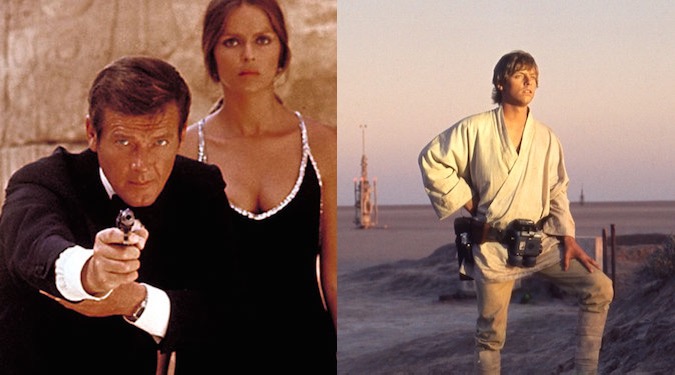
 There are two kinds of sports movies: underdog stories and everything else. The former category is vastly larger than the latter, likely because that’s sort of the archetypal narrative in any genre. The very first shot of Star Wars is a tiny Rebel ship fleeing a massive Imperial cruiser, and yet we know instantly which one we’re going to root for. In terms of sports movies this translates to Remember the Titans, The Longest Yard (not the remake), Rudy, Miracle, The Bad News Bears (not the remake), Chariots of Fire,


 Motion State Review