

 It ain’t always fun, the movies. Amongst this year’s least-fun pictures we probably have the likes of Alita: Battle Angel, Glass, Dark Phoenix and Gemini Man, all of which share in common a clear prioritization of special effects over storytelling. They’re also united in the fact that production was rocky in every instance, be it years of limbo or last-minute hackjobs in the editing bay, though that’s not necessarily synonymous with a bad film. Production on one of this year’s best, The Lighthouse, was described by its own director as “tense” and “cold”. No fun to be had in making that movie. Only in watching it.
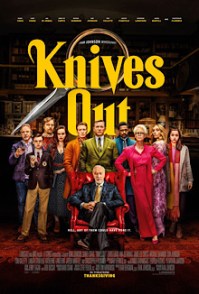
In a pre-recorded clip before the New England premiere of Knives Out, writer/director Rian Johnson — whilst thanking us for seeing the film and imploring us not to spoil it — said flat out that making it was “a blast.” It’s not hard to believe, and evident from the film’s very first scenes: everyone in front of the camera (Daniel Craig, Ana de Armas, Christopher Plummer, Don Johnson, Jamie Lee Curtis and a million others) breezes through having the time of their lives. And Johnson, too, exudes a confidence here as both a writer and a director that can only be borne of exciting material in the hands of a craftsman coming into his prime.
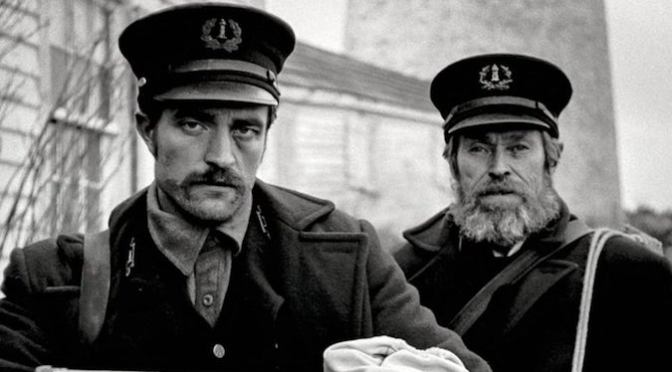
 The ambition of Robert Eggers was apparent after his debut The Witch, a one-of-a-kind horror film steeped in deeply-felt folklore. The dialect, the costumes and settings, the sound design and the themes were all clearly the result of hard research and dedication to period accuracy rarely realized in modern film. Eggers himself, who presented a special
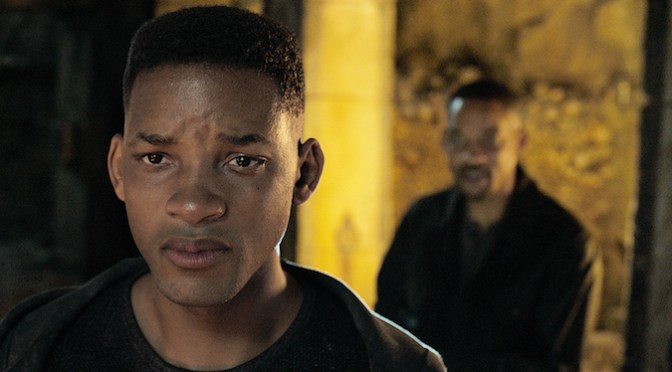
 Ang Lee’s increasing preoccupation with digital cinema effects can be traced to 2003’s Hulk, the first time one of his films featured a main character generated by a computer. In 2012 Life of Pi saw Lee wading further into digital waters, showcasing computerized sets and hyperrealistic animal characters. And in 2016 Billy Lynn’s Long Halftime Walk, filmed in a superfast 120 frames-per-second that very few theaters in the U.S. were actually equipped to project, managed to exude a digital sheen despite the apparent novelty of normal human characters doing non-superpowered things. With Gemini Man, Lee’s big-budget Will Smith actioner, the director tries a new digital toy: a screenplay generated entirely by a computer.
 Parasite is consistently surprising at every turn. Even if you don’t go in cold, knowing nothing about the plot or themes of Bong Joon-ho’s latest, the sprightly storytelling still does its job in keeping you on your toes. If you’ve seen Bong’s English-language efforts Snowpiercer and Okja, you might assume Parasite to be structured over themes of class disparity and the dangers of technology. While you’d technically be correct, those themes are far less obnoxious than they were in Snowpiercer, more cohesive than they were in Okja, and overall the plot- and character-based twists make Parasite into a far superior film.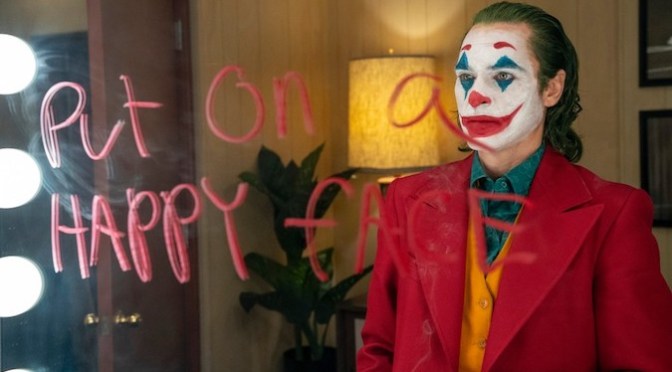
 Early buzz on Joker made frequent mention of a guy named Martin Scorsese, a film director you may have heard of, though not one who’s ever actually directed any films called Joker. Partly the comparison stems from the aesthetic of this new grimdark pseudo-origin for Batman’s nemesis, which is set in the ballpark of 1981 in a Gotham that looks suspiciously like the New York of Scorsese’s Mean Streets and Taxi Driver. Partly it’s the theme, too, I suppose, as Scorsese’s obvious preoccupation with insecure males and violence fits Joker‘s bill pretty well. And partly people simply love saying “it’s just like ______!” when a new movie comes out. Heck, the last Joaquin Phoenix movie we reviewed (the phenomenal
  Motion State Review