

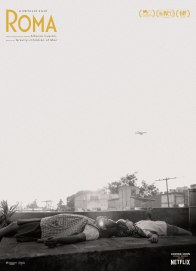
 You could call Roma the most colorful black-and-white film ever made. After the Centerpiece screening at the 56th New York Film Festival, writer/director Alfonso Cuarón noted how important the visual presentation was to the overall effect of the movie. Crucial among his points was that this black-and-white is “not a nostalgic black-and-white” but instead “modern” and “pristine,” disabusing the viewer of the notion that this tale is unfolding in a long-forgotten place or time. Despite being assured throughout the film that the place is Mexico City and the year is 1971, Roma simultaneously manages to assure you that what’s happening is happening here and now.
You could also single out the production design, the incredible detail in every frame of the film, as a primary contributor to this experience of color in a movie that supposedly doesn’t have any. A sweeping shot of the countryside seems to give off a yellow hue because the lighting is so sunny and natural; muddy brown makes its way into an otherwise cold shot of a discarded action figure and a flattened soccer ball in the garage outside. A rock thrown through a window in one scene leaves a hole that we look through weeks later, and somehow this lasting detail even evokes color in clear glass.
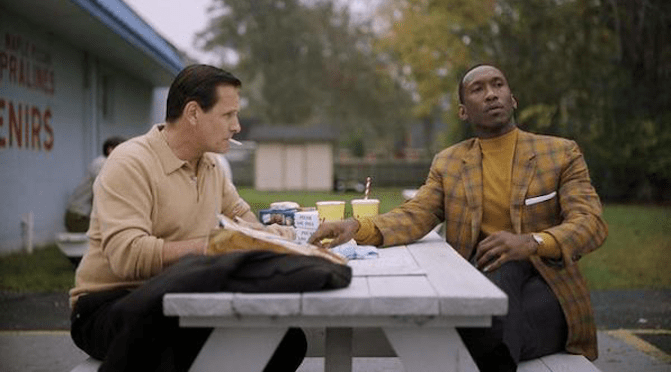
 After winning the People’s Choice Award at the Toronto International Film Festival last weekend, public opinion on Green Book quickly pivoted from a general curiosity in a dramatic effort from the guy who did Dumb and Dumber to genuine anticipation for an early Oscar frontrunner. The film’s first trailer, full of emotional monologues and swelling orchestral strings, already gave off a For Your Consideration vibe before Green Book even premiered. But TIFF has certainly become a stronger indicator of awards season success in recent years, and nine of the last ten People’s Choice Award winners went on to become Best Picture nominees. Universal went into overdrive this past week to get their sudden contender out to smaller festivals and screenings, so this week’s presentation at the 34th Boston Film Festival was a pleasant surprise.
 Shane Black’s new Predator movie, which opened last night and was advertised as an “explosive reinvention” of the series, purportedly debuts on the crest of a new wave of R-rated Hollywood blockbusters. Deadpool and Logan did pretty well in ’16 and ’17, see, and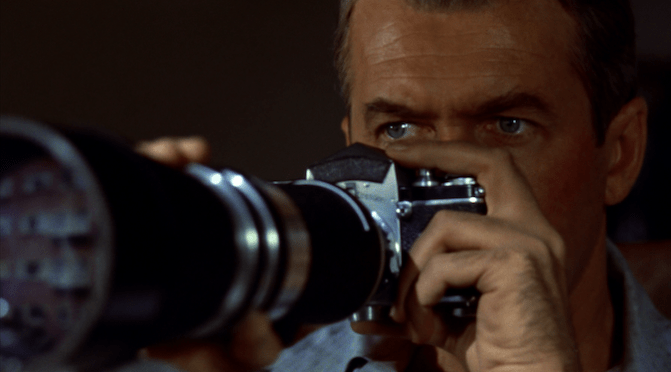
 Alfred Hitchcock was no stranger to the optical point-of-view shot, inserting a camera into the heads of his characters in nearly every film throughout his career. The Master of Suspense knew that this shortcut to conveying a character’s experience could be a powerful tool if used artfully. In Vertigo, this artfulness resulted in one of the greatest POV shots of all time, the discombobulating push-in-zoom-out (technically a “dolly zoom”) that simultaneously suggests our hero’s unbalanced frame of mind. More importantly, Hitchcock routinely tied these POV shot choices to significant narrative moments. In Vertigo this served to heighten the most intense action scenes by placing us directly in the action; elsewhere, the POV shot served to convey vital information, revelations, twists and — you guessed it! — suspense:
 If you’re a connoisseur of modern helicopter cinema, then Mission: Impossible – Fallout is the event of the season. Not since Black Hawk Down has the Neo-Copterism movement asserted such a well-defined visual aesthetic, such elevated narrative and tonal language, such awesome fucking explosions. Everything a refined and learned copterhead cinephile could possibly desire finds fresh life here. There is an absurdist, Lynchian quality infused into the rhythmic weaving of two whirlybirds; there are rarefied, Brechtian attributes present in those characters left on the ground. There is a continuation of the leitmotif established in the first Mission: Impossible‘s chopper-chase finale. When read through the lens of the tenets of cinéma vérité, Fallout delivers a powerful indictment of those who don’t actually know how to fly such a machine. And, in a move sure to receive recognition come awards season, auteur director Christopher McQuarrie playfully inverts the male gaze by literally flipping Tom Cruise upside down in a helicopter.

 In many instances a film is like a con: it wants to hook you, it wants to make you personally invested in the outcome, and it wants you to walk away with a smile on your face and slightly less in your wallet. If the endeavor is a success, there will always be enough to suggest that the artist — the film artist or the con artist — knows a truth that you do not. If the endeavor is unsuccessful, the feeling of being cheated will linger and frustrate.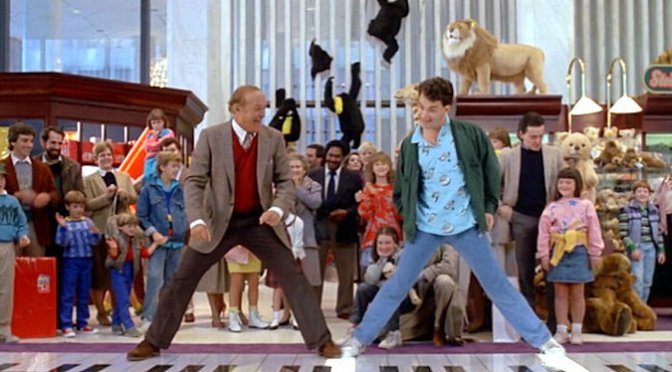
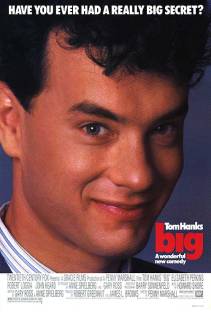 In Big, 13-year-old Josh Baskin wishes his way into a 30-something-year-old grownup version of himself. The trope of a mind-body mismatch was certainly nothing new in 1988, and in fact the late ’80s had a whole slew of movies featuring this exact same plot. These are heedfully chronicled by Mike Ryan
 One of the things that soured
 We’ve done a fair bit of writing about James Bond here at Motion State. From
  Motion State Review