All posts by hangmantitan

Murder by Decree (1979)

It can be a strange thing these days: some actors either play a role so many times or play it so effectively once that it becomes nearly impossible to fill the shoes, impossible to recast the role or to even imagine recasting the role. The former scenario – where an actor owns a role by performing it over multiple films – is more and more common now that the shared universe and neverending saga models are actually viable. Robert Downey Jr. and Hugh Jackman had the advantage of being the first to play Tony Stark and Wolverine in their respective franchises, but it’s still damn difficult to imagine what those cinema characters will look like ten years from now once Messrs. Downey and Jackman age out of the parts.

The latter camp – those who own a role after only a single performance – is more interesting, at least when the role we’re considering is that of Sherlock Holmes. The great deerstalker-capped detective has been played by hundreds of actors onscreen, notably by the likes of Basil Rathbone, Christopher Lee, Roger Moore (in Sherlock Holmes in New York), and the aforementioned Downey Jr. in the most recent feature adaptations. Peter O’Toole voiced the character in a series of animated shorts in the early ’80s, Ian McKellen will portray him in 2015’s Mr. Holmes, and Benedict Cumberbatch plays Sexy Holmes in the BBC show Sherlock. Jeremy Brett’s decade in the role spanning four separate series is certainly one of the most interesting turns – Brett’s health declined noticeably as each series progressed, and his time in the role ended up charting a tragic bearing through his final years.

Continue reading Murder by Decree (1979)

The Leftovers 1.1 – “Pilot”

The Leftovers isn’t easy watching. The premise is a tough one: roughly two percent of the world’s population suddenly vanishes one October day, leaving the other ninety-eight percent to agonize over where they went, why they went, and what the hell actually happened. Three years on, the weight of the uncertainty left in the wake of the event is so fresh that it might have happened just yesterday. Justin Theroux stars as Kevin Garvey, Chief of Police in smalltown Mapleton, New York, and in the pilot episode it’s already clear what kind of devastating effect the disappearance has had on Mapleton and on Kevin.

Damon Lindelof is a major player here, the writer behind such other head-scratchers as Lost and Prometheus, and his stroke is evident in the first hour of Leftovers. This is one reason why the show likely defies those happening upon it as they lounge on the couch and flip through channels until they hit HBO – The Leftovers isn’t at all a casual watch. Lindelof shares creator credit with Tom Perrotta, who wrote and published Leftovers as a novel before turning it to the small screen, and it appears they’ve both adopted the “mystery box” theory posed once by J.J. Abrams. The Leftovers shows us the box, shows the top and bottom and sides and practically makes us beg to see what’s inside it – and Lindelof and Co. are aware that that mystery itself is more compelling than actually opening the box. The main box – containing the answer to the question where did the departed go, and why were they taken? – is the framework for the entire show.

Continue reading The Leftovers 1.1 – “Pilot”

Enemy of the State (1998)

Wait a minute – Aaron Sorkin wrote Enemy of the State? Before we get too deep into false advertising here, let it be known that “rewrites” and “script edits” are terms that are extremely broad and ill-defined in most cases. Yes, Sorkin was brought on for rewrites of the Enemy of the State script by David Marconi; no, it’s not clear how much of the film is “his”, at least not in any explicit way. Sorkin presently has no credit for his work on the film, no listing on IMDb or anywhere else, although an early poster (later redacted) did feature his name right after Marconi’s:

Enemy of the State Sorkin

“Written by David Marconi AND Aaron Sorkin AND Henry Bean AND Tony Gilroy” – phew.  That many cooks in the kitchen usually isn’t a good sign – maybe bringing to mind Stanley Kubrick’s quote about one man writing a novel, one man writing a symphony, and one man making a film – but Sorkin’s name would eventually be struck, as would Bean’s and Gilroy’s, and Sorkin’s reputation as a controlling “sole credit” scriptwriter would presumably grow from there.

Continue reading Enemy of the State (1998)

Convoy (1978)

Sam Peckinpah’s penultimate film is Convoy, a Kris Kristofferson vehicle (sorry) about a bunch of truck drivers and their epic run-in with a corrupt lawman. The characteristics it shares with the other films from the late career of Peckinpah are not, unfortunately, anything other than the over-budget, highly confrontational, highly chaotic occurrences typical of the productions of Cross of Iron and The Killer Elite. The one difference in that regard is that Convoy actually did well at the box office, riding on the popular wave of truckerdom started by Smokey and the Bandit the previous year. But the uniqueness of that success is eyebrow-raising, too, for besides a chaotic production Convoy shares very few traits with any other film from Peckinpah’s career.

Kris Kristofferson is the sinewy truck driver known by the CB handle “Rubber Duck”, and his route across Arizona hooks him up with two of his trucker friends and a femme fatale played by Ali MacGraw. Their conflict with Ernest Borgnine’s crooked cop “Dirty Lyle” provides the main clash of Convoy, and the film’s title refers to the miles-long line of trucks that eventually forms in Duck’s wake as he crosses the Southern U.S. The escalation of the convoy itself isn’t too convoluted, which is to say that the pacing of this first chunk of the film is even and sensible. Preexisting animosity between Duck and Lyle leads to a situation of entrapment and extortion, which leads to the trucker retaliation at a diner, which leads to Lyle involving more and more policemen, which leads to the truckers involving more and more drivers. Ali MacGraw is just along for the ride (sorry).

Continue reading Convoy (1978)

Hero’s Island (1962)

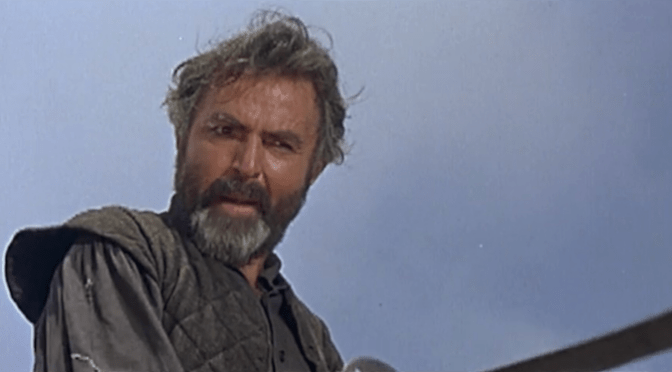
Long before James Mason was cast in the role of Stodgy Old Man in every movie ever, he once played Young Hunk in Hero’s Island. This somehow has nothing to do with his age – Mason was 53 when he played the island-bound Jacob Weber, which is far older than today’s Young Hunk standards – and instead has everything to do with Mason being one hell of an actor. In fact, he appeared as Humbert Humbert in Kubrick’s Lolita in the same year, a role which definitely leans more toward Stodgy Old Man than toward Young Hunk. One can imagine a remake of Hero’s Island casting Chris Hemsworth or Chris Evans or Chris Pratt – basically any of the Marvel Superhero Chrises – in the role of the brawny Jacob, sandy hair and strategically tattered shirt and all. This would be an entirely different kind of film (Superhero’s Island) because Mason’s Jacob is hunky, sure – but is he a hero?

Set on Bull Island in 1719, we meet the Mainwaring Family as they arrive on their new waterlocked home. The deed in Father Mainwaring’s hand entitles him to ownership of Bull Island, but standing on the dirt for the first time he states with a sense of wonder that “it doesn’t feel that I own this”. Ownership, of course, is entirely a matter of opinion – and in the opinion of the fisherman who’ve lounged around the island for years, the “right” of the Mainwaring Family’s presence is no right at all. They’re essentially Crusoe’s savages in the context of Hero’s Island, though their depiction in the opening scenes hews closer to this comparison than their actual function once the film is fully fleshed out. One of the first things the Mainwaring Family sees to is the construction of a large cross, which they kneel and pray in front of once it stands tall. The “savage” fisherman watch from afar, and before we hear them say anything more than a few words we see them bless themselves with the sign of the cross upon seeing the Christian symbol rising from their dirt.

Continue reading Hero’s Island (1962)

The Dark Valley (2014)

Aside from the title, the majority of Andreas Prochaska’s The Dark Valley is refreshingly original in the way it tackles a familiar story. Perhaps Das finstere Tal, the Austrian title, makes more sense in native tongue and context – but if you don’t care to brush up on your Austrian beforehand The Dark Valley is still to be enjoyed. Prochaska’s resume shows he’s been fairly prolific over the past few years, but most of his projects are horror flicks or TV shows. The Dark Valley looks to be his most mature feature effort thus far.

Sam Riley stars as the lone drifter Greider, largely the strong and silent type, recently arrived at a remote snowbound village high in the Alps. The aforementioned “familiar story” is really just that: mysterious stranger arrives in otherwise comfortable close-knit town, people become uncomfortable; secrets exist for the townsfolk and for the drifter, said secrets are exposed; drifter and young woman flirt with obligatory fling; things seem okay for a while until suddenly, one day, shit hits the fan. These by-the-numbers plot points are most at home in a Western, which is a genre that The Dark Valley is now a part of in spite of the snowy mountain setting (though, agreed, not technically a Western in the American sense – so, an Eastern?), but that familiarity is never crippling. As much as The Dark Valley resembles Once Upon a Time in the West on paper, it’s a starkly different kind of movie.

Continue reading The Dark Valley (2014)

Malice (1993)

Malice is without a doubt the odd duck in the Aaron Sorkin filmography. More so than possibly any modern American screenwriter, Sorkin is now synonymous with “politics”, with work that peers into the lives of the men and women who already live under intense scrutiny – The West Wing is possibly still his greatest example in this regard, but The American President and Charlie Wilson’s War deal in similar arenas. A Few Good Men also exists in this vein, as does the tech-giant exploration The Social Network; neither are about politicians per se, but “politics” is broader than simply politicians. Sorkin’s politics exist in the hot topics of today, whether it’s the relationship between foreign powers or relationship status between two of your friends on Facebook. One can imagine that Jobs, Sorkin’s upcoming biopic on the late Apple founder, will continue this trend.

But Malice, Sorkin’s second produced screenplay, isn’t about famous people. Instead, it’s about incredibly moronic people. Bill Pullman stars as Andy, mild-mannered loving husband to Nicole Kidman’s Tracy. One day they meet Alec Baldwin’s Jed, a hotshot surgeon who used to go to high school with Andy. They hit it off and Jed rents the room above Andy and Tracy because he’s new in town. Meanwhile, a series of vicious attacks on local women occurs – and when one ends in murder, things begin to hit closer to home for Andy.

Continue reading Malice (1993)

Batman Begins (2005)

Most of the comic book influences on Batman Begins are fairly evident. Everyone points to Frank Miller’s Year One, the redefining four-part series that put the “Dark” back in Dark Knight, and they’re right to hold that book up as the major influence. Begins relies heavily on Year One for a number of things, not least among them the exploration of the Bruce Wayne/Jim Gordon relationship, the exploration of the Bruce Wayne/Alfred relationship, the Gotham Monorail, the mention of the Joker at the end, the entire character of Flass, the entire sequence where Batman calls a squadron of bats to his aid (a bat-talion, am I right? Guys?) and, of course, the entire bat-flies-through-window genesis of the hero himself.

So Year One is the obvious one. Nolan and David Goyer pilfered little things from other famous Bat-books as well, often just an image or a line of dialogue. Here’s the Scarecrow in Loeb and Sale’s The Long Halloween, another popular arc:

Long Halloween
The Long Halloween (1996/97)

Goyer brought this to Nolan and said “I think Katie Holmes and the little kid who will eventually grow up to be Joffrey from Game of Thrones would look really good if we added them in front of the horse here” (paraphrased) and Nolan said “true dat, brah” (not paraphrased) and ran with it:

Batman Begins (2005)

The red eyes and flames are an admittedly nice touch.

Continue reading Batman Begins (2005)

Cross of Iron (1977)

If there’s one film in the late career of Sam Peckinpah that stands out among the rest, it’s Cross of Iron. By 1977, Peckinpah was still regarded relatively highly within the American film industry despite the fact that his last few films – Pat Garrett and Billy the Kid, Bring Me the Head of Alfredo Garcia, and The Killer Elite – performed atrociously at the box office. While most Peckinpah purists regard Alfredo Garcia as a violent and uncompromising classic, there’s little doubt that The Killer Elite is one of the weak points in the director’s career. Cross of Iron would be followed by Convoy and Peckinpah’s final film, The Osterman Weekend, but the former of the three is the only one that truly taps into the brutal verve that made the director so sought-after in the first place.

Interestingly – though perhaps not so surprisingly – Peckinpah supposedly turned down offers to direct the King Kong remake (with Jeff Bridges) and the first Superman film, opting for Cross of Iron instead. Hindsight is 20/20, sure, and odds are you’ve heard of King Kong and Superman while the “heroes” of Cross of Iron are difficult to name even after you’ve just watched the film – but one gets the sense that Peckinpah wouldn’t care about that, and would’ve picked Cross of Iron all over again if he were given the choice today. It was the quality of the story that mattered most to Peckinpah, and while King Kong and Superman endure to this day for a variety of reasons it can probably be argued that the strength of their scripts is pretty far down on that list.

Continue reading Cross of Iron (1977)

Indiana Jones and the Kingdom of the Crystal Skull (2008)

Indiana Jones and the Kingdom of the Crystal Skull has no shortage of detractors. Whenever a beloved film or film series receives a new treatment or installment, most people – myself included – are bound to vocalize their qualms. We said why can’t they leave well enough alone? We said why does everything have to be CGI? With the fourth Indy flick, we said a whole bunch of stuff that shouldn’t be reprinted. So yeah: Crystal Skull is the weakest Indiana Jones for a few reasons. But let’s find something nice to say about it for a change, shall we?

Harrison Ford returns to one of his most famous characters after a quarter-century hiatus (he appeared in one or two movies in the meantime) and most of the old crew returns with him: Steven Spielberg directs from a story by George Lucas, composer John Williams scores the film, and Karen Allen revives the role of Marion Ravenwood. Cate Blanchett plays (ahem, overplays) the primary antagonist Dr. Irina Spalko, and the best things about her are her hair and her name. Among the other new additions to the Indy legend is the consistent use of CGI, which was used sparingly in the first three adventure films in favor of practical effects. It feels at times as if somebody wanted to cram as many CG shots into this thing as possible, and many of those instances are very unfortunately unconvincing. Also: aliens.

Continue reading Indiana Jones and the Kingdom of the Crystal Skull (2008)