

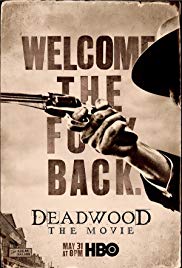
 It’d be tough to think about the Deadwood film as that alone, a mere two-hour tour through a corruption-riddled mining town in the waning days of the 19th century. The movie exists very much as a long-awaited finale for the Deadwood series, which was unceremoniously canceled after three seasons at HBO more than a decade ago. To enjoy the film without the context of the show is possible, probably, but it’d also be akin to starting in on the last episode of a television series. It’d be equally tough to refrain from using the f-word multiple times while writing about Deadwood, so consider this a spoiler warning for both series and film and a graphic language warning to fucking boot.
In the ever-expanding slew of reboots and revivals intent on wringing out every droplet of goodwill you might have once had for an old TV show — take Twilight Zone, X-Files, Twin Peaks, the upcoming Amazing Stories or, sure, fine, fucking Roseanne — it’s possible that Deadwood fares well out of necessity, plain and simple. The show never had an ending and the movie gives it an ending. Few truly wanted more Zone, more Files, more Peaks; not a fucking soul wanted more Roseanne, except for maybe the refined Ms. Barr herself. But the clamor for more Deadwood has really only intensified since that fateful cancellation in 2006. Fan-driven revivals aren’t guaranteed to turn out well (see: Anchorman 2) but if you have to watch your favorite characters get dragged out for one last ride, squeezed into their old costumes, it’s more comforting to think you’ve dragged them out yourself for good purpose.
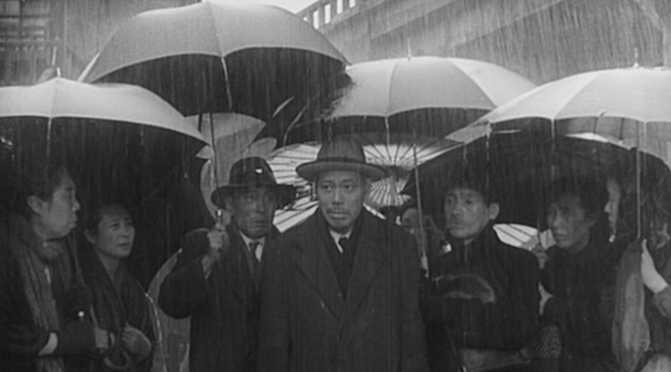
 It’s entirely possible that the West’s fondness for Akira Kurosawa is borne of the fact that he frequently addresses themes of individuality, personal distinctiveness, and the importance of being true to yourself. Those aren’t very Japanese themes, traditionally, even if the popular “nail that sticks out gets hammered down” axiom is a bit simplistic these days. But the corporate-cog-finds-new-lease-on-life narrative seems especially well-suited to the notoriously workaholic Japanese culture, and nowhere is that narrative more effective than in Kurosawa’s Ikiru. Now streaming on The Criterion Channel, Ikiru stars Kurosawa stalwart Takashi Shimura as a spiritless bureaucrat grappling with the futility of his mortal days.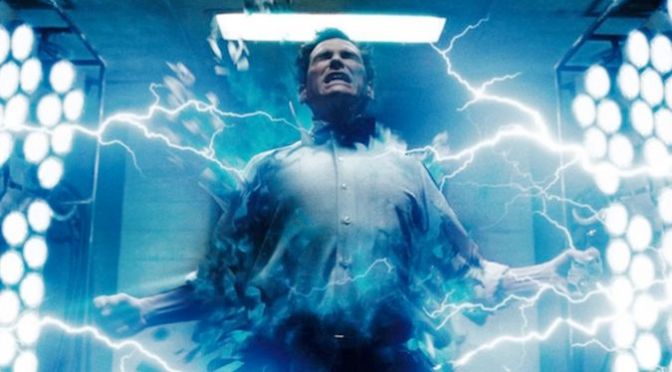
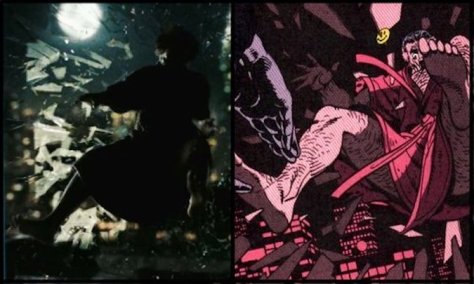
 A lot of what Alan Moore has created is now considered classic. V for Vendetta, League of Extraordinary Gentlemen, From Hell, The Killing Joke, his run on Swamp Thing…to say this stuff is at the vanguard of comic-book storytelling is to undermine the fact that this stuff is the vanguard of comic-book storytelling. But it’s important to remember — crucial, actually — that Moore’s never purposefully written a “classic,” meaning his tales are almost exclusively nontraditional narratives that toy with genre and literary consciousness. The writer has a few reasons to despise Hollywood, but the primary point of contention must be that each film adaptation of his comics seems to shove the original tale back into a traditional, classic structure. It happened with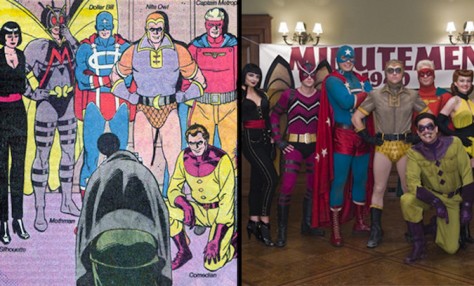

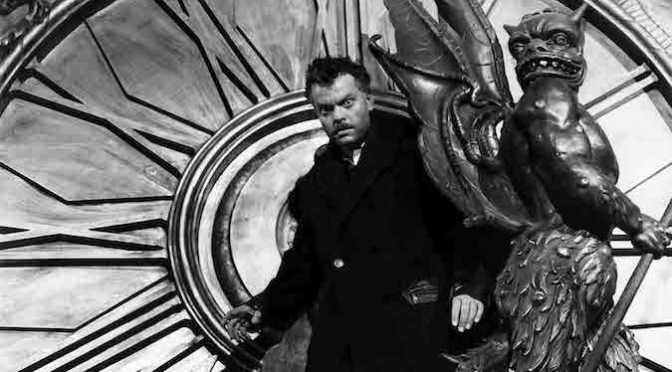
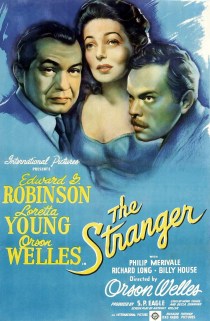 As is the case with the work of many a cinematic genius, the filmography of Orson Welles is especially revealing when considered as a whole. Hits, flops, stretches of obsession, gaps of inactivity, passion projects and moneygrabs — in some ways this kind of retrospective review can tell us more about the filmmaker than the films themselves. It’s the “God’s-eye view,” to steal the name of an aerial shot favored by Welles, and it serves to highlight the ideas that the writer/director would experiment with, return to, or transform entirely in successive efforts. The other edge of the sword, of course, is that each individual film inexorably loses something when viewed alongside a slew of cinema which may otherwise share little by way of plot, theme, style or cultural impact.
 April 2019 was a pretty earth-shaking month in pop culture terms. We had the first tangible fallout from the Disney/Fox merger and some really interesting developments in the Great Streaming Wars (the launch of the fantastic Criterion Channel, details on the upcoming Disney+), we had new blockbuster releases (

 What’s the worst thing that can happen in sports? That’s the question voiced by the title character as the curtain goes up on Molly’s Game, Aaron Sorkin’s directorial debut and latest produced screenplay since 2015’s
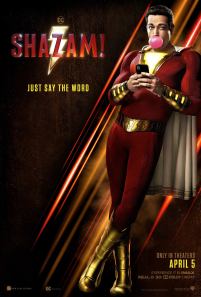 Is the DCEU still a thing? Conceived as the answer to Marvel’s unfathomably successful Cinematic Universe, DC’s interconnected supertales never quite coalesced the way they were intended to. You could point to any number of reasons for this derailment: a lack of a Kevin Feige-type visionary at the helm, or a violent shift in tone from one movie to the next, or poor casting in crucial roles, or the general cart-before-the-horse nature in which this series was rushed into existence. Those are all blameworthy when considering the ineffectiveness of a franchise. But because each individual film in the DCEU —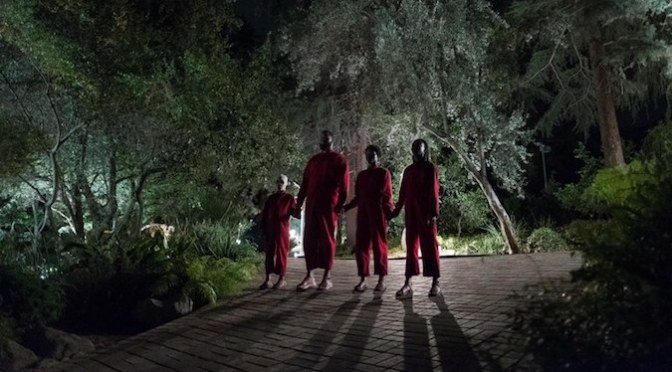
 Jordan Peele’s Us is nothing short of exceptionally entertaining horror. Starring Lupita Nyong’o and Winston Duke as the mother and father of a prototypical American family, Us joins a long tradition of doppelgänger horror while still emerging from that tradition into definitive modernity. Like Peele’s debut Get Out, the American Dream — as a white-picket-fence fantasy and as a dark reality — is crucial not only to the implicit themes of the film, but to the reason both films are scary in the first place. Yes, Us has a preponderance of classic horror moments, from jump-scares to home invasions to creepy coincidences foreshadowing a coming threat. But these tropes become entertaining again only in context of a strong underlying assertion that speaks to something in our everyday life, and while Us may not speak as explicitly as Get Out, the potency of the film is drawn from a similar source.
 The Black Stallion is very much a film of two halves. You could enter the film at the midpoint and still enjoy the back 50% as a self-contained story. Similarly, you could just watch the first chunk and then turn it off feeling surprisingly satisfied. Viewed as a whole, though, Stallion serves as a personality quiz centered around whichever half you ultimately prefer. Think Full Metal Jacket or King Kong, which not only bring characters through two vastly different settings but seemingly bring them through different genres of film as well. It’s possible to enjoy the whole film in each of these instances, but by design one segment probably connects with you more powerfully than the other.
 Motion State Review