

 Those with a dream to fulfill have a better chance of survival. This is the idea put forth to Diego Fairman, a once-famous film director, as he lies in his hospital bed. He’s dying of cancer at the moment, given only a few months to live, his body ransacked by the disease at every turn. Diego’s life outside his body has been ransacked, too, the cancer boiling within him such that deep issues in his marriage, his family and his work all bubble to the surface. The ailing artist knows he wants to survive, but he doesn’t yet know that this means more than simply “staying alive.” Even if you’re in perfect health, your chances of survival are better with a dream to fulfill.
My Hindu Friend unfurls the story of Diego (Willem Dafoe) methodically, with the mixture of matter-of-fact realism and dreamlike romanticism that one should expect from writer/director Héctor Babenco. The former finds grounding in Pixote, Babenco’s documentary-esque 1980 film about Brazil’s delinquent youth; elements of the latter can be traced to Kiss of the Spider Woman, Babenco’s transcendent 1985 endeavor to bring Latin American magical realism into the mainstream. It’s fitting that Babenco’s own art impact My Hindu Friend, as the film is based on true events from his life. Inasmuch as Diego is a stand-in for Babenco, the inextricability of art and “survival” is always at the forefront.

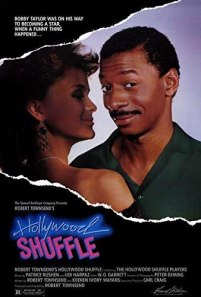 One of the best collections available on the Criterion Channel is one called Film Plays Itself, a self-reflexive assemblage of movies about movies. Here you’ve got your classics, like Sunset Boulevard and 8½. You’ve got your “out-there” stuff, like the experimental Symbiopsychotaxiplasm or Godard’s New-Wave Contempt. And you’ve got some modern triumphs like The Player and
 Rather than a standard film review, we’ve been compiling a visual glossary of likely inspirations in Paul Thomas Anderson’s 2012 film The Master. Huge props go to

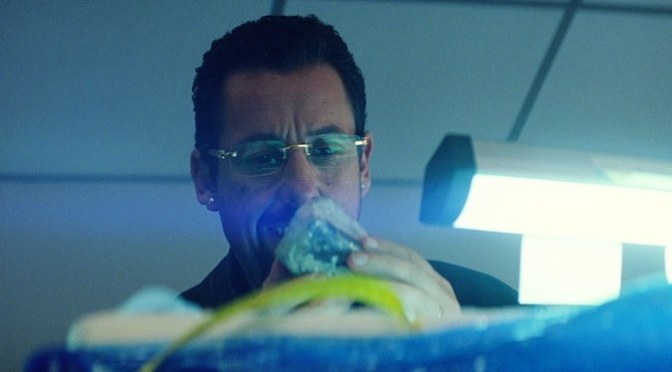
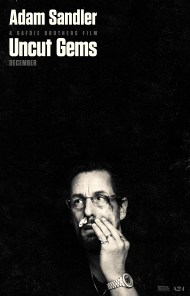 The films of the Safdie Brothers tend to share a few recognizable qualities. Most apparent is the kinetic, stressful energy with which each of their films unfolds, a ride that weaves unexpectedly while continuously approaching a breakneck speed. Those weaves are almost always a result of character decisions, though, and I respect that the Brothers keep memorable figures at the fore through even their most plot-twisty jaunts. They seem drawn to slightly-delusional protagonists, too, if not fully-delusional, and so the common logline usually follows a familiar trajectory: Main Character makes increasingly dumb decisions and pays for it. And then there’s the street-level realism, from the single-parent struggles of Daddy Longlegs to the exploration of addiction in Heaven Knows What to the petty life of crime in Good Time.
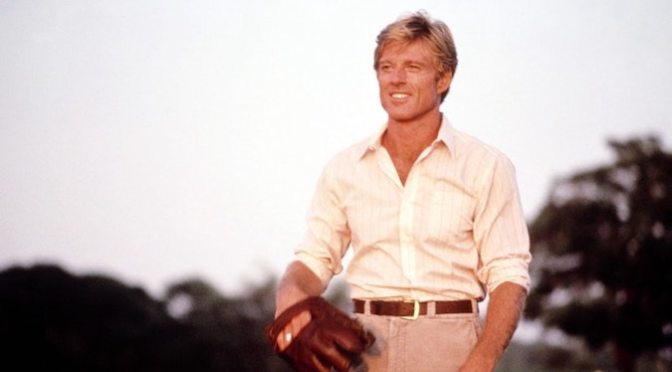
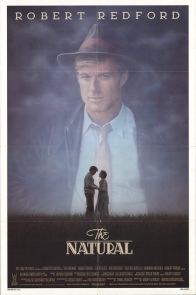 Bernard Malamud wrote The Natural, his debut novel, in 1952, the year the Yankees beat the Dodgers in the World Series. The tale of once-promising baseballer Roy Hobbs was almost universally praised upon the novel’s release, with many championing it as the first great novel about baseball. Critical consensus, though, agreed that the actual baseball — the strategy, the technicalities, the game — mattered less than the fable at hand. In some ways the myth behind Roy Hobbs was more interesting than Roy Hobbs.
 One of the most intriguing films of the past year is Dragged Across Concrete, S. Craig Zahler’s violent, hardboiled yarn about two misogynistic and racist cops (Mel Gibson and Vince Vaughn) taking the law into their own hands. The film plays as a far-right (or even alt-right) fantasy, the two white leads lamenting “political correctness” while they harass witnesses and suspects who are exclusively non-white. Even the casting of Gibson and Vaughn is loaded. But Concrete hinges on the question of whether Zahler actually agrees with the mentality of his own film, whether he’s playing a larger game in giving us these exact characters at a time when everything else out of Hollywood is either liberal-minded or four-quadrant neutral. Short of an answer, the question alone makes Concrete into one of 2019’s most provocative films.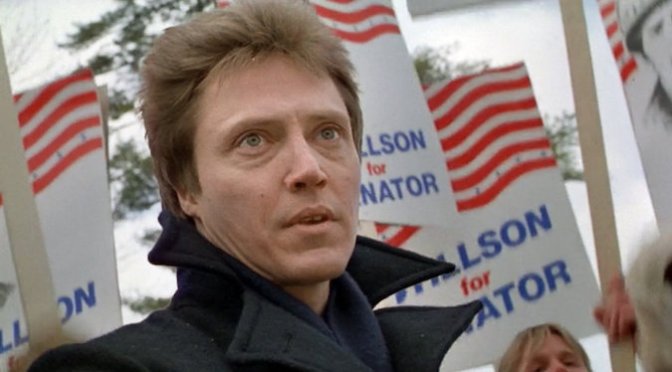
 Political turmoil always breeds strange artistic phenomena, and the movies are no exception. As the current occupant of 1600 Pennsylvania Avenue reclines in the West Wing, bone spurs resting beside the crumpled Wendy’s bag upon the Resolute Desk, one such phenomenon we’ve witnessed recently is that of Art as Response. In this scenario a filmmaker — like, say, Steven Spielberg — will work quickly to produce a movie — say The Post — as an active comment on whatever’s happening (or not happening) in the Oval Office. A second phenomenon involves us, the filmgoers and cinemalovers, and the way we inexorably view almost any new movie in the context of today’s political climate. A given film — like, say,
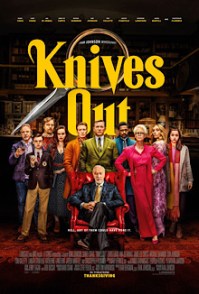 It ain’t always fun, the movies. Amongst this year’s least-fun pictures we probably have the likes of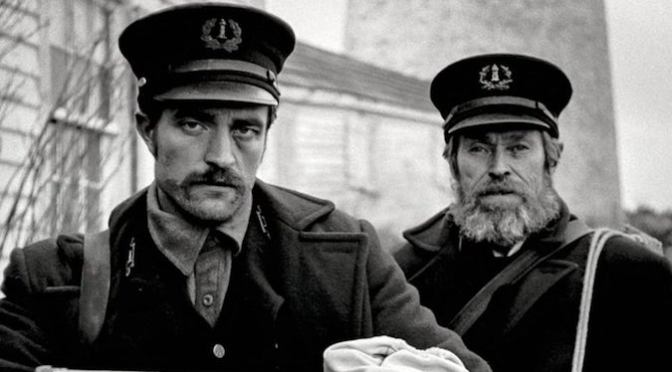
 The ambition of Robert Eggers was apparent after his debut The Witch, a one-of-a-kind horror film steeped in deeply-felt folklore. The dialect, the costumes and settings, the sound design and the themes were all clearly the result of hard research and dedication to period accuracy rarely realized in modern film. Eggers himself, who presented a special

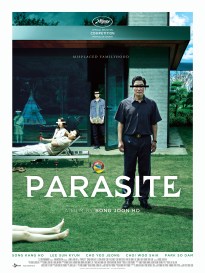 Parasite is consistently surprising at every turn. Even if you don’t go in cold, knowing nothing about the plot or themes of Bong Joon-ho’s latest, the sprightly storytelling still does its job in keeping you on your toes. If you’ve seen Bong’s English-language efforts Snowpiercer and Okja, you might assume Parasite to be structured over themes of class disparity and the dangers of technology. While you’d technically be correct, those themes are far less obnoxious than they were in Snowpiercer, more cohesive than they were in Okja, and overall the plot- and character-based twists make Parasite into a far superior film.
 Motion State Review