
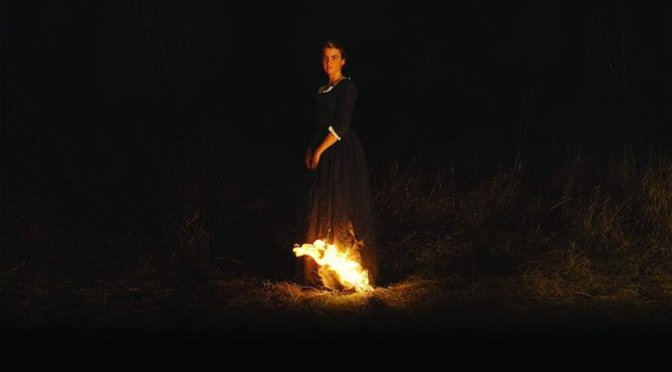
 Marianne, the artist and main character of Céline Sciamma’s Portrait of a Lady on Fire, invites us to know her immediately. Look at the way I sit, she says. Take time to look at me while I pose. Look at the way I hold my hands, she says, before her fist involuntarily clenches at the sight of an old painting of hers. A scene later Marianne is no longer posing, but we take time to look at her face when she sees her painting equipment go over the side of a boat. We see her foot find purchase on the boat’s edge, we see the briefest flicker of uncertainty, and we feel we know her a little better when she dives into the water.
How well can one really know another, though? Even under constant observation, even if the subject is unaware of the observer’s gaze, can that space between ever fully be bridged? Sciamma’s Portrait, a brilliant and surefooted romance captured passionately onscreen, asks this of Marianne (Noémie Merlant) and Héloïse (Adèle Haenel). The latter is introduced first under a figurative veil of secrecy — we’re told that the last painter who attempted Héloïse’s portrait was “unable to finish” — and then under a literal one, provided by a black cloak and a series of obscure camera angles. We’re with Marianne the whole time, wondering about Héloïse and her secrets.
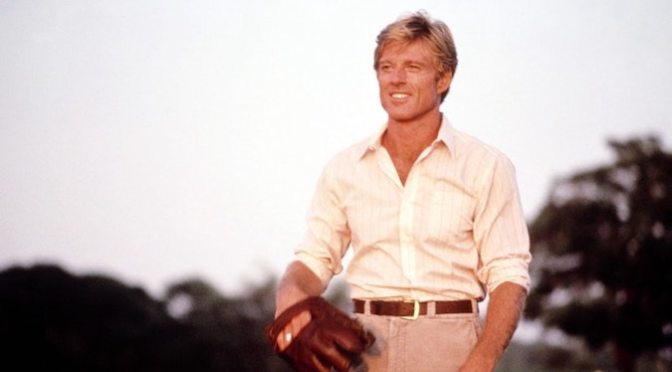
 Bernard Malamud wrote The Natural, his debut novel, in 1952, the year the Yankees beat the Dodgers in the World Series. The tale of once-promising baseballer Roy Hobbs was almost universally praised upon the novel’s release, with many championing it as the first great novel about baseball. Critical consensus, though, agreed that the actual baseball — the strategy, the technicalities, the game — mattered less than the fable at hand. In some ways the myth behind Roy Hobbs was more interesting than Roy Hobbs.

 One of the most intriguing films of the past year is Dragged Across Concrete, S. Craig Zahler’s violent, hardboiled yarn about two misogynistic and racist cops (Mel Gibson and Vince Vaughn) taking the law into their own hands. The film plays as a far-right (or even alt-right) fantasy, the two white leads lamenting “political correctness” while they harass witnesses and suspects who are exclusively non-white. Even the casting of Gibson and Vaughn is loaded. But Concrete hinges on the question of whether Zahler actually agrees with the mentality of his own film, whether he’s playing a larger game in giving us these exact characters at a time when everything else out of Hollywood is either liberal-minded or four-quadrant neutral. Short of an answer, the question alone makes Concrete into one of 2019’s most provocative films.
 Political turmoil always breeds strange artistic phenomena, and the movies are no exception. As the current occupant of 1600 Pennsylvania Avenue reclines in the West Wing, bone spurs resting beside the crumpled Wendy’s bag upon the Resolute Desk, one such phenomenon we’ve witnessed recently is that of Art as Response. In this scenario a filmmaker — like, say, Steven Spielberg — will work quickly to produce a movie — say The Post — as an active comment on whatever’s happening (or not happening) in the Oval Office. A second phenomenon involves us, the filmgoers and cinemalovers, and the way we inexorably view almost any new movie in the context of today’s political climate. A given film — like, say,
 It ain’t always fun, the movies. Amongst this year’s least-fun pictures we probably have the likes of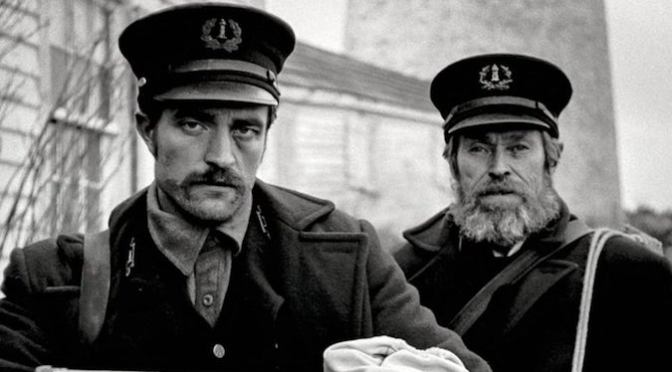
 The ambition of Robert Eggers was apparent after his debut The Witch, a one-of-a-kind horror film steeped in deeply-felt folklore. The dialect, the costumes and settings, the sound design and the themes were all clearly the result of hard research and dedication to period accuracy rarely realized in modern film. Eggers himself, who presented a special
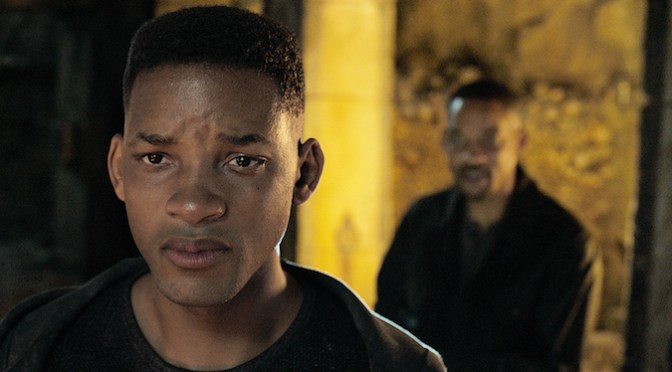
 Ang Lee’s increasing preoccupation with digital cinema effects can be traced to 2003’s Hulk, the first time one of his films featured a main character generated by a computer. In 2012 Life of Pi saw Lee wading further into digital waters, showcasing computerized sets and hyperrealistic animal characters. And in 2016 Billy Lynn’s Long Halftime Walk, filmed in a superfast 120 frames-per-second that very few theaters in the U.S. were actually equipped to project, managed to exude a digital sheen despite the apparent novelty of normal human characters doing non-superpowered things. With Gemini Man, Lee’s big-budget Will Smith actioner, the director tries a new digital toy: a screenplay generated entirely by a computer.
 Parasite is consistently surprising at every turn. Even if you don’t go in cold, knowing nothing about the plot or themes of Bong Joon-ho’s latest, the sprightly storytelling still does its job in keeping you on your toes. If you’ve seen Bong’s English-language efforts Snowpiercer and Okja, you might assume Parasite to be structured over themes of class disparity and the dangers of technology. While you’d technically be correct, those themes are far less obnoxious than they were in Snowpiercer, more cohesive than they were in Okja, and overall the plot- and character-based twists make Parasite into a far superior film.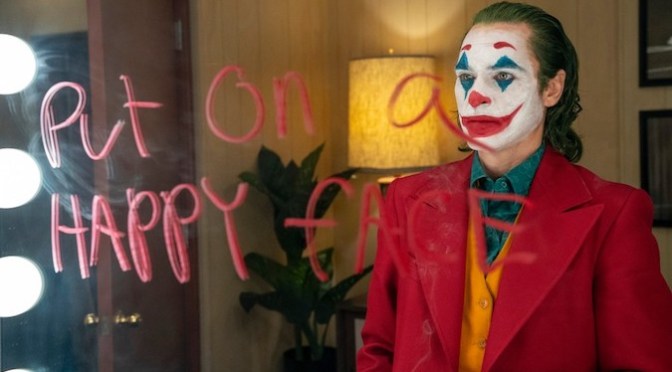
 Early buzz on Joker made frequent mention of a guy named Martin Scorsese, a film director you may have heard of, though not one who’s ever actually directed any films called Joker. Partly the comparison stems from the aesthetic of this new grimdark pseudo-origin for Batman’s nemesis, which is set in the ballpark of 1981 in a Gotham that looks suspiciously like the New York of Scorsese’s Mean Streets and Taxi Driver. Partly it’s the theme, too, I suppose, as Scorsese’s obvious preoccupation with insecure males and violence fits Joker‘s bill pretty well. And partly people simply love saying “it’s just like ______!” when a new movie comes out. Heck, the last Joaquin Phoenix movie we reviewed (the phenomenal
  Motion State Review