

Each Motion State Face Off pits two films, franchises, or television series against each another for no reason other than because we can.
 In The Harder They Fall, sportswriter Eddie Willis (Humphrey Bogart) finds himself in a moral conundrum. He’s covering the boxing phenom Toro Moreno (Mike Lane), an absolute barn of a fighter who’s touring across America on an unprecedented winning streak. The conundrum? Toro can’t actually box worth a damn. The glassjawed giant has been set up by his manager Nick Benko (Rod Steiger) and had all of his fights fixed, though that particular fact is kept secret from Toro himself. Benko’s scheme ensures that the audience has a built-in perception of this fighter, that Toro’s reputation — even if it’s engineered behind his back — will equal dollars in Benko’s pocket. People love a clear-cut hero, an undeniable winner, and Benko forms Toro into exactly that. But Eddie’s not convinced, even if the blissfully-ignorant Toro seems to be having the time of his life in this heroic role. Shouldn’t the athlete himself have some say in how he’s portrayed to the world?
As Bogie’s last film, the noir-ish drama is of a piece with many of his other movies. Eddie isn’t at all riding around gallantly on a noble white steed, nor is he above making a quick buck off a media frenzy now and again. But as his relationship with Toro grows, Eddie softens and soon realizes he has to champion the athlete in response to a ruthless media and Benko’s managerial machinations. It’s not the Quintessential Humphrey Bogart picture, but The Harder They Fall is still deserving of a place amongst his filmography. And as a sports drama, it’s refreshingly not your classic scrappy underdog tale. A string of famous boxers lend some credibility by making appearances throughout the film, too, from Jersey Joe Walcott to Max Baer.
Continue reading Face Off: The Harder They Fall (1956) and Cinderella Man (2005)

 The second season of Netflix’s Mindhunter is the best single season of television the streaming giant has ever produced. I’d entertain an argument for the best series overall being something else — Stranger Things,
 Tarantino’s Once Upon a Time in Hollywood is out this month, and it seems like a culmination of sorts for the film fanatic writer-director. Each of his movies toes the line between self-awareness and immersive cinema, continually winking at the camera and yet lost in a world of its own, packed to the brim with pop culture references but still stylish enough to become a pop culture reference. Tarantino, who worked at a video store as a kid and has been devouring several movies a day ever since, has few rivals when it comes to an encyclopedic knowledge of the art form. To see Once Upon a Time in Hollywood framed around film and television sets in 1950s L.A. is quite the prospect, because that encyclopedic knowledge serves as more than a wink or a reference.
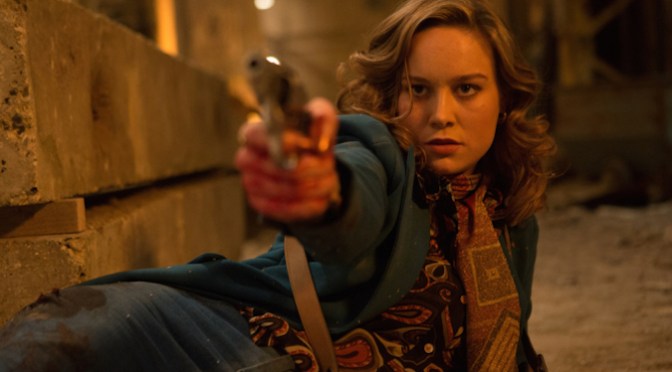
 Prolific director Ben Wheatley followed up 2015’s
 I recently watched Edgar Wright’s Hot Fuzz for the zillionth time. This was partly to assuage my excitement for Baby Driver, Wright’s latest, and partly because the discovery of a commentary track by Wright and his buddy Quentin Tarantino was too good to pass up. Usually commentary tracks feel slight, strained, straight-up unnecessary; Wright and Tarantino have a casual chat that’s nearly as bonkers as Hot Fuzz itself. The pair share a vast encyclopedic knowledge of film and music, and throughout the course of the commentary they discuss nearly 200 films — basically everything besides Hot Fuzz — and if you’re thinking someone should write out that list, well, yeah:



 Motion State Review