

 I’m constantly being surprised by What Lies Beneath. On first viewing it surprised me that Robert Zemeckis, the Spielberg acolyte behind feel-good romps like Back to the Future and Forrest Gump, would direct this self-contained horror flick. Years later, I was surprised to learn that Clark Gregg — Agent Coulson himself — wrote the screenplay. When I revisited Beneath a few months ago, the thing that surprised me was how good it was, how it does a lot with fairly little, how the straightforward nature of the plot obscures nuances that you wouldn’t catch the first time through. And then, of course, I was surprised a final time to learn that I am not in a majority here, that the film received mixed reviews upon release and currently has a dismal 47% approval rating on Rotten Tomatoes, and that the Pantheon of Horror Flicks may not hail What Lies Beneath as a genre masterpiece after all.
Doubtful, of course, that Beneath would ever really slip down the precipice into the Abyss of Forgotten Horror Flicks. It’s got Michelle Pfeiffer and Harrison Ford, and they and Zemeckis secured their places in film history long before 2000. And no, it’s not an outright masterpiece; it probably does little that Hitchcock didn’t do decades earlier. But one feels the need to defend it all the same, no? If not to reinstall it in the Pantheon or rescue it from the Abyss, perhaps just to feel better about being so endeared to it, as I am. We could touch on the film as a whole or dig into some of those criticisms from the mixed-review crowd…or we could sorta just talk about one single scene.

 The first scene of E.T. wouldn’t be the same in any other medium. Wordless, shadowy and purposefully obscure, there’s still a ton of information conveyed through visuals alone. Spielberg was (and maybe still is) a fan of this kind of opening, eschewing expository positioning in favor of details that might strike as somewhat disorienting at first. There are fifteen or so characters here, all of them faceless. But even though we don’t get an instance of “Spielberg Face” — his beloved reaction shot of a wonderstruck visage, eyes wide, mouth agape — there’s still plenty to gawk at in these few short minutes.
 Political turmoil always breeds strange artistic phenomena, and the movies are no exception. As the current occupant of 1600 Pennsylvania Avenue reclines in the West Wing, bone spurs resting beside the crumpled Wendy’s bag upon the Resolute Desk, one such phenomenon we’ve witnessed recently is that of Art as Response. In this scenario a filmmaker — like, say, Steven Spielberg — will work quickly to produce a movie — say The Post — as an active comment on whatever’s happening (or not happening) in the Oval Office. A second phenomenon involves us, the filmgoers and cinemalovers, and the way we inexorably view almost any new movie in the context of today’s political climate. A given film — like, say,
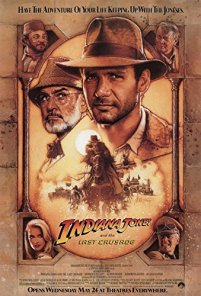 Pretty much everyone knows Indiana Jones. He’s a popular guy! The hat, the jacket, the bullwhip. If you’ve met him, these facets of his character ensure that you’ll remember him; if you haven’t, these facets still get thrown around in rumor and legend and make it feel like you’ve met him. I’m not talking about you and I, of course, or the world in which we happen to live, although pretty much everyone does know Indiana Jones. But Indy’s own world, in-movie, isn’t so dissimilar in that regard, and in fact his popularity might even be greater amongst the countless supporting characters who’ve seen him in action, experienced his -ness, or simply caught wind of his legendary adventures.
 The Black Stallion is very much a film of two halves. You could enter the film at the midpoint and still enjoy the back 50% as a self-contained story. Similarly, you could just watch the first chunk and then turn it off feeling surprisingly satisfied. Viewed as a whole, though, Stallion serves as a personality quiz centered around whichever half you ultimately prefer. Think Full Metal Jacket or King Kong, which not only bring characters through two vastly different settings but seemingly bring them through different genres of film as well. It’s possible to enjoy the whole film in each of these instances, but by design one segment probably connects with you more powerfully than the other.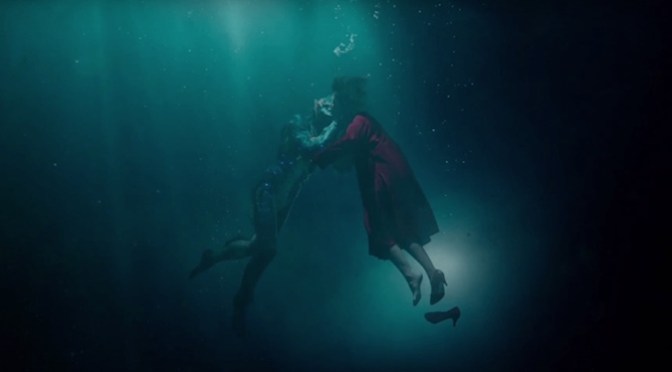
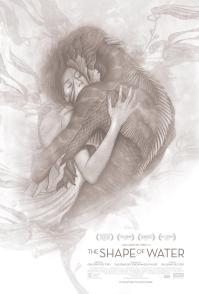 I arrived late to the party for The Shape of Water, having finally caught the movie a few weeks ago after months and months of dodging reviews online. Guess I’d better add my voice to the fray, huh? Maybe a piece on how writer/director Guillermo del Toro’s creativity allowed him to get away with a smaller budget…but, no,


 Motion State Review