Category Archives: Featured

The Quiller Memorandum (1966)

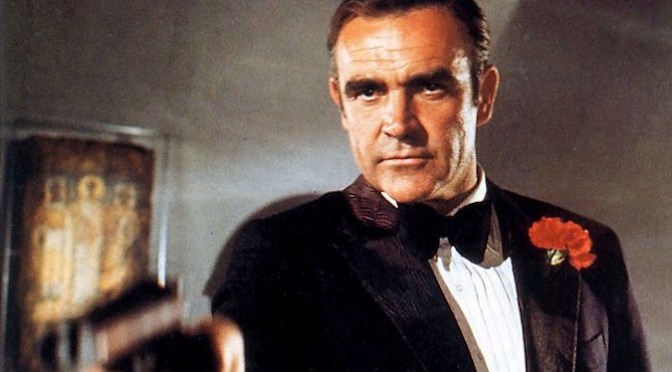
It’s been almost fifty years since The Quiller Memorandum, and spy movies have changed quite a bit in the ensuing half-century. It’s unfair to say they’re better or worse nowadays, especially considering the qualification of “spy movie” can mean anything from Skyfall to Syriana to Agent Cody Banks (though, if we’re talking about the latter, then yes: they’re worse). Even the superhero genre is dabbling in spy-ish flicks, with the espionage thriller Captain America: The Winter Soldier drawing favorable comparisons to Three Days of the Condor; Condor, of course, is a spy movie with a main character who is not in fact a spy, nor is he a suave step-ahead killer fighting for what’s right, nor does he even know what’s going on — this all by way of saying that a great “spy” movie doesn’t even need a spy.

But Peter Quiller is a spy, and a damn good one to boot. He’s good by today’s standards, he’s good by the standards of 1966, and he’s good by the standards of his fellow spies in Memorandum. The film opens with a stark, memorable sequence of a man plodding cautiously down a dark, quiet street. He looks around constantly, fearing that the hidden blade might finally come from the shadows. Cautious, quiet. He enters a phone booth and reaches for the receiver when bam! — he’s shot in the back. Dead.
Continue reading The Quiller Memorandum (1966)

Batman: Mask of the Phantasm (1993)

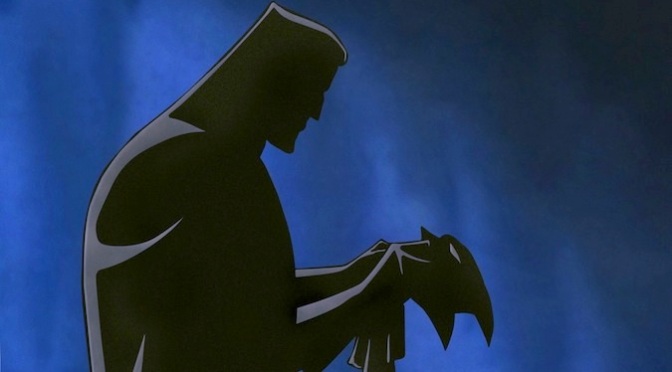
I have a few favorite Batman moments, but the one that trumps them all occurs in the first Batman animated movie Mask of the Phantasm. The comic books are full of contenders, of course — the iconic “legends can never die!” panel in Jim Aparo’s “Man Behind the Mask”, the more-iconic moment in “Hearts in Darkness” when Batman rises from the grave, or the most-iconic “fiend from hell” moment from “The Demon Lives Again!” (which we talked about in our rundown on Batman Begins). The feature films have some epic moments as well, like the introductory call-to-arms of Batman Returns or the final ascension from the pit in The Dark Knight Rises. But Mask of the Phantasm captures what many of these moments capture — the determination of Bruce Wayne, the -ness of the Bat — in a unique way.

Phantasm, of course, is more than just the best animated Batman movie — it might be the best Batman movie, period. It certainly stands with the live-action iterations of Tim Burton and Christopher Nolan, and getting over the fact that Phantasm happens to be animated (as if that’s a point against it) is just a necessary assumption akin to classing The Incredibles at the top of the list of Best Superhero Films. It’s easy to forget about The Incredibles amid the present torrent of live-action Marvel hero flicks, just as it’s easy to forget that Mask of the Phantasm is without a doubt a better Batman film than at least 6/10 live-action Batfilms. I’ll let you figure out which ones I mean.

Continue reading Batman: Mask of the Phantasm (1993)

Kiss of Death (1995)

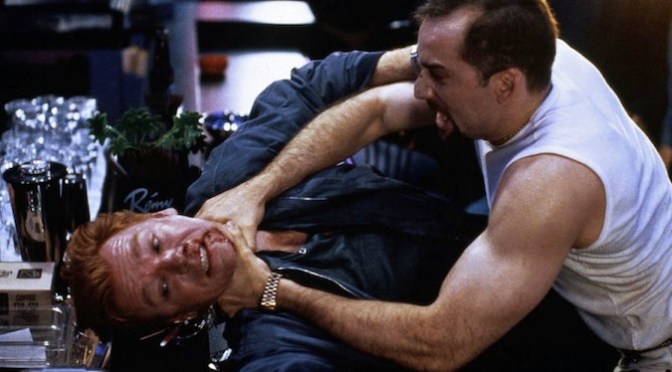
Maybe the lasting symbols of the 1990s are different for everyone, but as far as movies go there’s an uncomplicated formula: we either remember a movie because it’s great or we remember a movie because it absolutely sucks. The vast majority fall in the middle, films that might have been passable at the time but are ultimately forgettable because, hey, look, Dunkaroos. Did you see that movie? No, I was too busy trading six Warheads for a gel pen and beating the hell out of my siblings with Sock’em Boppers with a sweatshirt tied around my waist. But what a time the mid-’90s was for movies that were just straight-up fun — like Space Jam, Home Alone, Men in Black, Independence Day, Jurassic Park, Mrs. Doubtfire, Jumanji, Flubber, every other Robin Williams movie. And what a time it was for movies that were just straight-up awful — like Kiss of Death.

Admittedly, this is not a movie I remember from childhood as being spectacularly bad. It came and went and I never watched it or even heard of it until recently, engrossed at the time in Goosebumps books and Outkast (Say Cheese and Die! was my jam, Outkast still is). But the first ten minutes of Kiss of Death brought ’90s nostalgia rushing back — the good kind, not the O.J. Simpson kind — in such a way that it felt like this just might be one of those terrible, laughably overacted ’90s action flicks that, were I a few years older, I might have remembered as one of those terrible, laughably overacted ’90s action flicks. In lieu of entering the abyss of nitpicking that would result from a look at the entire movie, let’s just take those first ten minutes.

Continue reading Kiss of Death (1995)

Restrepo (2010)

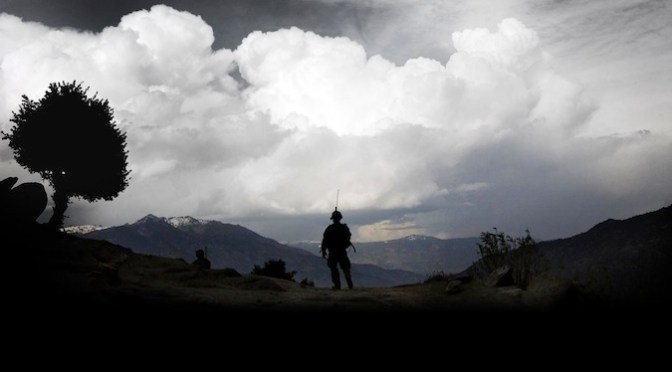
I had the good fortune of meeting Sebastian Junger a few years ago in Boston as he did the press junket for his book War. From mid-2007 to mid-2008 Junger was embedded with a U.S. unit in the Korengal Valley in Afghanistan with his friend and photographer Tim Hetherington, and War was one of the many pieces of journalism that resulted from that year. Another was a series of Vanity Fair dispatches collected as “Into the Valley of Death“, which is an excellent companion to War and an excellent account of that year in the Korengal. But the most affecting portrait from Junger’s tour as a war journalist might be Restrepo, the documentary he and Hetherington directed from the thousands of hours of footage they took during the year and ensuing interviews with the soldiers immediately upon their return home.

The Korengal Valley (sometimes spelled Korangal) was at the time dubbed the deadliest place in the world, an overblown-sounding moniker that is nonetheless entirely lacking exaggeration. U.S. troops in the Korengal took fire from Taliban insurgencies every single day, often engaging in five or six firefights between dawn and dusk. For soldiers on a fifteen-month deployment, that’s an unheard-of amount of action. By the time the U.S. pulled out of the Korengal in April 2010, nearly fifty American soldiers had been K.I.A. there. Seventy percent of ordinance dropped throughout Afghanistan during the course of the war was dropped here. In an interview with CNN, Junger describes the Korengal as “the Afghanistan of Afghanistan, too remote to conquer, too poor to intimidate, too autonomous to buy off.”

Continue reading Restrepo (2010)

Diamonds Are Forever (1971)

Grantland’s Chris Ryan makes a great point here about the way in which the James Bond franchise has changed, for better or worse, to not only gel with modern viewers but to fit the current model of blockbuster franchising. It was always the case that each 007 flick was a standalone film, made even more explicit with those little “James Bond will return” tags at the end. These are installments, and if this particular one stinks then we still have the next one to look forward to or the previous one to rewatch. If you want to jump in on a random one (like, say, Never Say Never Again — wait, bad example), that’s no problem. You won’t miss a step.

Ryan’s point is that all of that has changed now, as the Spectre trailer makes fairly heavy reference to Skyfall and even to Quantum of Solace and Casino Royale. This is continuity as Bond has never known, and Ryan further posits that the filmmaker might be the one who mainly benefits from such a thing — Spectre now seems “more important” than Skyfall (whatever that might mean) just by virtue of being a continuation of the story. Who wouldn’t rather direct “the Bond movie that the last few have been leading up to” over “the next Bond film in a string of other Bond films”?

Continue reading Diamonds Are Forever (1971)

The Lord of the Rings: The Fellowship of the Ring (2001)

Here at Motion State, we don’t f*ck around. We’ve got it figured out. We hang ’em high, we die harder. We bring you the head of Alfredo Garcia. We learn to stop worrying and love the bomb. We’re not afraid of Virginia Woolf and never have been. Hell, we even self-bleep our f*cks. Suffice it to say that we’re professionals.

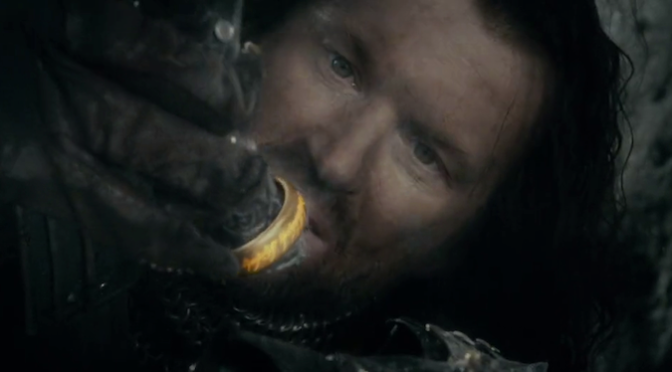
On those infallible grounds, we’re confident in the fact that the best character in the entire Lord of the Rings saga-on-film isn’t the noble wizard Gandalf nor the noble badass Aragorn; it’s not the against-all-odds Frodo nor his tagalong everyman Samwise. It’s certainly not Legolas, despite his superpowered eyesight and epic acrobatics, and it’s not Gimli despite his…it’s not Gimli. Are we about to try to convince you that it’s one of those comic relief companions C-3PO and R2-D2 Merry and Pippin? Maybe pull one of those fast ones where we tell you that it’s the Ring, man, the Ring is the best character, or that we are the best character because Tolkien allowed us to roam free throughout wondrous Middle-Earth…nope. No such luck: the best LotR film character is Isildur, a guy with a fraction of the screentime of the aforementioned candidates, a jerk by all standards of fantasy heroism, dead long before the story really begins.

Here’s why.

Continue reading The Lord of the Rings: The Fellowship of the Ring (2001)

The Hours (2002)

The first question one might ask about a movie is “what happened in it?” After all, the average viewer usually watches a movie to see what happens. However, in a strange way, what happens in Stephen Daldry’s The Hours does not seem to be the most important aspect of the movie. And while The Hours certainly does have a lot going on — three different stories and time periods, a couple suicides, more contemplated suicides, homosexuality, bisexuality, and historical and literary relevance with Virginia Woolf as a prominent character — the actual plot does not draw the viewer in quite like the acting, the dialogue, and the beautiful music. It doesn’t take an advanced movie critic to notice these aspects either; after all, they caught my attention almost immediately.

The masterful dialogue in the movie makes sense to a degree, for the screenplay was heavily influenced by Michael Cunningham’s novel of the same title and, of course, by the incredibly gifted Woolf. Listening to the characters converse, the viewer feels no less enthralled than if they were voraciously reading a page from any of Woolf’s great body of work.

Continue reading The Hours (2002)

Force Majeure (2014)

Whenever a perfect little family poses for a picture like the one taken in the opening scene of Force Majeure, you pretty much know they’re in for some trouble. It’s an oft-used trope showing how easily people can slip into a display of happiness, showing how perception can sometimes count for everything — we touched on a similar scene in our discussion of Robert Redford’s Ordinary People, a film which is on the whole a good touchstone for the themes of Force Majeure. Though the Swedish film suffers slightly from swaths of introspection that last just a bit too long, Force is still one of the most well-crafted family dramas of the past year.

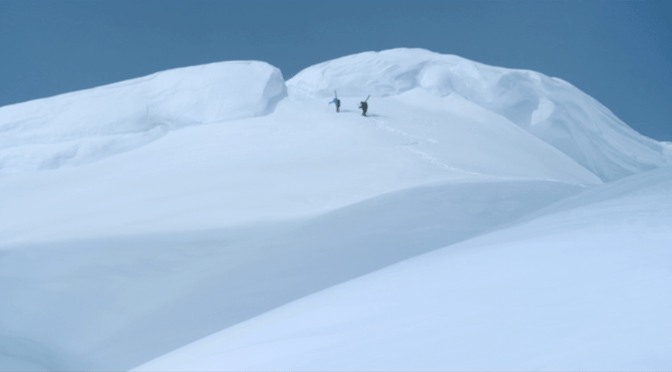
That family is dad Tomas, mom Ebba, little daughter Vera and littler son Harry. They’re on a weeklong getaway at a beautiful mountainside resort in the French Alps for some skiing and relaxation. It’s family time, which Ebba subtly notes has been a much-needed side effect of Tomas’s busy work schedule. This is precious time, so the family does everything together. They ski together, they brush their teeth together, they sleep together on the big master bed. They eat lunch together. They get engulfed by an avalanche together. Family stuff.

Continue reading Force Majeure (2014)

Avengers: Age of Ultron (2015)

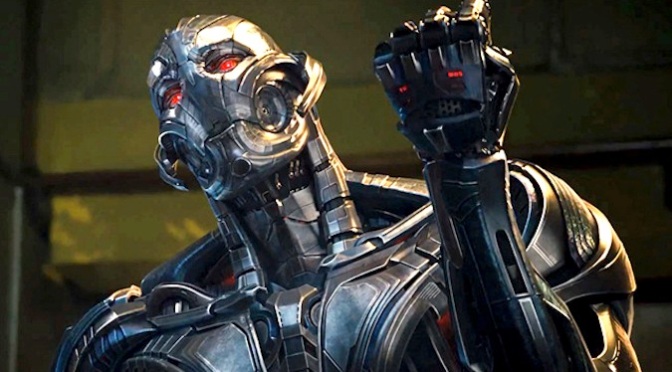
I have a kind of casual self-imposed policy of watching movies from the Marvel Cinematic Universe only once. Sometimes this works out beautifully, as in the case of, say, Thor: The Dark World, which I’m not sure I could sit through again without fast-forwarding to the parts with Tom Hiddleston. Other times I have a temptation to go back and watch a previous entry, usually on the eve of a new entry like Avengers: Age of Ultron. This policy is in effect partly because a good chunk of the MCU films are like The Dark World — sloppy, boring, noncommittal — and a second viewing only highlights these qualities. What do I do, then, if I need me my Thor fix now? I go read a Thor comic.

The real experiment afoot here is one that will fail, but one I hope for anyway: if the longevity of the MCU is the thing the MCU-makers are actually striving for, rather than that rusty and outdated model of making one good movie after another, then can I find a way to emphasize that? Can I enjoy the good and forget the bad and then return to the whole thing as one whole thing, years later, and really feel that longevity in the good and the bad?

Continue reading Avengers: Age of Ultron (2015)

The Punisher (1989)

I was one of those kids who only had a dozen or so comic books to my name but still read them constantly anyway. We’re talking constantly. Most of them were Batman titles, a few were Spider-Man or Darkhawk, one was an old Justice League issue featuring Eclipso. One was an issue of Weird War Tales with a soldier kneeling at a grave on the front cover and exclaiming to the soldier behind him “Hey! According to this…you DIED three weeks ago!”, and for some reason that shit freaked me out. Outside of the occasional Saturday morning cartoon, these precious issues were my sole window into the superhero world.

My favorite of the batch might have been a 64-page Annual issue of The Punisher, featuring a few different Punisher yarns and Part One of the mini-crossover The System Bytes. I read that thing until the cover and inside pages wore out and started to fall away and I had to cradle it like a fragile science project on the bus ride to school every time I wanted to read it. Punisher wasn’t my favorite superhero — I’d probably have told you he’s not a superhero at all, and that my Punisher issue was more similar to the Weird War Tales issue than to the guys-in-costume stuff. Spidey was the coolest and Batman was for some reason automatically my favorite, but I still went back to that Punisher comic over and over.

Continue reading The Punisher (1989)